Reliable Mini Loader Manufacturer for OEM & Wholesale Equipment Buyers
A trusted industrial equipment manufacturer helps B2B buyers source reliable machinery for construction, material handling, agriculture, landscaping, mining, and environmental applications. Since 2019, we have manufactured mini loaders, freight elevators, lift platforms, and lawn mowers for customers across Western countries, Japan, South Korea, Central Asia, Russia, and other markets.
Longyao County Yuhong Machinery Manufacturing Co., Ltd.
Since 2019
North of Xiaozhuangdong Village, Weijiazhuang Town, Longyao County, Xingtai City, Hebei Province, China
Scissor Lift Breakdown Response Plan: Reduce Liability for Contractors
A scissor lift breakdown is not just a maintenance issue; it becomes a liability file the moment a worker is stranded, exposed, injured, or told to improvise. This guide gives contractors a practical response plan for MEWP failures, rescue timing, documentation, training, and jobsite control.
And suddenly the jobsite gets that ugly silence—one worker stuck in the platform, two people on the ground pretending they know the emergency lowering valve, the foreman checking his phone, and somebody, usually too confident, saying, “Can’t he just climb down?”
No. Don’t.
A Scissor Lift Safety Plan is not a cute binder for audits; it is the written proof that your company had a controlled method for communication, rescue, equipment isolation, defect reporting, and post-incident documentation before the platform froze 22 feet in the air with a worker holding a drill and a half-installed ceiling bracket.
So who owns the next ten minutes?
OSHA’s scissor lift guidance says employers must train workers on hazards, including manufacturer instructions, material handling, weight limits, electrical hazards, fall hazards, and defect reporting; that is the boring sentence safety people quote, but in the field it means one thing: if your ground crew cannot lower the platform safely, your “training program” is probably theater.
Table of Contents
Contractors usually fail after the breakdown, not before
I’ve seen this pattern too often.
The lift itself fails for a normal reason: weak batteries, a dead controller, a stuck emergency stop, hydraulic leakage, a pothole-protection fault, a tilt alarm, a failed limit switch, platform overload, or a loose connector that nobody caught during pre-use inspection. Annoying? Yes. Rare? Not really.
But the liability explosion comes later.
Someone tries to move the machine while elevated. Someone lifts the basket with another machine. Someone tells the worker to step onto a beam. Someone keeps the unit in service after a “minor” fault. Someone forgets to photograph the ground condition. Someone calls the rental supplier three days later, after everyone has already changed the story.
That’s how contractors get hurt.
And that’s how they get sued.
In OSHA’s own eTool guidance, employers are told to isolate the scissor lift or use traffic control so other equipment cannot contact it, select firm and level surfaces, avoid hazards like drop-offs, holes, slopes, bumps, debris, and maintain safe clearance from electrical sources. Nice checklist. But here’s the hard truth: those items become evidence when the job goes bad.
Breakdown response and rescue are not the same thing
But contractors mix them up all the time.
A breakdown response is the controlled handling of a failed lift when the platform is stable, the worker is uninjured, the surface is firm, the weather is acceptable, and trained ground personnel can lower the platform using the manufacturer’s procedure.
A rescue is different.
A rescue starts when the worker is injured, medically distressed, exposed to bad weather, near energized lines, trapped by structure, stranded on a tilted or unstable lift, or the emergency lowering procedure does not work. Once that line is crossed, the contractor is no longer “fixing a machine.” The contractor is managing a live exposure event.
The paperwork changes.
The calls change.
The liability changes.
OSHA’s 29 CFR 1926.454 training rule requires workers using scaffolds to be trained by a qualified person to recognize hazards and understand procedures to control or minimize those hazards; since OSHA has stated scissor lifts are treated under scaffold-related provisions in construction, the training and hazard-control logic matters directly for contractor lift programs.
Write the first ten minutes like a field script
The first ten minutes decide the tone of the incident.
Not the legal department. Not the insurance adjuster. Not the equipment dealer. The first ten minutes.
A strong scissor lift breakdown response plan should tell the crew exactly what to do when the platform stops: keep the operator inside the guardrails, establish voice or radio contact, stop nearby work, set an exclusion zone, assign a trained ground responder, check for tilt, leaks, weather, overhead hazards, traffic, and power lines, then attempt only the manufacturer-approved emergency lowering method if conditions are safe.
That sounds obvious.
It isn’t.
Plenty of companies own lifts but do not own the emergency procedure. They buy the machine, lose the manual, skip the ground-control drill, and then act surprised when the only trained person is the worker stuck in the platform.
If your team also operates remote machinery on rough ground, the logic should feel familiar. A crew using a remote control tracked flail mower 4WD slope cutter pro cannot treat a stalled machine on a slope as a casual walk-up problem; people, terrain, and mechanical status must be controlled first. Same discipline. Different equipment.
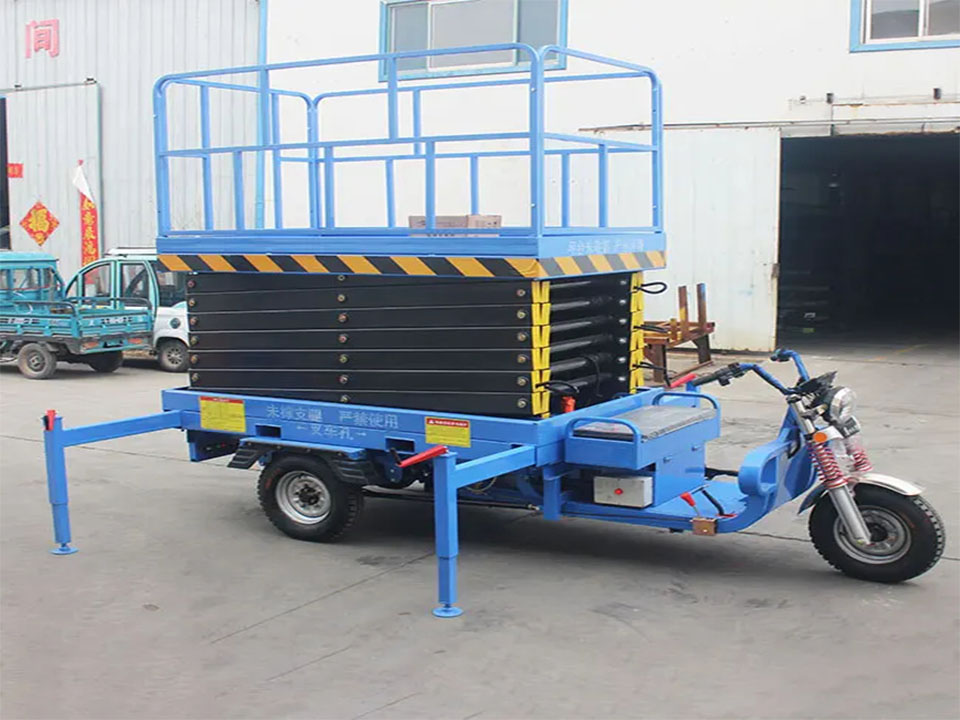
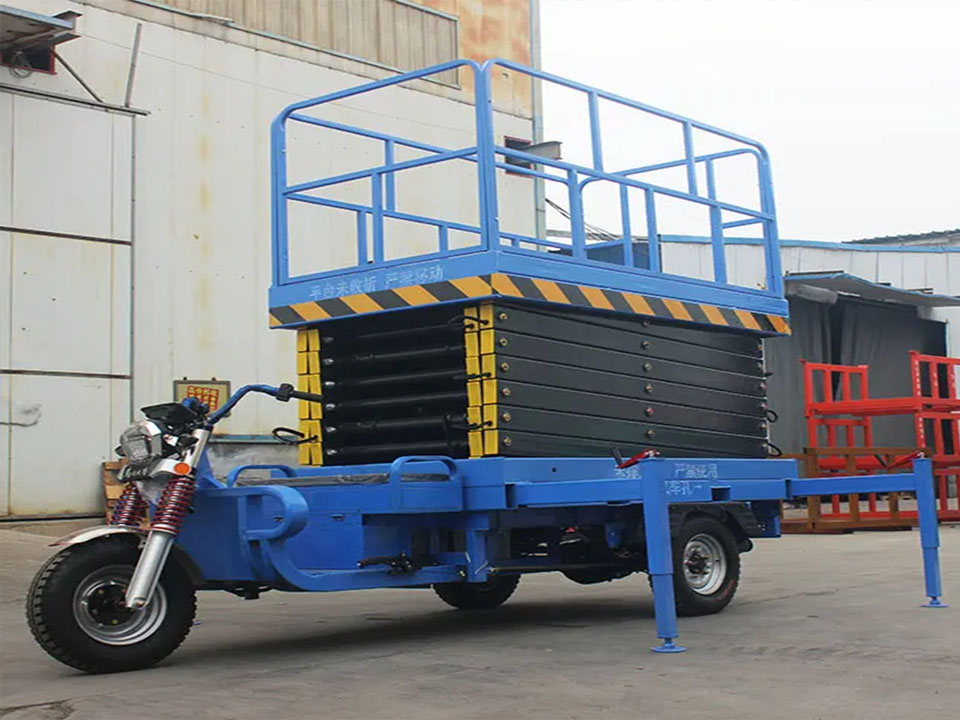
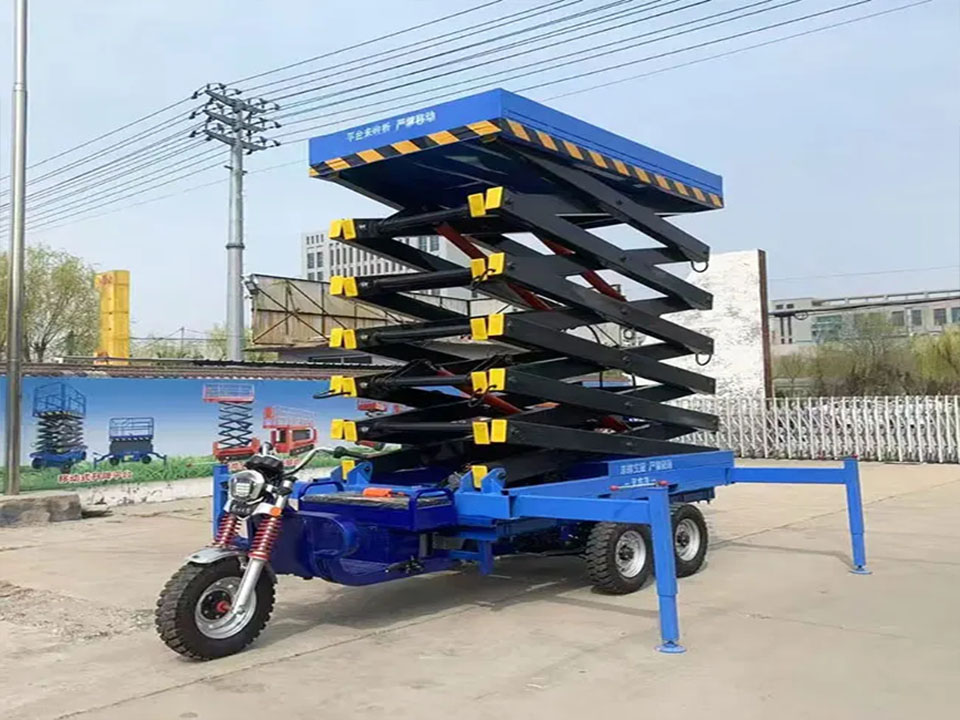
Construction Site Scissor Lift Truck
Scissor lift breakdown response table for contractors
Breakdown condition
Immediate response
Who owns the action
What not to do
Documentation to keep
Platform controls fail
Keep worker in platform, confirm communication, stop nearby work
Clear area below, keep worker still, evaluate stability
Competent person
Do not move elevated lift casually
Ground condition record, slope notes
Worker is injured
Call emergency services immediately
Site supervisor
Do not delay EMS for “one more try”
EMS call time, witness names
Hydraulic leak appears
Stop operation, lower only if safe, tag out after recovery
Mechanic + supervisor
Do not return to work after lowering
Lockout/tagout record, repair ticket
Near energized lines
Maintain clearance, stop movement, call qualified responders if needed
Competent person
Do not approach or touch if energized risk exists
Distance estimate, utility contact log
Rental machine fault
Preserve evidence, notify rental provider in writing
Contractor manager
Do not keep using it to “finish the bay”
Rental notice, photos, defect report
The no-climb rule needs ugly wording
I don’t like soft language here.
“Workers should avoid climbing out of the platform” is weak. Too polite. Too easy to ignore when a superintendent is angry about schedule delay.
Write it like this: workers must not climb over guardrails, stand on rails, transfer to nearby structure, climb down framing, step onto equipment, or exit the platform at height unless a competent-person-approved rescue method requires it.
That sentence will annoy someone.
Good.
Because the moment a worker climbs out of the platform, your controlled breakdown becomes an uncontrolled fall exposure. The guardrail system is no longer doing its job because the worker has left the system. And if you think a plaintiff attorney will miss that, you haven’t sat through enough ugly depositions.
OSHA’s scissor lift guidance emphasizes guardrails, stable positioning, safe movement, and training workers to report equipment defects or maintenance needs; that defect-reporting piece gets ignored, but it is one of the strongest liability shields when written and enforced properly.
Your MEWP rescue plan must be model-specific
Generic rescue plans are cheap.
Also dangerous.
A Genie GS-1930, JLG 1932R, Skyjack SJIII 3219, Haulotte Compact, Dingli JCPT unit, and rough-terrain diesel scissor lift do not all behave the same when controls fail. Manual lowering valves sit in different places. Battery systems differ. Outdoor ratings differ. Platform height, capacity, gradeability, wind limit, charger voltage, pothole protection, and ground-control behavior all vary.
So don’t write “refer to manual” and call that a plan.
The manual might be in the office. Or inside a plastic pouch full of water. Or missing because somebody used it to prop open a gang box.
A practical MEWP rescue plan should include model, serial number, rated capacity, platform height, indoor/outdoor rating, wind limit, emergency lowering instructions, ground-control location, battery disconnect, hydraulic release point, manufacturer support contact, rental provider contact, rescue escalation number, and the name of the trained ground responder.
Yes, it’s tedious.
So is explaining why nobody knew how to lower the platform.
Pre-use inspection is where liability quietly begins
A breakdown response plan cannot save a bad morning inspection.
If the emergency lowering control was never tested, if the pothole protection was jammed, if the battery was weak, if hydraulic fluid was visible on the frame, if the gate latch was loose, if the alarm was ignored, then the incident did not begin when the lift stopped. It began when the crew accepted the machine.
Call emergency services if the worker is injured, dizzy, faint, trapped, exposed to heat stress or cold stress, near power lines, on a tilted lift, or cannot be lowered using approved ground controls within a defined time. Call the rental provider or mechanic if the machine has control failure, hydraulic leakage, battery fault, alarm fault, or any unknown defect. Remove the unit from service until repaired and cleared.
The plan should also name what not to do: do not move the lift while elevated unless manufacturer instructions allow it; do not use forklifts, loaders, telehandlers, or another MEWP as rescue equipment without a preplanned and approved method; do not let the worker climb onto structure; do not reset alarms repeatedly just to finish the task.
That “just finish” culture is expensive.
It sounds efficient right up until the report is written.
Set exclusion zone, identify trained ground responder, check tilt/leaks/traffic/power
Photos of work zone
3–5 minutes
Attempt manufacturer-approved emergency lowering only if safe
Responder name, step used
5–10 minutes
Escalate to competent person, mechanic, rental provider, or rescue contact
Call log
10+ minutes
Activate emergency rescue or EMS if worker condition, stability, or lowering remains uncertain
Time-stamped rescue record
After lowering
Tag out equipment, preserve evidence, complete defect report, prohibit reuse
Lockout tag, repair ticket, witness notes
Training the operator is not enough
And this is where many contractors get it wrong.
They train the operator. Fine. But the operator may be the stranded person. The person on the ground may be the one who needs to lower the lift, set the barricade, call the competent person, and prevent a bad rescue attempt.
So the ground crew needs training too.
OSHA’s training language includes employees who operate, repair, maintain, inspect, erect, disassemble, or move scaffold systems, and its scissor-lift guidance tells employers to train workers in correct procedures, material handling, worksite hazards, and defect reporting. That pushes the responsibility beyond the person standing in the platform.
But let’s be honest. Some contractors hear “training” and think “certificate.”
A certificate is not a rescue plan.
A rescue drill is.
FAQ
What is a scissor lift breakdown response plan?
A scissor lift breakdown response plan is a written jobsite procedure that tells contractors how to communicate with a stranded worker, control the work area, use manufacturer-approved emergency lowering methods, escalate rescue support, tag defective equipment, and document every action after a scissor lift stops working.
It should be short enough for field use and specific enough to defend later. The plan belongs with the machine, the supervisor, and the trained ground responder.
What should be included in a Scissor Lift Safety Plan?
A Scissor Lift Safety Plan should include pre-use inspection, operator training, ground-responder training, emergency lowering procedures, rescue escalation triggers, no-climb rules, traffic control, overhead hazard controls, power-line clearance rules, defect reporting, lockout/tagout steps, and post-breakdown documentation.
I would also include model-specific emergency pages for each lift. Generic plans look nice but fail under stress.
How does a scissor lift emergency rescue plan reduce liability?
A scissor lift emergency rescue plan reduces liability by proving the contractor trained workers, planned rescue actions, controlled the hazard zone, followed manufacturer procedures, escalated when needed, removed defective equipment from service, and kept written evidence of the incident response.
That proof matters when OSHA, insurers, clients, or attorneys ask what happened after the lift stopped.
When should contractors call emergency services after a scissor lift breakdown?
Contractors should call emergency services after a scissor lift breakdown when the worker is injured, medically distressed, trapped, near electrical hazards, exposed to unstable ground or severe weather, stuck on a tilted lift, or cannot be lowered safely using approved emergency controls.
Waiting too long is not toughness. It is risk.
What is the biggest mistake after a scissor lift stops working?
The biggest mistake after a scissor lift stops working is letting workers improvise by climbing out, stepping onto structure, bypassing controls, shaking the lift, moving it while elevated, or using unapproved equipment to rescue the platform.
That kind of improvisation may look fast in the moment. Later, it looks reckless.
Stop treating breakdowns like surprises
A scissor lift breakdown is predictable.
Maybe not today. Maybe not on this exact bay. Maybe not with this exact model. But batteries fail, controls fail, hydraulic parts leak, alarms trigger, surfaces shift, workers overload platforms, and rental machines arrive tired.
So write the response plan before the lift stops.
Build the scissor lift breakdown response plan around the first ten minutes, trained ground responders, model-specific emergency lowering, no-climb rules, exclusion zones, defect tagging, lockout/tagout, and hard escalation triggers. Practice it until the crew can run the response without a safety manager shouting from a pickup truck.
For contractors, the Scissor Lift Safety Plan is not paperwork.
It is the difference between a controlled equipment failure and a very expensive story nobody wants to tell.
Contact our equipment manufacturer to discuss mini loaders, freight elevators, lift platforms, and lawn mowers for construction, logistics, agriculture, landscaping, mining, and municipal projects. Founded in 2019, we support global B2B buyers with RFQ review, WhatsApp or email communication, sales team guidance, customization, and export-ready machinery solutions.
Company
About
Solutions
Applications
Electric Freight Elevator
Contact
Products
Mini Loader
Freight Elevator
Lift Platform
Lawn Mower
Electric Mini Loader
Contact
+86 151 0096 5355
North of Xiaozhuangdong Village, Weijiazhuang Town, Longyao County, Xingtai City, Hebei Province, China