Reliable Mini Loader Manufacturer for OEM & Wholesale Equipment Buyers
A trusted industrial equipment manufacturer helps B2B buyers source reliable machinery for construction, material handling, agriculture, landscaping, mining, and environmental applications. Since 2019, we have manufactured mini loaders, freight elevators, lift platforms, and lawn mowers for customers across Western countries, Japan, South Korea, Central Asia, Russia, and other markets.
Longyao County Yuhong Machinery Manufacturing Co., Ltd.
Since 2019
North of Xiaozhuangdong Village, Weijiazhuang Town, Longyao County, Xingtai City, Hebei Province, China
Inspection Certificate Tracking Checklist for Compliance Teams
Inspection certificate tracking is not just document filing; it is how compliance teams prove equipment, suppliers, and safety controls are still valid. This guide gives B2B teams a practical checklist for tracking certificate expiry, ownership, audit evidence, and supplier follow-up before records become expensive problems.
I have seen a production team lose a shipment window because one lifting inspection certificate was stored in an email thread, a supplier declaration had the wrong serial number, and nobody noticed the certificate expired nine days before the customer’s audit meeting, which meant the issue was no longer a paperwork gap but a credibility problem. Why do companies still treat certificates like harmless PDFs?
Because tracking feels boring.
That is the trap.
Inspection Certificate Tracking is one of those compliance jobs that looks small until it blocks payment, delays dispatch, weakens a supplier audit, or gives a safety officer a reason to stop the equipment. Compliance teams do not need another soft reminder list. They need a hard-edged system that tracks certificate status, expiry dates, equipment IDs, inspection intervals, responsible owners, renewal evidence, supplier replies, and audit-ready proof.
And here is my blunt opinion: if your team cannot pull the latest certificate in under three minutes, you do not have certificate control. You have document storage with hope sprinkled on top.
Table of Contents
Why Inspection Certificate Tracking Fails in B2B Operations
Most certificate failures do not happen because nobody cares. They happen because responsibility is split.
Purchasing asks the supplier. Quality stores the file. Operations uses the machine. Compliance answers the auditor.
So when a certificate expires, everyone is “partly involved,” which usually means nobody is truly accountable. That is how audit delays begin.
In equipment-heavy B2B industries, inspection certificates may cover lifting devices, welding procedures, pressure systems, electrical checks, operator qualification, calibration records, load tests, factory inspection reports, material conformity, CE/UKCA declarations, ISO certificates, or supplier quality approvals. Each one has a different renewal rhythm. Some are annual. Some are monthly. Some are tied to equipment hours, repair events, serial numbers, or statutory inspections.
Messy? Yes.
But manageable.
The compliance team’s job is not to memorize every certificate. The job is to build a tracking system that catches gaps before a customer, regulator, insurer, or site safety manager catches them first.
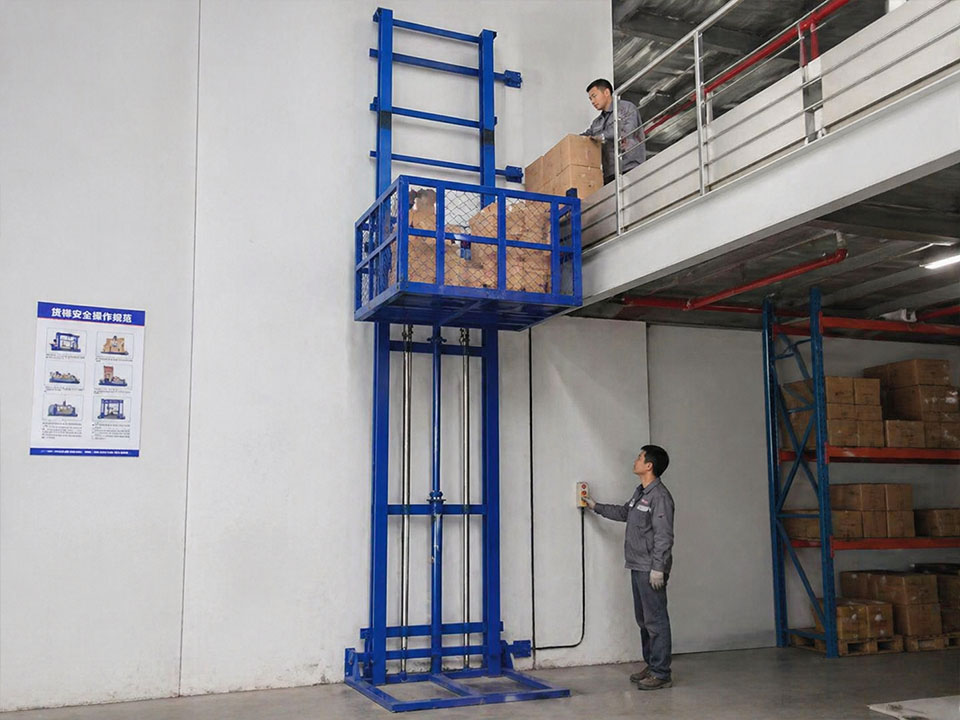
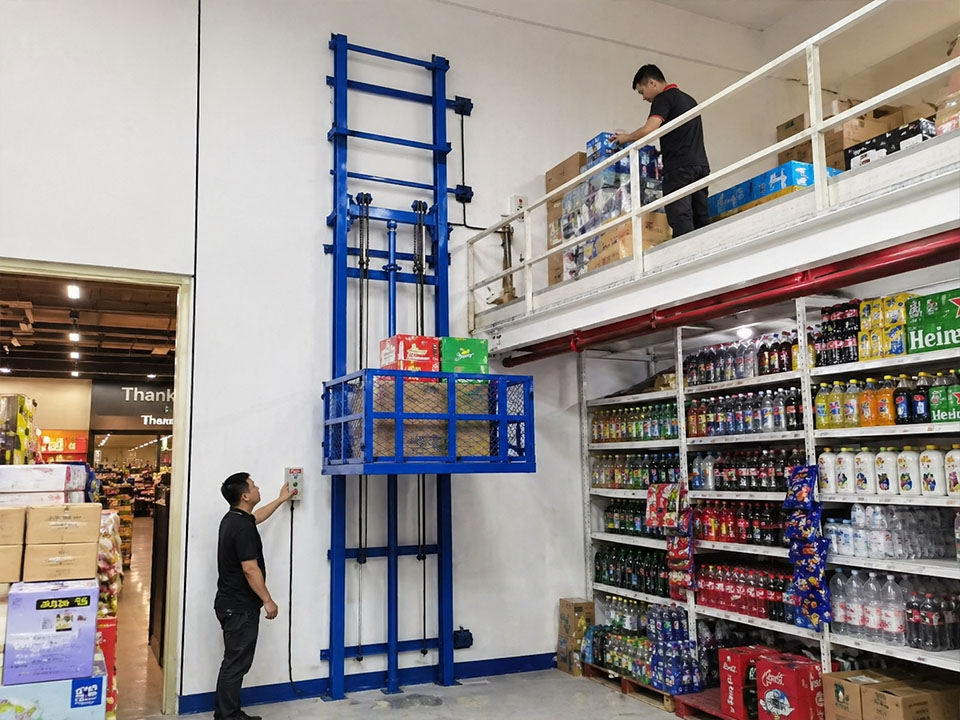
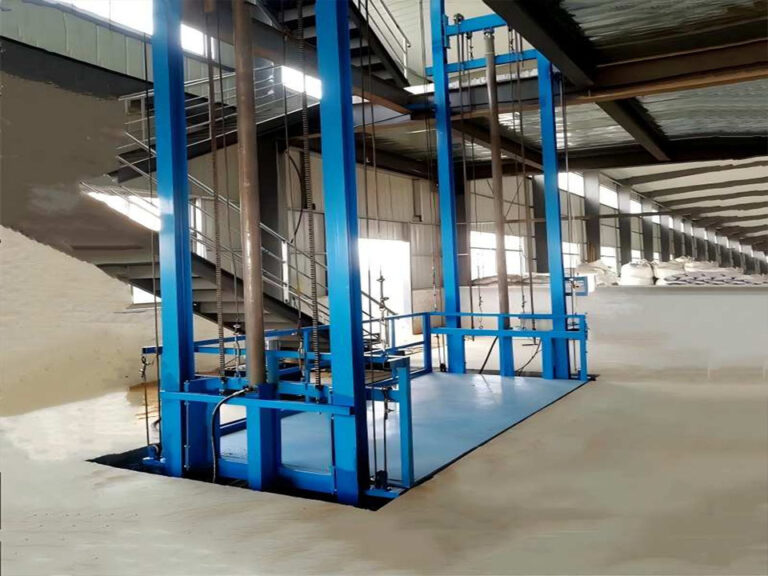
Cargo Elevator
The Hard Truth: A Certificate Without Traceability Is Weak Evidence
A certificate is not useful just because it exists.
If the document does not match the correct machine, serial number, inspection date, inspector name, test standard, supplier batch, or validity period, it becomes weak evidence. Worse, it can create false confidence. I would rather see one clean, traceable certificate than ten random files named “inspection report final latest new.pdf.”
That filename should be illegal. Almost.
For machinery suppliers selling products such as a 4WD remote control lawn mower for rough terrain use, certificate tracking should connect the machine model, engine type, blade system, remote control system, inspection scope, and outbound shipment batch. A certificate that only says “machine inspected” is too thin for serious B2B buyers.
The same logic applies to mowers, loaders, lifts, hoists, hydraulic platforms, and site equipment. Compliance is not just the file. It is the match between file and asset.
Start With a Certificate Register, Not a Folder
A shared folder is not a tracking system.
A proper certificate register should act like a control tower. It tells the compliance team which certificates exist, which assets they apply to, who owns renewal, when each certificate expires, what evidence is attached, and what action is overdue.
At minimum, track these fields:
Tracking Field
Why It Matters
Bad Example
Better Example
Certificate ID
Prevents duplicate or confused files
“Cert 1”
“IC-2026-RCM-0042”
Certificate Type
Separates inspection, calibration, conformity, and training records
“Inspection”
“Annual mechanical safety inspection”
Asset / Product ID
Links the record to the exact equipment
“Remote mower”
“XT-800CB, Serial XT800-260418-07”
Supplier / Inspector
Shows who issued the evidence
“Factory”
“Yuhong QC Department / Third-party inspector name”
Issue Date
Confirms inspection timing
“April”
“2026-04-28”
Expiry Date
Triggers renewal control
Blank
“2027-04-27”
Status
Gives fast audit visibility
“OK”
“Valid / Expiring in 30 days / Expired / Pending renewal”
Evidence Link
Speeds audit retrieval
Email attachment
Controlled PDF file path
Owner
Prevents responsibility drift
“QC”
“Quality Manager”
Last Review Date
Proves active control
Not recorded
“2026-05-15”
This is not fancy. Good.
Fancy systems often hide weak logic. A simple register with ruthless discipline beats expensive compliance software full of incomplete fields.
Build Expiry Tracking Around Risk, Not Calendar Convenience
The lazy method is to review certificates once a year. That is not enough.
A risk-based Inspection Certificate Tracking system uses expiry bands. I like 90 days, 60 days, 30 days, 7 days, and expired. That sounds aggressive, but for B2B exports, large tenders, rental fleets, safety equipment, and supplier audits, 30 days can disappear fast.
A certificate may need renewal scheduling, inspector availability, machine downtime, supplier response, document correction, translation, stamp verification, and internal approval. If the certificate has a typo in the model name or serial number, add another week. Maybe two.
For a machine such as a remote control tracked lawn mower for slopes and rough terrain, compliance teams should not wait until a customer asks for records. Slope work increases operational scrutiny. Track condition, remote-control safety checks, engine inspection, blade guard checks, emergency stop function, and outbound QC evidence should be easy to retrieve before shipment.
And yes, buyers notice when you send records quickly.
The Certificate Tracking Checklist Compliance Teams Should Use
Here is the checklist I would use in a real compliance office. Not theoretical. Practical.
Checklist Item
Required Record
Review Frequency
Owner
Master certificate register updated
Excel, ERP, QMS, or compliance platform register
Weekly
Compliance Coordinator
All certificates linked to asset IDs
Model, serial number, batch, or PO reference
Weekly
Quality Team
Expiry dates captured
Issue date and expiry date fields
Weekly
Compliance Coordinator
90/60/30-day alerts active
Renewal reminder list
Weekly
Compliance Lead
Certificate issuer verified
Supplier, inspector, lab, or internal authority
Per certificate
Quality Manager
Scope matches product use
Inspection scope, test item, rated load, operating condition
Per certificate
Engineering / QC
Document version controlled
File name, revision, upload date
Monthly
Document Controller
Expired certificates quarantined
Status changed to expired, equipment blocked if needed
Immediate
Compliance Lead
Renewal evidence attached
New certificate, inspection sheet, invoice, photos if relevant
Per renewal
Quality Team
Audit pack prepared
Certificate summary, evidence folder, status report
Before audit
Compliance Manager
Do not overcomplicate it. The power is in doing it every week.
Match Certificates to the Equipment Reality
One mistake I see too often: certificate categories are copied from office templates, not from the actual product risk.
That is lazy.
A remote-controlled outdoor machine is not the same as a warehouse shelf. A tracked mower working on wet slopes, rough grass, orchards, roadsides, or embankments has inspection concerns that a flat-floor machine does not. When your product line includes a remote control 4WD lawn mower with gas engine power, the tracking system should recognize fuel engine inspection, blade assembly checks, electrical control verification, emergency stop response, frame inspection, tire or track condition, and customer-specific compliance documentation.
A generic “inspection certificate” is too vague.
Compliance teams should classify certificates by risk type:
Safety certificate Performance inspection certificate Factory acceptance inspection Supplier conformity certificate Calibration certificate Operator training certificate Maintenance inspection record Load or function test certificate Material certificate Export compliance document
That classification helps answer one ugly audit question: “Show me the valid evidence for this exact machine.”
Use Red Flags, Not Just Status Labels
“Valid” is not enough.
A certificate can be valid but still suspicious. Maybe the issuer name is inconsistent. Maybe the serial number format does not match the equipment plate. Maybe the inspection date is after the shipment date. Maybe the scope says visual inspection only, while the customer expected functional testing. Maybe the certificate is signed but not stamped. Maybe the PDF metadata shows it was created after the audit request.
I am not saying every oddity is fraud. But compliance teams should treat certificate tracking as evidence review, not document collecting.
Use red flags:
Certificate expires within 30 days Certificate has no serial number Certificate has no inspector name Certificate has no inspection scope Certificate issuer is not approved Certificate date conflicts with production date Certificate file is a photo, not controlled PDF Certificate covers model family, not exact unit Certificate lacks pass/fail criteria Certificate does not match customer contract requirement
For high-demand machines like a heavy-duty remote control tracked flail mower for slopes, red-flag tracking is especially useful because the machine may be sold into demanding terrain applications. The certificate file should not merely exist. It should defend the product.
Real escalation means something happens when a certificate enters risk status. At 60 days, the owner confirms renewal route. At 30 days, the supplier or inspector must be booked. At 7 days, management sees the risk. At expiry, the related asset, shipment, or supplier approval is blocked until the certificate is renewed or formally risk-accepted.
This will annoy people.
Good.
Compliance systems that never annoy anyone usually do not control anything. They only report failure after the fact.
A clean escalation ladder should include certificate owner, department manager, compliance lead, sales or project manager, and operations head when customer delivery is affected. Do not let expired certificate problems stay buried in quality inboxes.
Audit-Ready Certificate Management Means Retrieval Speed
Auditors judge retrieval speed. Buyers do too.
If your team spends 20 minutes searching for one certificate, confidence drops even if the certificate is valid. If your team pulls the master register, current certificate, previous certificate, inspection sheet, renewal trail, and asset link within three minutes, the conversation changes.
Product inspection certificate Factory test record Engine inspection record Remote controller function test Emergency stop test Blade system check Track tension check Packing inspection photo Serial number label photo Final QC approval
Do you need all of that for every buyer? Maybe not. But if you sell to professional B2B buyers, contractors, municipalities, distributors, or rental companies, the ability to provide a clean pack becomes a sales advantage.
Not glamorous. Profitable.
Stop Letting Suppliers Control Your Certificate Risk
Suppliers often send certificates late because buyers ask late.
That is the buyer’s fault too.
Build certificate requirements into purchase orders, supplier onboarding, and pre-shipment checklists. Do not wait until the goods are packed. The PO should state what certificates are required, acceptable issuer type, document language, serial number requirements, renewal validity, and submission deadline.
For supplier compliance certificate tracking, I would add one rule: no final payment or shipment release until critical certificates are received and checked.
Some sales teams will hate that. I understand. But what is worse: delaying release by one day or discovering during a customer audit that a required inspection certificate is expired, mismatched, or missing?
This looks boring because it is doing its job. Anyone can read it. Anyone can sort it. Anyone can check the expiry date without opening the PDF.
For compliance teams handling hundreds of records, file naming is not clerical decoration. It is operational control.
What to Review Before Every Customer Audit
Before a customer audit, do not ask, “Do we have the certificates?”
Ask better questions.
Are all certificates current? Do certificates match the exact product, serial number, or batch? Are expired documents removed from the active folder? Are renewal records attached? Are supplier certificates verified? Are inspection scopes aligned with customer requirements? Can the team retrieve records fast? Is there a summary sheet for the auditor? Are gaps disclosed internally before the audit starts?
That last point matters. Never let the auditor discover your gap before you do. It makes the team look passive.
The 15-Point Inspection Certificate Tracking Checklist
Use this as a practical compliance team checklist:
No.
Checklist Point
Pass Criteria
1
Master register exists
One controlled file or system tracks all certificates
2
Certificate owner assigned
Every certificate has a named responsible role
3
Asset ID linked
Model, serial number, batch, or PO is recorded
4
Certificate type classified
Safety, inspection, calibration, conformity, or training
5
Issuer captured
Supplier, inspector, laboratory, or internal authority listed
6
Issue date recorded
Date follows ISO format such as 2026-04-28
7
Expiry date recorded
Blank expiry dates require justification
8
Alert bands active
90/60/30/7-day warning system used
9
Scope checked
Certificate scope matches product and customer requirement
10
Document version controlled
Latest certificate clearly separated from old files
11
Evidence file attached
PDF or controlled image stored in audit folder
12
Expired files blocked
Expired certificates cannot remain in active status
13
Supplier follow-up logged
Email, portal note, or supplier reply attached
14
Renewal verified
New certificate reviewed before status changes to valid
15
Audit pack prepared
Summary sheet and evidence folder ready before audit
Simple? Yes.
But simple controls catch expensive mistakes.
FAQ
What is Inspection Certificate Tracking?
Inspection Certificate Tracking is the controlled process of recording, monitoring, verifying, and renewing inspection certificates linked to specific products, machines, suppliers, assets, or compliance requirements. It helps compliance teams prove that required inspections are valid, traceable, current, and ready for audit review without relying on scattered emails or manual memory.
In B2B operations, this usually means maintaining a master certificate register with certificate type, asset ID, serial number, issue date, expiry date, issuer, owner, status, evidence file, and renewal action.
Why do compliance teams need an inspection certificate checklist?
A compliance team needs an inspection certificate checklist because certificates can expire, mismatch assets, lack required scope, or disappear into supplier emails before an audit begins. A checklist forces teams to verify ownership, expiry dates, document quality, issuer credibility, asset links, renewal evidence, and audit readiness in a consistent way.
Without a checklist, teams often find certificate problems only when a customer, regulator, insurer, or internal auditor asks for proof under time pressure.
How do you track inspection certificate expiration dates?
Inspection certificate expiration dates are tracked by recording every certificate’s issue date, expiry date, owner, asset ID, and renewal status in a controlled register with 90-day, 60-day, 30-day, and 7-day alerts. Expired certificates should trigger escalation, equipment review, shipment blocking, or supplier follow-up depending on risk.
The best systems also include dashboard filters for “valid,” “expiring soon,” “expired,” “pending renewal,” and “under review,” so compliance teams can act before the audit clock starts.
What should be included in an audit-ready certificate management system?
An audit-ready certificate management system should include a master register, controlled document storage, certificate ownership, expiry tracking, asset links, supplier details, evidence files, renewal logs, approval status, and retrieval rules. The system should help teams prove certificate validity quickly and consistently during customer, regulatory, supplier, or internal audits.
It should also separate old certificates from current records, flag missing scope details, and show who reviewed each certificate before it was accepted.
What are common inspection certificate tracking mistakes?
Common inspection certificate tracking mistakes include using shared folders without a register, missing expiry dates, storing certificates only in email, failing to match certificates to serial numbers, accepting vague inspection scopes, leaving expired certificates in active folders, and assigning responsibility to a department instead of one accountable owner.
The most damaging mistake is assuming that possession equals control. A company can “have” a certificate and still fail an audit if the certificate cannot be verified, retrieved, or matched to the right asset.
How can B2B suppliers improve compliance certificate tracking?
B2B suppliers can improve compliance certificate tracking by building certificate requirements into purchase orders, linking each certificate to product models and serial numbers, using standardized file names, assigning renewal owners, creating expiry alerts, and preparing audit packs before customers request them. This turns certificate management from reactive paperwork into operational control.
For machinery suppliers, the system should also connect certificates to inspection records, final QC reports, packing evidence, maintenance checks, and customer-specific compliance requirements.
CTA
If your compliance team still tracks certificates through inbox searches, scattered PDFs, and “ask QC” habits, fix that before the next customer audit. Build one controlled Inspection Certificate Tracking register, assign owners, set expiry alerts, link every certificate to the exact asset, and prepare audit packs before anyone asks. That is how B2B teams reduce audit delays—and protect trust when the paperwork suddenly matters.
Contact our equipment manufacturer to discuss mini loaders, freight elevators, lift platforms, and lawn mowers for construction, logistics, agriculture, landscaping, mining, and municipal projects. Founded in 2019, we support global B2B buyers with RFQ review, WhatsApp or email communication, sales team guidance, customization, and export-ready machinery solutions.
Company
About
Solutions
Applications
Electric Freight Elevator
Contact
Products
Mini Loader
Freight Elevator
Lift Platform
Lawn Mower
Electric Mini Loader
Contact
+86 151 0096 5355
North of Xiaozhuangdong Village, Weijiazhuang Town, Longyao County, Xingtai City, Hebei Province, China