Reliable Mini Loader Manufacturer for OEM & Wholesale Equipment Buyers
A trusted industrial equipment manufacturer helps B2B buyers source reliable machinery for construction, material handling, agriculture, landscaping, mining, and environmental applications. Since 2019, we have manufactured mini loaders, freight elevators, lift platforms, and lawn mowers for customers across Western countries, Japan, South Korea, Central Asia, Russia, and other markets.
Longyao County Yuhong Machinery Manufacturing Co., Ltd.
Since 2019
North of Xiaozhuangdong Village, Weijiazhuang Town, Longyao County, Xingtai City, Hebei Province, China
B2B Wheel Loader Defect Reporting Checklist for Contractor Fleets
A sharper, more field-real version of a wheel loader defect reporting guide for B2B contractor fleets. Built around inspection discipline, stop-work rules, photo evidence, and repair accountability.
And I mean that in the most expensive way possible: the bucket sits level, the engine note sounds calm, the paint still has enough shine for the site manager to nod and walk past—but underneath, a lift-cylinder seal is sweating, the brake pedal has gone sponge-soft, the steering has a tiny delay, and the operator has quietly learned to “work around it” because nobody wants to be the person who stops production at 7:18 a.m.
Sound familiar?
I’ve seen it happen. Too often. A machine doesn’t usually fail like a movie explosion; it fails like a bad habit. One ignored seep. One weak horn. One missing mirror. One cracked step that “we’ll fix Friday.” Then Friday becomes next month.
A wheel loader inspection checklist should not be a cute clipboard exercise. It should be a hard gate. Pass, restrict, repair, or tag out.
Table of Contents
Why a Defect Report Beats a Pretty Checklist
Here’s the ugly truth: most checklists are built to make managers feel protected, not to make machines safer.
“Brakes OK.” Useless.
Which brakes? Tested loaded or empty? Flat yard or slight grade? Did the parking brake hold? Did the machine pull left? Did the operator hear anything? Did anyone write the hour meter?
A real wheel loader defect report turns a vague complaint into usable maintenance intelligence. It gives the mechanic a starting point. It gives the fleet manager a risk category. It gives procurement people proof that the contractor fleet isn’t running iron on hope and grease.
OSHA’s powered industrial truck rule says unsafe or defective equipment must be removed from service until repaired, and pre-service examination is part of the safety discipline around powered industrial equipment . Yes, wheel loaders are not always treated the same as warehouse forklifts in every jurisdiction—but the logic travels well: if the defect affects control, braking, visibility, fire risk, structure, or operator protection, you don’t run it.
You park it.
The Stop-Use Defects Nobody Should Argue About
But, somehow, people still argue.
A foreman says, “Just finish the morning loading.” A driver says, “I only need five buckets.” A mechanic says, “I’ll look at it later.” And the operator—usually the person with the most skin in the game—gets stuck between job pressure and common sense.
From my experience, these defects should trigger immediate stop-use:
Defect Area
What the Operator Notices
Why It Matters
Action
Brakes
Soft pedal, long stopping distance, pulling sideways
Loader can’t be controlled around people, trucks, or slopes
Tag out
Steering
Delay, binding, drift, hydraulic noise
Operator loses precise control under load
Tag out
Hydraulics
Active spray, sudden drop, bucket creep, hot oil smell
Fire risk, crush risk, component failure
Tag out or urgent repair
Tires & Wheels
Sidewall cuts, exposed cord, loose nuts, rim cracks
Failed horn, reverse alarm, beacon, mirrors, camera
Ground crew can’t read machine movement
Stop in active sites
Cab Access
Broken step, missing rail, failed seat belt
Operator injury during entry, exit, or rollover
Stop or restrict
Engine Bay
Fuel leak, oil leak near heat, overheating, smoke
Fire, breakdown, engine damage
Stop or urgent repair
No poetry here. Just risk.
NIOSH has warned that struck-by incidents remain one of construction’s nastiest killers, and its 2023 struck-by material notes that transportation-related struck-by injuries make up a major share of both fatal and nonfatal construction injuries . A loader with bad brakes or blind reverse movement is not “slightly defective.” It’s a moving steel argument.
Contractor Fleets Have a Culture Problem, Not a Form Problem
I frankly believe defect reporting fails because companies reward silence.
Not officially. Nobody writes “please hide brake problems” in the safety manual. But the site rhythm teaches it. Keep loading. Don’t delay the concrete truck. Don’t block the rental schedule. Don’t make the supervisor explain downtime.
So operators adapt. They pump the brake twice. They lift slower. They avoid tight turns. They park on flatter ground. They know the machine is wrong, but they also know nobody likes bad news before lunch.
That’s where a contractor fleet equipment inspection system earns its money. It must protect the person reporting the fault. If an operator tags out a machine for steering drift, the manager should ask, “What’s the backup plan?” not “Can you run it carefully?”
Carefully? Come on.
Singapore’s 2024 Workplace Safety and Health report showed construction remained a high-risk sector, with the fatal injury rate in construction rising from 3.4 to 3.7 per 100,000 workers . Different country, same lesson: heavy work plus weak controls equals blood and paperwork.
The Wheel Loader Inspection Checklist I’d Actually Use
Start outside. End moving.
That’s the sequence. Not random tire kicking. Not “looks okay.” Not a laminated sheet that nobody reads after the first week.
“Hydraulic oil below sight glass after overnight park”
5
Cab access
Steps, handrails, seat belt, mirrors, wipers
“Left step bent downward, boot slips on entry”
6
Start-up
Gauges, warning lights, smoke, abnormal noise
“Oil pressure warning stayed on 4 seconds after start”
7
Brake test
Service brake and parking brake
“Parking brake failed to hold on yard ramp”
8
Steering test
Full turn, response, noise, drift
“Steering delay under low-speed left turn”
9
Hydraulic test
Lift, tilt, lower, hold, coupler lock
“Bucket dropped 60 mm in 4 minutes, engine idle”
10
Final report
Photos, severity, machine status, signature
“Level 4 stop-use, tagged 07:42”
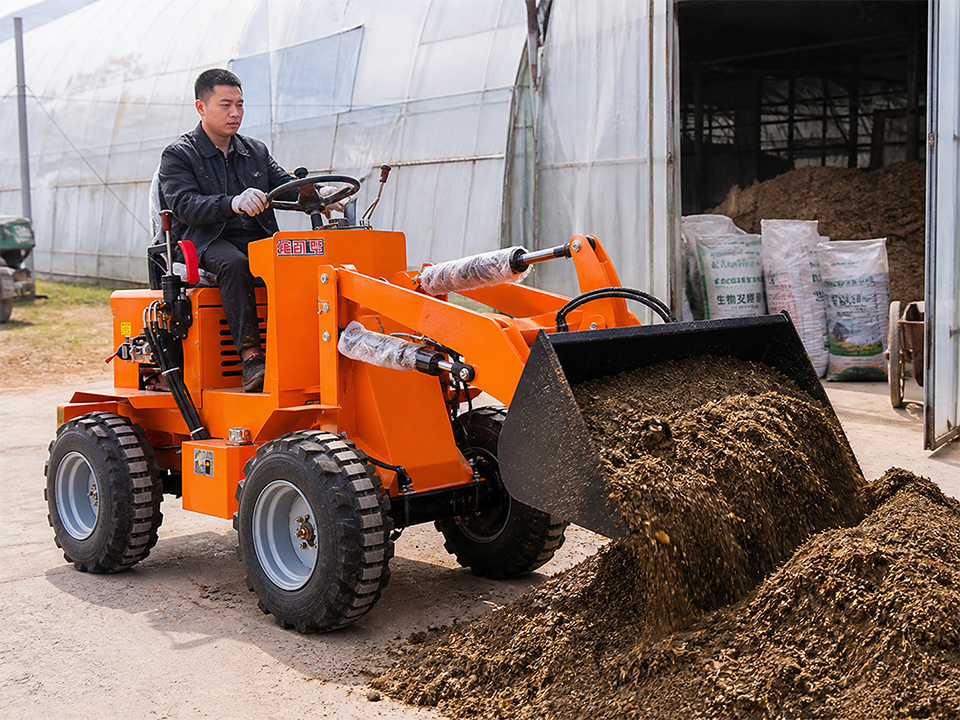
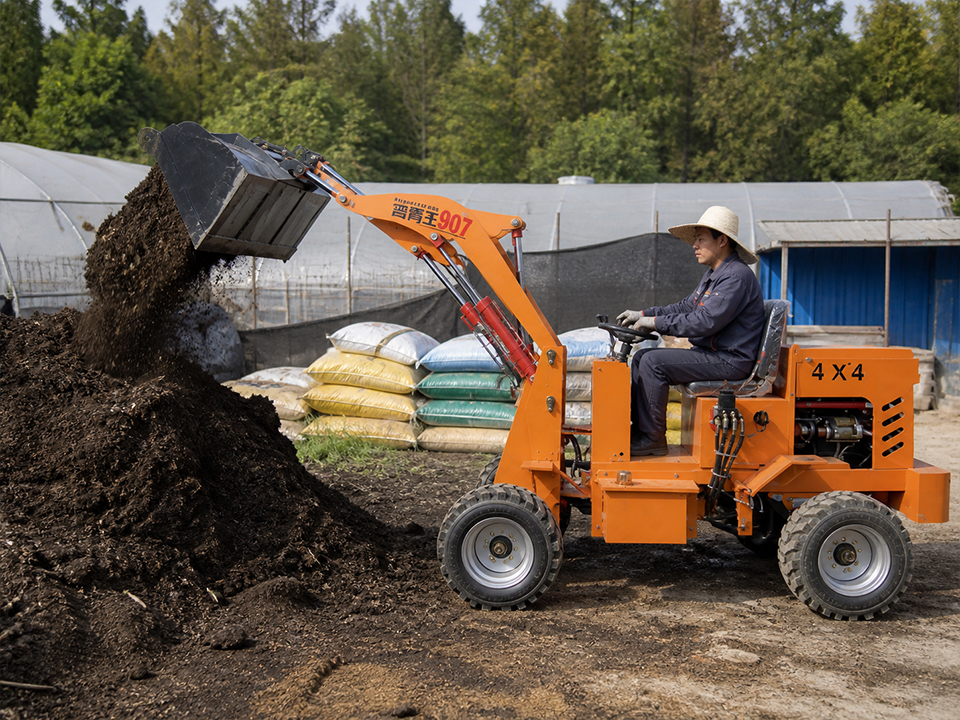
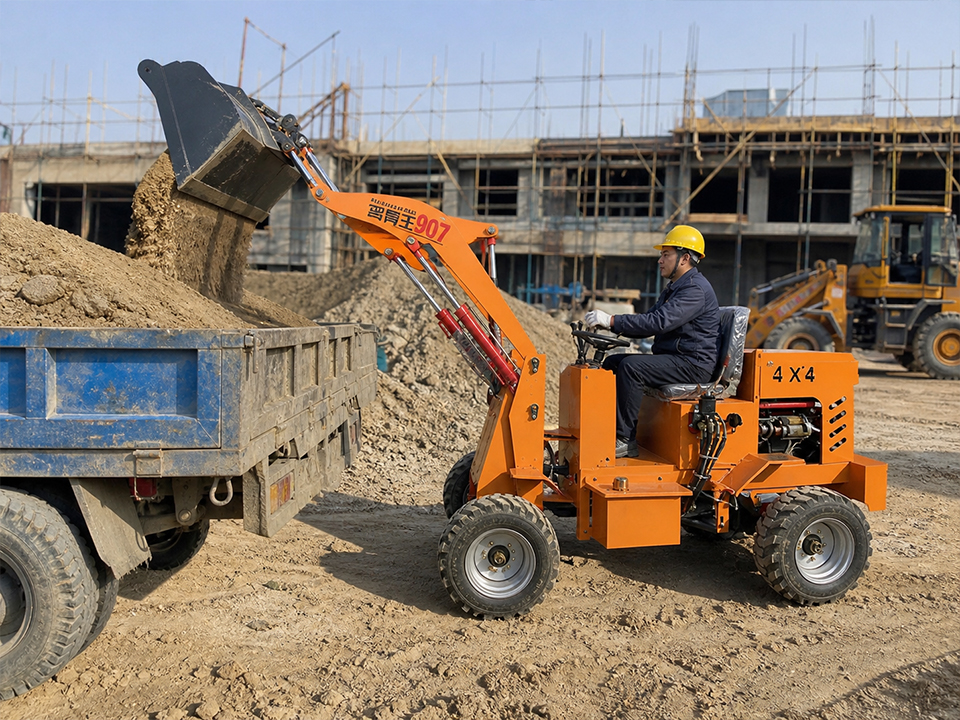
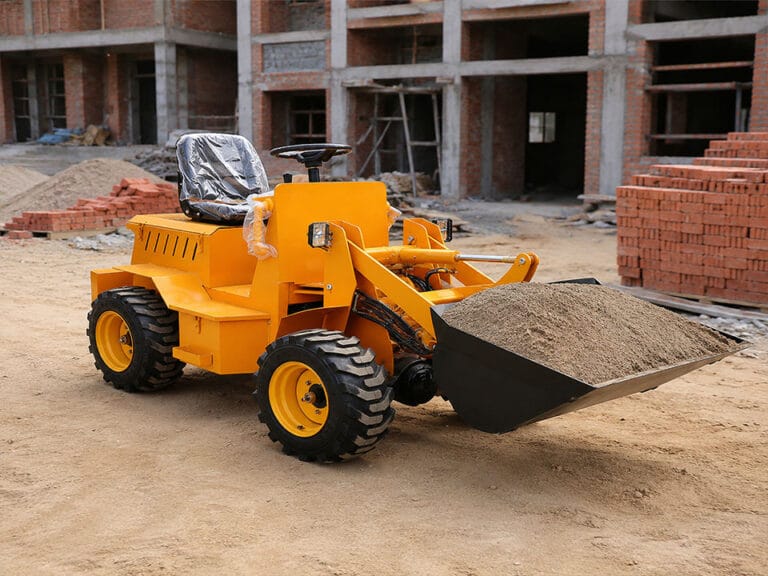
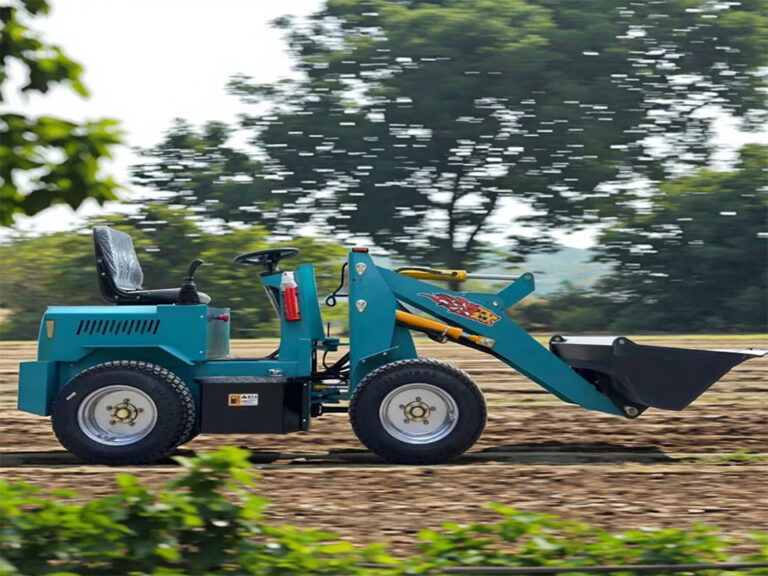
If your fleet uses compact loaders on job sites, this same discipline fits smaller equipment too. A compact 4×4 all-wheel drive diesel loader for job sites still needs brake, steering, hydraulic, tire, linkage, and cab-access checks before work starts.
Small machine. Same danger.
What a Good Defect Report Sounds Like
A bad report says: “Hydraulic leak.”
A useful report says: “Unit WL-07, 2,486 hours, left lift-cylinder rod seal wet after three lift cycles, fresh oil visible on chrome, bucket drifted about 70 mm in five minutes, photo attached, machine tagged out at 07:42.”
See the difference?
The first report creates guessing. The second report creates action.
A proper heavy equipment defect reporting checklist should include:
Fleet ID and machine type
Site name and shift
Date and time
Hour meter
Operator name
Defect category
Exact defect description
Severity level
Photos or video
Machine status: in use, restricted, or tagged out
Mechanic diagnosis
Repair action
Return-to-service approval
And yes, add photos. Always.
Photos shut down the little political games that happen around maintenance. “It wasn’t that bad.” “The operator exaggerated.” “We didn’t know.” Fine—look at the timestamped image of the cracked rim, oil spray, failed coupler lock, or snapped step bracket.
Severity Levels: Stop Treating Every Fault Like the Same Problem
Here’s where many fleets get stupid.
They either overreact to everything, which makes operators hate the checklist, or they underreact to everything, which makes the checklist worthless. Use levels.
Level
Meaning
Example
Required Response
Level 1: Monitor
Cosmetic or low-risk condition
Scratched panel, worn seat cushion
Record and review
Level 2: Scheduled Repair
Needs repair, but not immediate danger
Weak work light, worn cutting edge
Plan repair window
Level 3: Urgent
Could worsen fast or reduce safe performance
Hydraulic drift, overheating trend
Restrict or pull from heavy work
Level 4: Stop-Use
Safety, fire, control, structural, or visibility risk
Brake fault, steering fault, active fuel leak
Tag out immediately
This is also how B2B buyers should judge suppliers. If a seller only talks price, be careful. A serious equipment supplier should talk maintenance access, defect categories, spare parts, and inspection points.
For example, if a contractor is comparing site-handling machines like an electric 4WD mini loader for construction site handling, the buyer should ask: Where are the daily inspection points? How easy is the hydraulic system to check? Are safety devices simple to verify? What does the defect handoff look like?
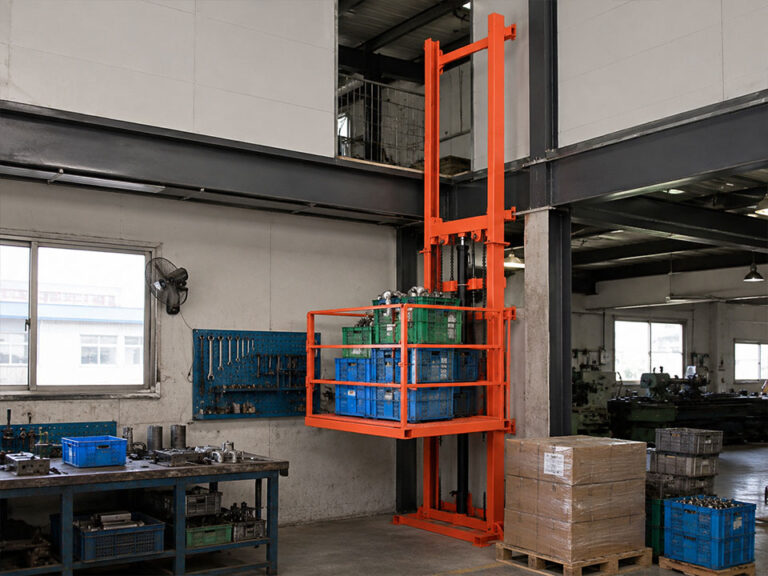
And if the operation includes a hydraulic single rail freight elevator cargo lift platform, the checklist mindset becomes even more important because vertical movement hides risk differently. A loader shows you leaks on the ground. A lift may hide wear in guide rails, cylinders, limit switches, or platform alignment.
Both punish lazy reporting.
The Five-Photo Rule for Serious Defects
I like simple rules because crews remember them.
For Level 3 and Level 4 defects, take five photos:
Photo
Purpose
Full machine photo
Shows unit, setting, and general condition
Close-up defect photo
Shows the actual fault
Hour meter photo
Ties defect to service life
Fleet ID photo
Prevents machine mix-ups
Tag-out photo
Proves machine was removed from service
This takes two minutes. Maybe three if the operator’s gloves are wet.
Worth it.
The Repair Handoff: Where Reports Usually Die
But the report is only half the job.
The other half is the handoff: operator to supervisor, supervisor to mechanic, mechanic to fleet manager, fleet manager back to site. If that chain is loose, defects disappear into chat messages and memory.
A clean workflow looks like this:
Role
Responsibility
Failure Point
Operator
Finds and reports defect before use
Writes vague notes or keeps quiet
Supervisor
Confirms severity and machine status
Pushes machine back into work
Mechanic
Diagnoses and repairs
Fixes symptom, misses root cause
Fleet Manager
Tracks pattern across machines
Ignores repeated defects
Return Approver
Signs machine back into service
No final verification
The return-to-service signature matters. Without it, nobody owns the moment the machine becomes “safe” again.
FAQ
What is a wheel loader inspection checklist?
A wheel loader inspection checklist is a daily safety and maintenance document used to verify brakes, steering, hydraulics, tires, bucket linkage, engine condition, safety devices, cab access, and defect status before the machine works. It helps contractor fleets identify faults, classify risk, and document whether the loader is safe, restricted, or removed from service.
For B2B fleets, the checklist should not be generic. It should include hour meter, site name, operator name, severity level, photos, mechanic notes, and return-to-service approval. Otherwise, it’s just a form with grease on it.
What should be included in a wheel loader defect report?
A wheel loader defect report should include machine ID, inspection time, hour meter, operator name, site location, defect category, exact fault description, severity rating, photo evidence, machine status, mechanic diagnosis, repair action, and final approval. The purpose is to turn a field observation into a traceable maintenance decision.
Avoid vague language. “Loader leaking” is weak. “Fresh hydraulic oil at right tilt-cylinder hose after pressure test” gives the mechanic something real.
When should a wheel loader be tagged out?
A wheel loader should be tagged out when a defect affects braking, steering, visibility, hydraulic control, structural strength, fire safety, tire integrity, or operator protection. Stop-use defects include weak brakes, steering delay, active hydraulic spray, fuel leaks, cracked loader arms, exposed tire cord, failed alarms, and broken seat belts.
No supervisor should override that casually. If the loader can hurt a person or lose control under load, it stays parked until repaired and approved.
How often should contractor fleets inspect wheel loaders?
Contractor fleets should inspect wheel loaders before every shift, after operator changes, and after harsh work such as rock loading, demolition debris, deep mud, long travel, or night operation. Daily inspection is the minimum; high-risk jobs may need more frequent checks.
A loader that passed at sunrise can develop a fault by lunch. Heat, vibration, impact loading, dust, and constant steering cycles are not gentle.
What is the biggest mistake in heavy equipment defect reporting?
The biggest mistake in heavy equipment defect reporting is writing vague defects without severity, evidence, or machine status. A report that does not say whether the loader is safe to use, restricted, or tagged out leaves everyone guessing—and guessing is where downtime and accidents start.
A good report forces action. It says what failed, where it failed, how serious it is, who saw it, what photos exist, and who approved the repair.
CTA
If you’re buying loaders, mini loaders, freight lifts, or site-handling equipment for a contractor fleet, don’t stop at price, color, and delivery time. Ask for the boring stuff: inspection points, defect categories, maintenance access, spare parts logic, service documentation, and stop-use rules.
Contact our equipment manufacturer to discuss mini loaders, freight elevators, lift platforms, and lawn mowers for construction, logistics, agriculture, landscaping, mining, and municipal projects. Founded in 2019, we support global B2B buyers with RFQ review, WhatsApp or email communication, sales team guidance, customization, and export-ready machinery solutions.
Company
About
Solutions
Applications
Electric Freight Elevator
Contact
Products
Mini Loader
Freight Elevator
Lift Platform
Lawn Mower
Electric Mini Loader
Contact
+86 151 0096 5355
North of Xiaozhuangdong Village, Weijiazhuang Town, Longyao County, Xingtai City, Hebei Province, China