Reliable Mini Loader Manufacturer for OEM & Wholesale Equipment Buyers
A trusted industrial equipment manufacturer helps B2B buyers source reliable machinery for construction, material handling, agriculture, landscaping, mining, and environmental applications. Since 2019, we have manufactured mini loaders, freight elevators, lift platforms, and lawn mowers for customers across Western countries, Japan, South Korea, Central Asia, Russia, and other markets.
Longyao County Yuhong Machinery Manufacturing Co., Ltd.
Since 2019
North of Xiaozhuangdong Village, Weijiazhuang Town, Longyao County, Xingtai City, Hebei Province, China
B2B Equipment Inspection Record Readiness for Operations Leaders
Inspection records are not paperwork; they are operational evidence. This guide shows B2B operations leaders how to build inspection logs that hold up during audits, claims, downtime reviews, and buyer due diligence.
I’ve seen inspection folders that looked clean enough to impress a visiting buyer, but when we traced the hour-meter readings, hydraulic leak notes, operator names, and repair closeout dates, the whole system fell apart like a cheap binder left in rain. What good is a perfect-looking Equipment Inspection Checklist if nobody can prove the defect was fixed?
That is the ugly truth in B2B equipment operations: inspection records are not made for the mechanic. They are made for the bad day.
The day a customer asks why a machine failed after 38 hours of use. The day an insurance investigator wants service history. The day a contractor says your equipment arrived with worn tires, weak brakes, missing labels, low hydraulic oil, or a damaged guard. The day a plant manager quietly decides whether your company is a supplier or a liability.
OSHA’s own powered industrial truck checklist guidance is blunt about the basics: daily pre-shift inspections are required, and checklists should be adapted by truck type, workplace, manufacturer instructions, and operating conditions. That matters because a generic form rarely protects a real operation. It protects the illusion of control.
Table of Contents
Why Operations Leaders Should Stop Treating Inspection Records Like Admin Work
Most inspection systems fail for one boring reason: the form is built by someone who does not have to use the machine.
So the operator ticks boxes. The supervisor files it. Maintenance sees it late. Procurement never sees the trend. Sales never sees the risk. And leadership only sees the record after something breaks.
Bad setup.
For B2B operations leaders, equipment inspection records should answer five hard questions without a meeting:
Who inspected the equipment?
What condition was found?
Was the defect safety-related, performance-related, cosmetic, or customer-caused?
Who approved continued use?
When was the repair closed?
If the record cannot answer those questions, it is not a readiness system. It is a scrapbook.
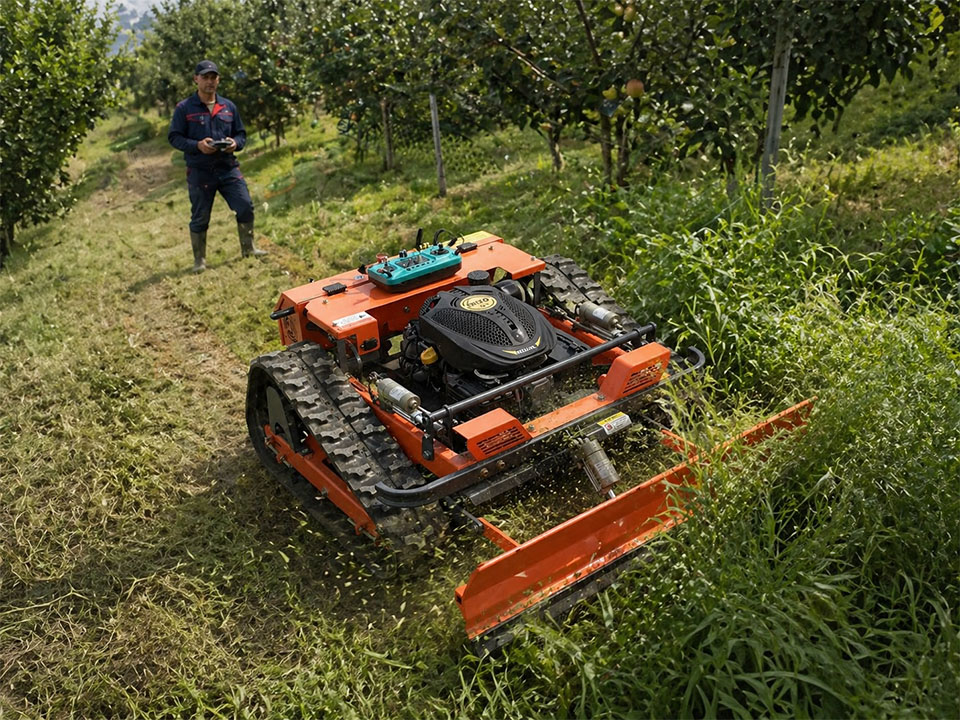
This is especially true for rough-terrain and remote-operated equipment. A 4WD remote control lawn mower for rough terrain use may work in wet grass, slopes, brush, and uneven ground, but every one of those conditions changes inspection priority. Tracks, blade area, emergency stop response, radio control signal, fuel line condition, guards, bolts, vibration marks — these are not “nice-to-check” items. They are the machine’s diary.
The Data Says Contact, Transport, and Machinery Risks Are Not Small
Here is where I get opinionated: if your team still treats inspection logs as “compliance paperwork,” your risk model is already outdated.
BLS reported 5,283 fatal work injuries in the United States in 2023, with transportation incidents accounting for 36.8% of fatal occupational injuries. That is not a small category hiding in the corner; it is the biggest fatal event type.
NIOSH also reported that from 2018 to 2022, 3,677 workers were killed by contact with objects and equipment, and in 2022 alone, likely machinery-related fatalities accounted for 738 of 5,846 total occupational deaths. That is why I don’t trust “visual inspection only” programs when moving machinery, rotating parts, slope work, and hydraulic lift systems are involved.
And for nonfatal cases, the National Safety Council’s 2023–2024 work injury data shows contact incidents had 499,270 days-away-from-work cases, ahead of overexertion and falls/slips/trips. In plain English: equipment contact events are not background noise. They are front-row operational risk.
What an Audit-Ready Equipment Inspection Checklist Actually Includes
A serious Equipment Inspection Checklist has layers. Not pages. Layers.
The first layer is identity: model, serial number, hour meter, attachment type, operator, shift, jobsite, and date. Without this, your inspection record becomes almost useless during a dispute.
The second layer is condition: tires or tracks, blades, forks, platform, mast, hydraulic hoses, battery, engine oil, fuel system, control box, remote signal, brakes, emergency stop, warning labels, guards, bolts, weld points, and abnormal noise.
The third layer is action: safe to operate, restricted use, removed from service, mechanic required, spare part ordered, customer damage suspected, or supervisor review needed.
The fourth layer is closeout: repair date, technician, parts used, approval signature, photos, and return-to-service time.
The fifth layer is pattern detection. This is where most companies are weak. If three machines show hydraulic seepage at 180–220 hours, that is not “three small leaks.” That is a fleet signal.
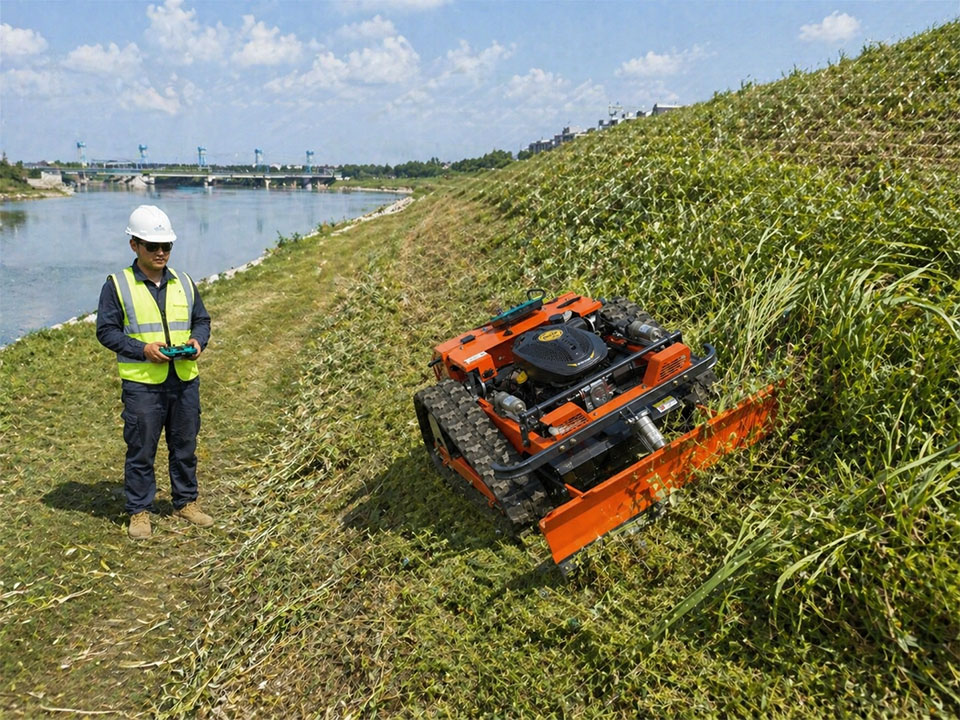
For example, if a buyer is comparing a remote control tracked lawn mower for slopes and rough terrain with a wheeled unit, your inspection record should prove why the tracked unit was chosen: slope traction, ground pressure behavior, undercarriage wear, and blade load history. Not marketing fluff. Evidence.
Lawn Mower
The Record Has to Follow the Machine, Not the Office
A paper form sitting in a cabinet 40 km away is not readiness.
I still like paper as a backup. I don’t like paper as the only source of truth. Photos, timestamps, QR-code machine profiles, repair notes, and signed defect closeouts give leaders something paper rarely gives: sequence.
Sequence beats memory.
When a remote control 4WD lawn mower with gas engine power comes back from a contractor, the record should show fuel system condition, air filter status, blade spindle noise, tire cuts, remote controller response, emergency stop test, and any abnormal vibration. If that data is missing, the next customer inherits yesterday’s uncertainty.
And here is the part many sellers hate hearing: buyers are getting better at asking for proof. Not brochures. Proof.
Inspection Record Readiness Framework for B2B Operations
Readiness Area
Weak Record Practice
Audit-Ready Practice
Operations Leader’s Test
Equipment identity
“Mower checked”
Model, serial number, attachment, hour meter, operator, date, shift
Can we link this record to one exact unit?
Inspection detail
Generic yes/no boxes
Component-level checks by machine type and environment
Would a mechanic know what failed?
Defect handling
“Needs repair”
Severity, restriction status, assigned technician, closeout date
Can we prove unsafe equipment was stopped?
Photo evidence
None or random photos
Before/after photos tied to defect ID
Can we defend the condition at handover?
Maintenance link
Separate service file
Inspection log connected to equipment maintenance records
Can we show the defect was fixed?
Buyer confidence
Verbal assurance
Exportable PDF or digital log for customer review
Would a skeptical buyer trust it?
Trend analysis
Reviewed only after failure
Monthly defect pattern review by model and usage
Can we prevent repeat failures?
Stop Using One Checklist for Every Machine
This mistake is everywhere.
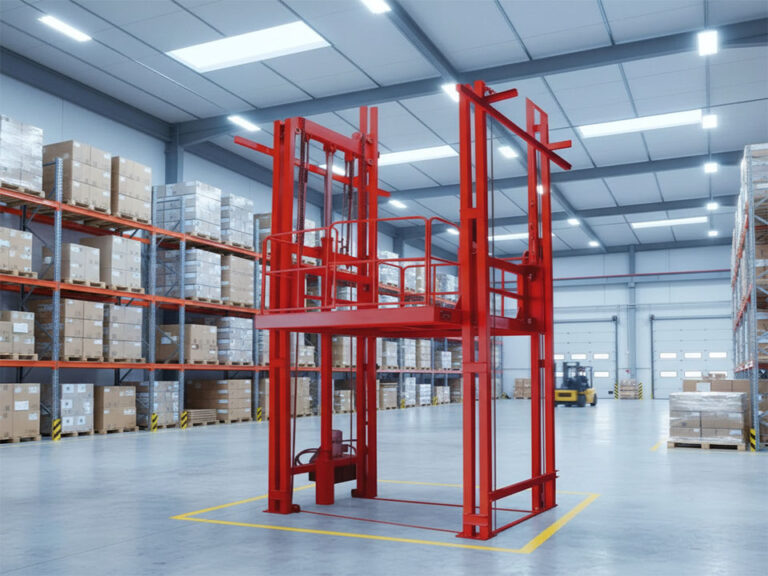
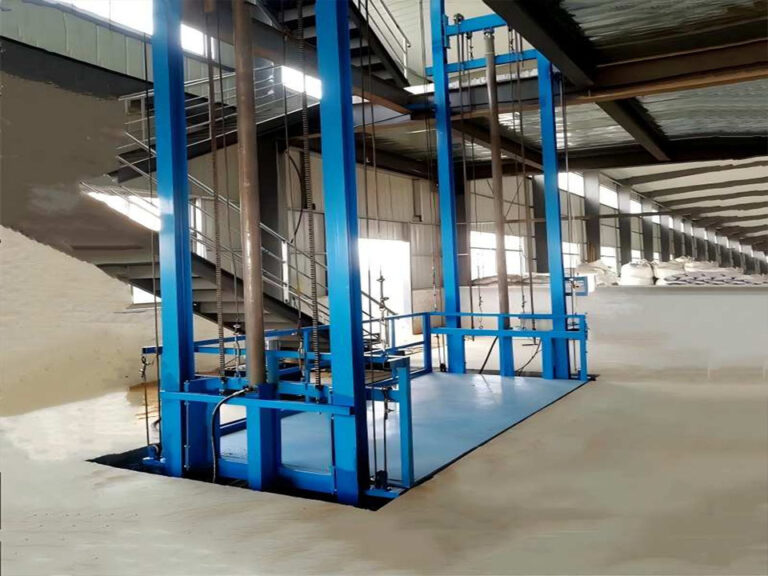
A warehouse pallet truck, a hydraulic cargo lift, a tracked mower, a compact loader, and a slope flail mower do not deserve the same form. They may share some checks — labels, leaks, controls, guards, abnormal sound — but the risk profile is different.
A heavy-duty remote control tracked flail mower for slopes needs a slope-work inspection block: track tension, flail rotor condition, debris wrapping, remote range, emergency stop, slope angle notes, guarding, and hydraulic temperature after load. If your form does not ask those questions, the operator probably won’t volunteer the answers.
The same logic applies to the XT-800CB remote control track lawn mower for rough terrain. Rough terrain creates different evidence needs: vibration loosening, track wear, blade impact marks, controller delay, wet-ground traction, and battery or fuel stability under load.
I frankly believe inspection forms should be built backward from failure modes. Ask: “What would hurt someone, stop production, void a warranty, trigger a claim, or embarrass us in front of a buyer?” Then write the checklist.
The “Ready for Audit” Test I Use
Here is my simple test. I call it the 10-minute audit test.
Pick any machine. Pick any date in the last 90 days. Ask your team to show the inspection record, defect notes, repair action, approval to return to service, and customer handover condition.
If they need three people, two spreadsheets, one WhatsApp thread, and a mechanic’s memory, the system is not ready.
It’s theater.
The better system is not fancy. It is disciplined. Each equipment inspection log must connect inspection, maintenance, safety, and commercial accountability. That means the inspection record should be useful to operations, service, sales, rental, warranty, and management at the same time.
The Hidden Commercial Value of Clean Equipment Maintenance Records
Operations leaders often sell inspection readiness too narrowly. They call it safety. They call it compliance. Fine.
But clean equipment maintenance records also help close B2B deals.
A professional buyer wants fewer surprises. A rental fleet manager wants lower downtime. A contractor wants proof that equipment was checked before delivery. A warehouse manager wants evidence that the lift or mower will not turn into a shutdown event during peak workload.
A clean record package says: we know our machines, we know our failure modes, and we are not hiding behind vague promises.
That is stronger than a discount.
FAQ
What is an Equipment Inspection Checklist?
An Equipment Inspection Checklist is a structured document used to verify the condition, safety status, operating controls, wear points, and maintenance needs of a specific machine before, during, or after use, so managers can prove that risks were checked and defects were handled properly.
In B2B operations, the checklist should not be a generic form. It should match the machine type, usage environment, operator duty, and maintenance rules. A tracked mower working on slopes needs different inspection points from a warehouse platform lift or a compact loader.
Why are equipment inspection records important for operations leaders?
Equipment inspection records are operational proof that a company checked machine condition, identified defects, assigned responsibility, and controlled risk before equipment was used, rented, shipped, or returned from the field, making them useful for audits, claims, service planning, and buyer confidence.
The record protects leadership from guesswork. When equipment fails, nobody should rely on memory. A proper record shows condition history, maintenance actions, operator comments, and return-to-service approval.
How often should B2B equipment inspections be completed?
B2B equipment inspections should be completed before each shift or use cycle for high-risk machines, after harsh working conditions, before customer delivery, after return from rental or field use, and after any repair that affects safety, control, hydraulic, braking, lifting, or cutting performance.
Daily checks are the base level for many industrial machines. But rough terrain, slope mowing, construction work, long shifts, rental turnover, and multiple operators may require more frequent inspection points.
What should be included in an equipment inspection log?
An equipment inspection log should include machine identity, date, operator name, hour meter, jobsite, inspection items, defect descriptions, photos, risk rating, operating restriction, repair assignment, technician closeout, parts used, supervisor approval, and return-to-service confirmation.
The most common failure is missing closeout. A defect without repair proof is an open risk. The log should show not only what was found, but what was done about it.
How do you prepare equipment inspection records for audits?
To prepare equipment inspection records for audits, organize every machine record by serial number, date, operator, defect category, repair status, maintenance action, and approval trail, then verify that inspection findings connect clearly to service records, photos, and return-to-operation decisions.
Do not wait for an audit request. Run a monthly internal sample check. Pick five machines and trace the record from inspection to repair closeout. Weak systems usually fail in the handoff between operator and maintenance.
What is the best format for a B2B equipment compliance checklist?
The best B2B equipment compliance checklist format is a machine-specific, exportable record that combines yes/no checks, defect notes, photo evidence, severity grading, maintenance assignment, and supervisor signoff, while keeping the form simple enough for operators to complete accurately under real working conditions.
A checklist that is too long becomes fiction. A checklist that is too short becomes useless. The sweet spot is practical detail: enough evidence for an audit, not so much friction that operators stop caring.
CTA
If your equipment inspection records cannot defend the machine, the operator, the service team, and the buyer relationship, rebuild the system now — not after the claim. For B2B operations leaders handling remote-control mowers, rough-terrain equipment, loaders, lifts, or mixed fleets, the inspection checklist should be treated as a commercial asset, not a forgotten form.
Contact our equipment manufacturer to discuss mini loaders, freight elevators, lift platforms, and lawn mowers for construction, logistics, agriculture, landscaping, mining, and municipal projects. Founded in 2019, we support global B2B buyers with RFQ review, WhatsApp or email communication, sales team guidance, customization, and export-ready machinery solutions.
Company
About
Solutions
Applications
Electric Freight Elevator
Contact
Products
Mini Loader
Freight Elevator
Lift Platform
Lawn Mower
Electric Mini Loader
Contact
+86 151 0096 5355
North of Xiaozhuangdong Village, Weijiazhuang Town, Longyao County, Xingtai City, Hebei Province, China