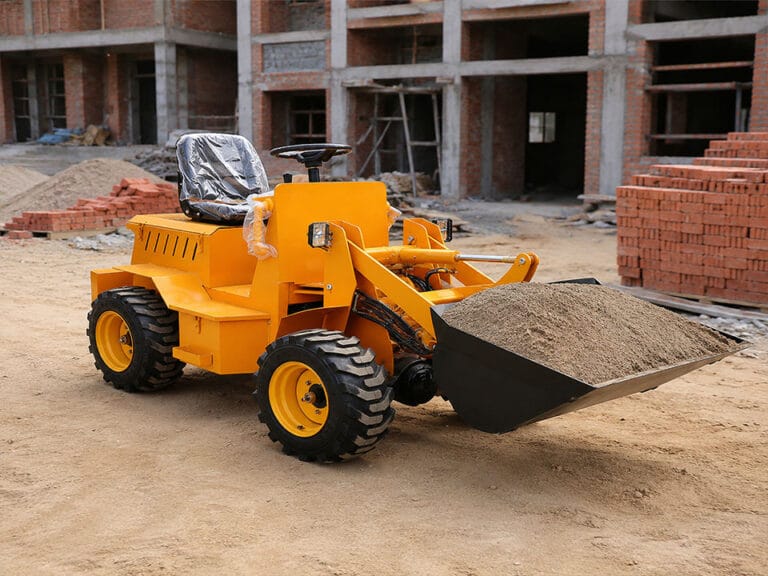
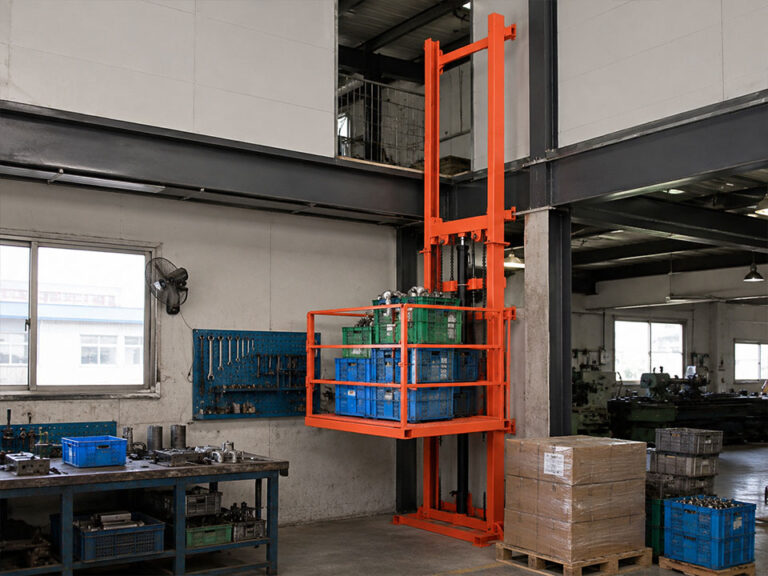
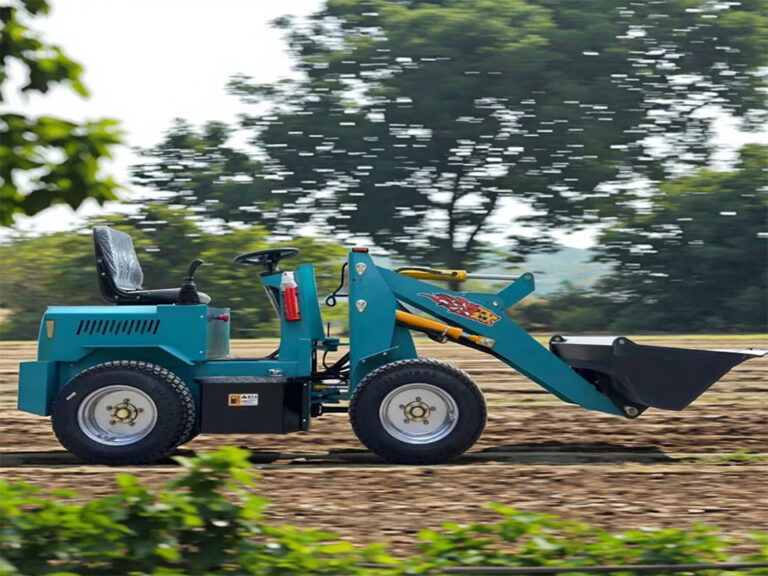
Reliable Mini Loader Manufacturer for OEM & Wholesale Equipment Buyers
A trusted industrial equipment manufacturer helps B2B buyers source reliable machinery for construction, material handling, agriculture, landscaping, mining, and environmental applications. Since 2019, we have manufactured mini loaders, freight elevators, lift platforms, and lawn mowers for customers across Western countries, Japan, South Korea, Central Asia, Russia, and other markets.
Longyao County Yuhong Machinery Manufacturing Co., Ltd.
Since 2019
North of Xiaozhuangdong Village, Weijiazhuang Town, Longyao County, Xingtai City, Hebei Province, China
When to Use a Mini Skid Steer vs. Compact Articulated Loader
A mini skid steer wins tight access. A compact articulated loader wins repeat material handling. The expensive mistake is buying the machine that looks versatile, then discovering it is slow, fatiguing, or too light for the work that actually pays.
I’ve watched crews argue over this at 6:40 a.m., coffee still burnt, trailer ramps half-dropped, one guy swearing the mini skid steer is “all we need” while the operator who actually ran yesterday’s material haul looks like he slept inside a trench box.
Table of Contents
He’s not wrong.
But neither is the other guy.
That’s the annoying part.
A mini skid steer earns its keep when the work is nasty-tight: backyards, fence lines, pool access, side yards, wet lawns, little grading cuts, trench spoils, auger holes, demo junk, and those miserable jobs where a full-size skid steer would chew up the customer’s property before the bucket even hits dirt. A compact articulated loader earns its money somewhere else — pallet forks, mulch, snow, feed, nursery stock, gravel piles, repetitive bucket cycles, and long days where the operator isn’t standing on a platform getting rattled through the knees.
Small machine. Big consequences.
Here’s the ugly truth: most buyers don’t choose between a mini skid steer and a compact articulated loader. They choose between the work they wish they did and the work that actually pays invoices. And those are often two different businesses wearing the same logo on the truck.
The Mini Skid Steer Is a Gate-Crashing Tool, Not a Tiny Wheel Loader
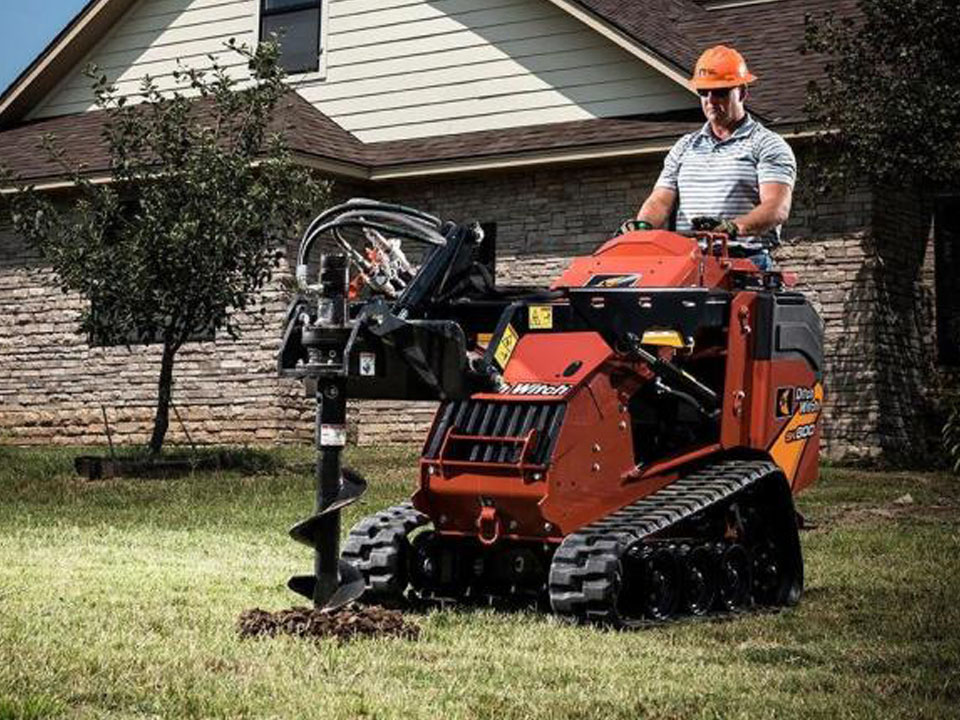
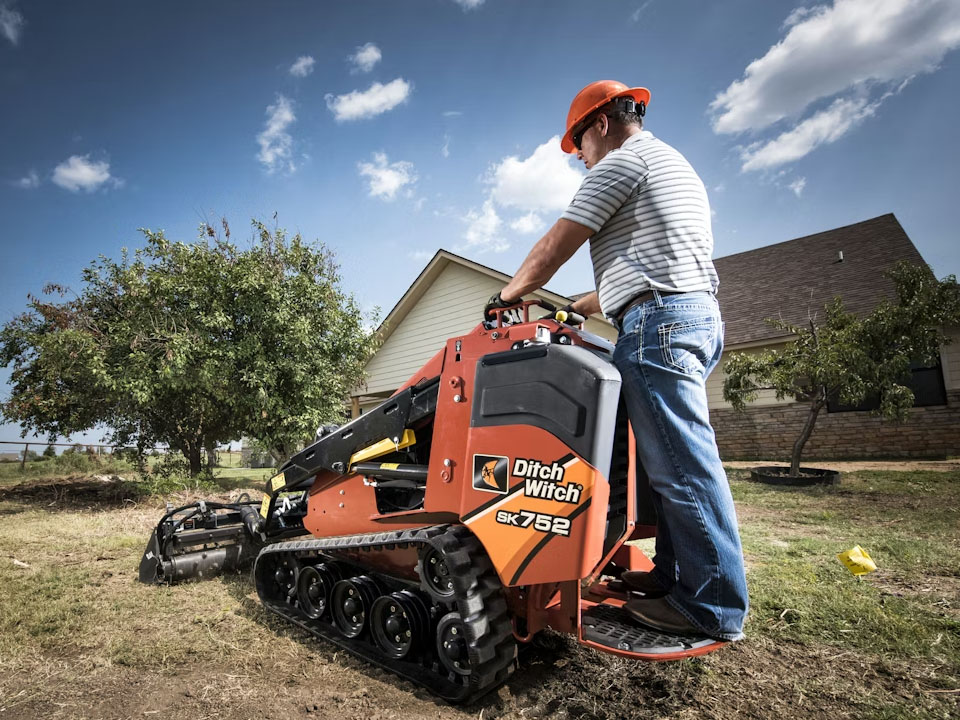
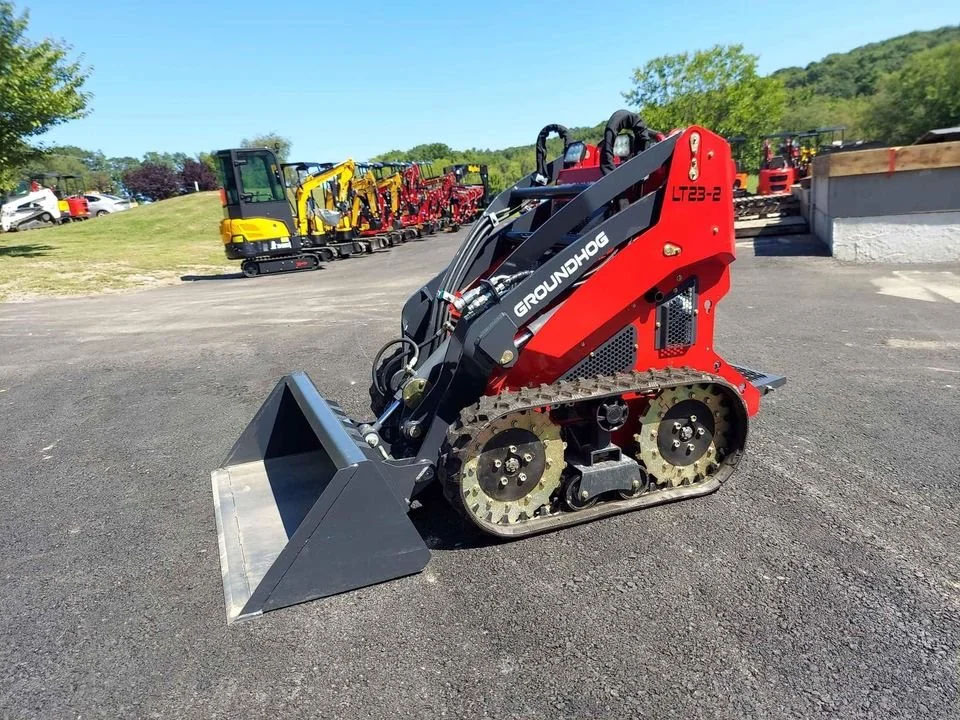
A mini skid steer is a compact stand-on utility loader built for tight access, quick attachment work, and small-site production where the job would otherwise get done with wheelbarrows, shovels, and one angry laborer pretending his back doesn’t hurt.
That’s the polite version.
From my experience, the real reason contractors buy a stand-on skid steer is simpler: they’re tired of losing half a day to hand-carrying spoils through a 36-inch gate while the customer asks why the lawn still looks bad.
Bobcat lists the MT100 mini track loader with a 1,000-pound rated operating capacity, and Bobcat’s mini track loader page notes a 35.6-inch standard-track width, 41.1-inch wide-track width, and 80.9-inch lift height. That isn’t brochure fluff; that’s the difference between getting through the gate and calling the customer to discuss fence removal. Bobcat MT100 key specifications (Bobcat)
And Toro’s Dingo TX 1000 Turbo? Same category, same job-site logic. Toro lists the narrow model at 34.6 inches wide without bucket, 83 inches long without bucket, 4.1 mph ground speed, and 1,000 pounds rated operating capacity, with the wide-track model showing 4.1 PSI ground pressure. Toro Dingo TX 1000 Turbo specifications (Toro)
That’s tight-access money.
Not glamour. Not ego. Money.
Where the Mini Skid Steer Makes Sense
But don’t confuse “compact” with “magic.” A mini skid steer is right when the job has:
Gate access under 40 inches
Short push/carry cycles
Frequent attachment swaps
Small material piles
Soft turf or wet residential soil
Fence, irrigation, tree, pool, or backyard work
One operator trying to feed one or two laborers
I frankly believe the mini skid steer is one of the most honest machines in the compact equipment market because it doesn’t pretend to be a wheel loader, a telehandler, and a production skid steer all at once. It’s a little tracked mule with hydraulics. Use it like that and it prints money. Ask it to do 300-foot material hauls all day and suddenly your “efficient” machine is just a slow punishment platform.
Been there.
Wouldn’t spec it that way.
The Compact Articulated Loader Is the Machine You Buy When Repetition Starts Hurting
A compact articulated loader is a seated, center-pivot loader designed for repetitive material handling, better visibility, faster site travel, lower turf scuffing, and operator comfort over long cycles.
Sounds dry. It isn’t.
This is the machine that starts making sense when the workday becomes: load, carry, dump, reverse, repeat, repeat again, move pallets, stack material, push snow, sweep, fork, bucket, grapple, then do it tomorrow. If that’s your work pattern, standing on a mini skid steer all day is not “lean.” It’s cheap in the bad way.
Avant’s 528 is a useful reference point because the specs tell the story without much drama: 1,130 mm width, 1,420 kg weight, 950 kg lift capacity, 2,790 mm lift height, 12 km/h drive speed, Kubota D1105 Stage V diesel, and 36 l/min auxiliary hydraulic flow at 200 bar. Avant 528 technical specifications (Avant Tecno)
See the shift?
The numbers stop being about squeezing through a gate and start being about lift height, hydraulic flow, travel speed, and keeping an operator productive after lunch.
This is where a compact articulated wheel loader with multi-attachments makes more sense than another stand-on unit. Not because it’s “better.” Because it’s built for the grind: forks, bucket work, snow tools, brooms, grapples, mulch, feed, and job-site ferrying without turning the operator into a vibrating dashboard ornament.
Comparison Table: Mini Skid Steer vs Compact Articulated Loader
Decision Factor
Mini Skid Steer / Stand-On Skid Steer
Compact Articulated Loader / Small Articulated Loader
Best use case
Tight access, short-cycle work, residential jobs, trenching, augering, small grading
Often around 4 mph class on many mini track loaders
Often faster, especially on open sites
Surface protection
Good with tracks, but turning can still disturb turf
Strong when articulated steering and proper tires reduce scuffing
Operator comfort
Acceptable for short bursts
Better for long shifts
Attachment work
Excellent for augers, trenchers, buckets, grapples, breakers
Excellent for buckets, forks, brooms, snow tools, grapples, light grading
Weak point
Fatigue and limited cycle productivity
Width, transport size, and less suitability for ultra-tight access
Best buyer
Fence, irrigation, small hardscape, tree, backyard construction crews
Property maintenance, agriculture, nurseries, snow contractors, material-heavy construction crews
Safety Isn’t a Poster on the Shop Wall — It’s a Routing Problem
You want the uncomfortable version?
A lot of compact-loader accidents start before the engine does. Bad routing. No spotter. Pedestrians walking through machine lanes. Attachments parked like ankle traps. Operators backing up blind because the site got treated like a junk drawer.
NIOSH said in April 2024 that struck-by injuries are the leading cause of nonfatal injuries and the second most common cause of fatalities among construction workers, and it specifically pushed internal traffic control plans where workers and equipment share space. NIOSH struck-by prevention bulletin (CDC)
That matters here. A mini skid steer can keep laborers from hand-bombing material across a yard. Good. A compact articulated loader can reduce fatigue and improve visibility during repetitive loading. Also good. But both machines turn dumb fast when pedestrians wander through swing zones and nobody has a plan.
OSHA’s public statistics page reports 34,696 federal inspections in FY 2024 and 5,283 fatal work injuries in 2023, with a fatal injury rate of 3.5 per 100,000 full-time equivalent workers. OSHA commonly used statistics (OSHA)
And BLS later reported 5,070 fatal work injuries in 2024, down 4.0% from 2023, while its Injuries, Illnesses, and Fatalities page also notes private-industry injury and illness totals around 2.5 million cases in 2024. BLS Injuries, Illnesses, and Fatalities data (Bureau of Labor Statistics)
So, yes, machine choice is a safety decision.
Not in a soft way. In a “who’s walking behind the bucket while the operator is watching the load” way.
The Buying Logic Contractors Keep Botching
But price is loud.
That’s the problem.
A mini skid steer looks easier to justify because it’s smaller, easier to trailer, and easier to imagine paying for with tight-access residential work. A compact articulated loader can look like a luxury until you add up operator fatigue, cycle time, tire scuff, pallet work, fork visibility, and the number of hours your crew spends moving the same kind of material every week.
I’d start with the last 20 paid jobs. Not the brochure. Not the dealer demo. The jobs.
Mark each one:
Tight access
Material-heavy
Long travel
Fork-heavy
Soft turf
Attachment-heavy
Snow or seasonal maintenance
Operator in machine over four hours
If tight access dominates, buy the mini skid steer. If repeat material movement dominates, look hard at a compact articulated loader. If your work splits right down the middle, stop hunting for the mythical perfect machine. It doesn’t exist. Own one, rent the other, and quit making one loader do therapy for a bad fleet plan.
For general site work where traction and diesel torque matter, a compact 4×4 all-wheel drive diesel loader for job sites fits the contractor who needs a small machine that can move dirt, carry material, and work around cramped construction areas without jumping into full-size loader bulk.
And if the work is more construction-heavy — bucket cycles, rough yards, material staging, smaller commercial sites — a compact 4×4 diesel mini wheel loader for construction starts looking less like an upgrade and more like the sane default.
The Field Test: Which Machine Wins Where?
Backyard Construction and Fence Installation
Mini skid steer.
Usually.
If the access is narrow, the soil is soft, and the operator needs to auger, trench, backfill, drag spoil, and sneak around finished features, the stand-on skid steer is the safer bet. A compact articulated loader may be nicer to sit in. Doesn’t matter if it can’t get through the gate.
Nurseries, Farms, and Material Yards
Compact articulated loader.
No contest, unless the paths are absurdly narrow.
Forks, bags, nursery stock, feed, compost, pallets, tote bins, snow piles — this is where articulated loaders feel less like compact equipment and more like common sense. The seated position isn’t pampering. It’s production.
Snow Work
Compact articulated loader for open work. Mini skid steer for sidewalks and pinch points.
That’s the split.
Snow exposes weak fleet thinking because speed, visibility, operator heat, tire choice, traction, stacking height, and route length all matter at the same time. A mini skid steer can clear narrow paths. A compact articulated loader can keep pushing after the third hour without turning the operator into a popsicle with forearms.
Tree Work and Debris
Depends on the drag.
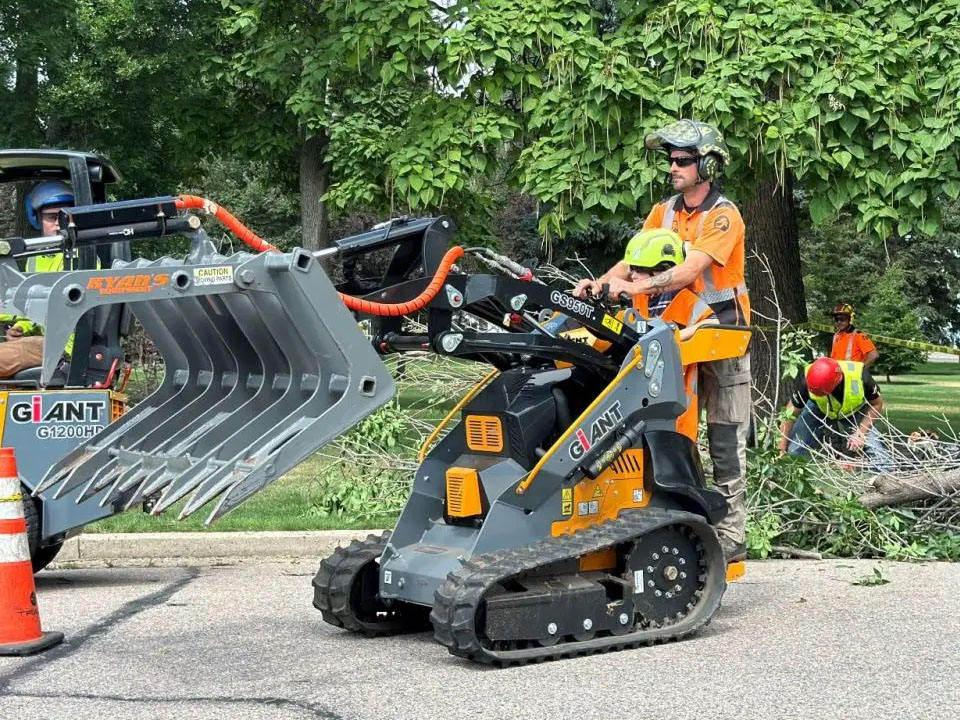
Brush through a side yard? Mini skid steer. Larger logs across a property? Compact articulated loader. Grapple work lies to people because a machine can lift something once in a demo and still be the wrong machine for doing it 80 times on uneven ground.
Rental Fleets
Carry both.
I know, inventory costs hurt. But urban fence guys, irrigation crews, hardscape crews, and tree crews will keep asking for stand-on skid steers. Property managers, farms, snow accounts, nurseries, and material handlers will keep asking for compact articulated loaders. Different customers. Different pain.
The Bottom-Line Decision Matrix
If Your Work Looks Like This
Choose This Machine
Why
Gates, patios, side yards, fence lines
Mini skid steer
Access beats comfort
Augering, trenching, small grading
Mini skid steer
Attachments and maneuverability dominate
Pallet forks and bulk material every day
Compact articulated loader
Lift, visibility, and seated operation win
Long travel paths across a site
Compact articulated loader
Faster, less fatiguing cycles
Soft finished turf
Depends
Tracks help mini skid steers; articulated steering and turf tires help compact loaders
One-day residential jobs
Mini skid steer
Easy transport and quick deployment
All-day operator use
Compact articulated loader
Comfort becomes production
Snow, mulch, compost, feed, nursery stock
Compact articulated loader
Repetition rewards seated machines
FAQs
What is the main difference between a mini skid steer and a compact articulated loader?
A mini skid steer is a stand-on compact utility loader for tight access and short attachment-heavy jobs, while a compact articulated loader is a seated pivot-steer loader built for repetitive material handling, longer travel cycles, higher operator comfort, better load visibility, and less turf disturbance on extended workdays.
That’s the clean split. Gate machine versus cycle machine. Don’t overcomplicate it unless your job mix is genuinely split.
When should I use a mini skid steer?
Use a mini skid steer when the job has narrow gates, cramped residential access, short travel routes, soft ground, and attachment-heavy tasks such as augering, trenching, grading, backfilling, small demolition cleanup, tree debris removal, or moving soil and stone where larger loaders physically don’t fit.
It’s a tight-access tool first. If your operator spends more time traveling than working the attachment, you may be forcing the wrong machine into the job.
When should I use a compact articulated loader?
Use a compact articulated loader when the work involves repeated loading, pallet handling, bulk material movement, snow clearing, nursery stock, farm chores, property maintenance, or longer carry cycles where seated operation, lift height, visibility, speed, and low surface scuffing create more value than ultra-narrow access.
This is where the seated loader starts paying you back quietly. Less fatigue. Better cycles. Fewer ugly turf conversations with customers.
Is a compact articulated loader better for turf protection?
A compact articulated loader can be better for turf protection because articulated steering reduces skid-style tire scrubbing, especially when the machine uses turf tires, correct ballast, smooth throttle input, and planned turning routes across finished grass, estates, sports turf, or maintained commercial property.
That said, tracks spread weight well. A mini skid steer can be gentle too. But a careless operator can tear up turf with anything — rubber tracks, turf tires, or good intentions.
Is a mini skid steer strong enough for construction work?
A mini skid steer is strong enough for many small construction jobs, including trenching, augering, grading, backfilling, moving debris, hauling soil, and feeding crews with buckets or grapples, but it is not the right substitute for heavier loaders when lift height, long carries, or high-volume loading dominate.
The phrase “for its size” is doing a lot of work here. Respect the limits and it’s profitable. Ignore them and it’s just a slow, expensive wheelbarrow.
Which machine is better for a small contractor’s first loader?
A mini skid steer is usually the better first loader for tight-access residential contractors, while a compact articulated loader is usually better for businesses built around material handling, property maintenance, snow work, nursery operations, farming support, or all-day loading where operator comfort and cycle time matter.
My bias? Buy the machine that solves your most common paid problem, not the one that looks most versatile on YouTube.
Final Thoughts: Stop Buying the Brochure Version of Your Business
Here’s what I’d do before signing anything.
Take your last 20 jobs. Put them on paper. Circle every job where width killed productivity. Circle every job where material hauling killed productivity. Then count the circles.
If width is the villain, spec a mini skid steer and the attachments that earn: bucket, grapple, auger, trencher, maybe forks if you’re realistic about load size.
If hauling is the villain, stop pretending a stand-on skid steer is “basically the same thing.” It isn’t. Start looking at a compact articulated loader, especially if your work includes pallets, mulch, snow, feed, compost, gravel, nursery stock, or long carry routes.
And if both problems show up every week?
Fine. That’s not failure. That’s fleet segmentation. Own the machine that works five days a week. Rent the one that saves the weird job.
Contact our equipment manufacturer to discuss mini loaders, freight elevators, lift platforms, and lawn mowers for construction, logistics, agriculture, landscaping, mining, and municipal projects. Founded in 2019, we support global B2B buyers with RFQ review, WhatsApp or email communication, sales team guidance, customization, and export-ready machinery solutions.
Company
About
Solutions
Applications
Electric Freight Elevator
Contact
Products
Mini Loader
Freight Elevator
Lift Platform
Lawn Mower
Electric Mini Loader
Contact
+86 151 0096 5355
North of Xiaozhuangdong Village, Weijiazhuang Town, Longyao County, Xingtai City, Hebei Province, China