Reliable Mini Loader Manufacturer for OEM & Wholesale Equipment Buyers
A trusted industrial equipment manufacturer helps B2B buyers source reliable machinery for construction, material handling, agriculture, landscaping, mining, and environmental applications. Since 2019, we have manufactured mini loaders, freight elevators, lift platforms, and lawn mowers for customers across Western countries, Japan, South Korea, Central Asia, Russia, and other markets.
Longyao County Yuhong Machinery Manufacturing Co., Ltd.
Since 2019
North of Xiaozhuangdong Village, Weijiazhuang Town, Longyao County, Xingtai City, Hebei Province, China
B2B Freight Elevator Downtime Reduction Plan for Facility Managers
A practical downtime reduction plan for freight elevators in factories, warehouses, ports, and mixed-use facilities. Built for facility managers who need fewer shutdowns, cleaner service windows, and better maintenance accountability.
Then one Tuesday morning, the freight elevator stops between floors with 1.4 tons of palletized stock inside, three forklifts queued near the loading bay, a warehouse supervisor shouting into a radio, and the facility manager suddenly discovering that “we service it when needed” was never a maintenance strategy at all.
Sound familiar?
I’ve seen this pattern too many times in B2B facilities. Nobody panics about a freight elevator when it runs. The machine is boring. Ugly. Hidden in the back of the building. But when it stops, it becomes the most expensive square meter in the facility.
And here’s the hard truth: most freight elevator downtime is not random. It is usually built into the site by lazy inspection habits, vague service records, cheap parts, poor loading discipline, and managers who treat Freight Elevator Maintenance like a cost center instead of a production-control system.
Table of Contents
Why Freight Elevator Downtime Hurts More Than Managers Admit
A passenger elevator failure annoys people. A freight elevator failure stops movement.
That difference matters.
For a facility manager, freight elevator downtime can hit several cost points at once: labor waiting time, delayed outbound shipments, overtime repair callouts, temporary manual handling, safety exposure, and angry internal departments blaming maintenance for everything. In B2B sites, the elevator is rarely “just an elevator.” It is part of the material-flow chain.
We should say it plainly. If your freight elevator is connected to receiving, mezzanine storage, production feeding, cold storage transfer, parts movement, or port-side cargo handling, then downtime becomes an operations problem, not just a mechanical problem.
This is why I often compare elevator planning with rough-terrain equipment management. Machines working in dirty, heavy-duty environments need inspection discipline. The same mindset used for a remote control tracked lawn mower for slopes and rough terrain applies here: environment beats brochure promises every time.
Dust, shock, humidity, loading abuse, and operator shortcuts are not small details. They are the failure recipe.
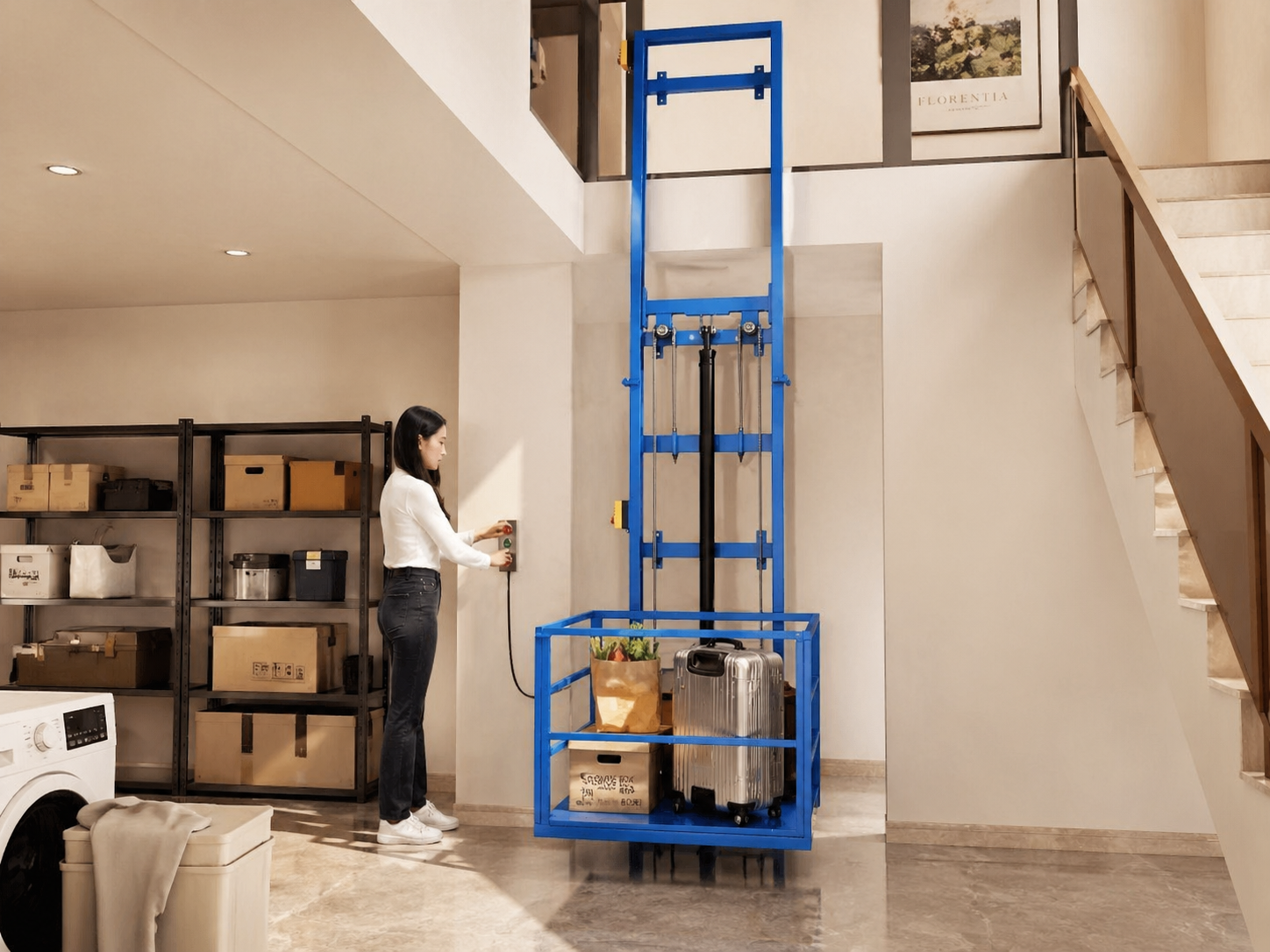
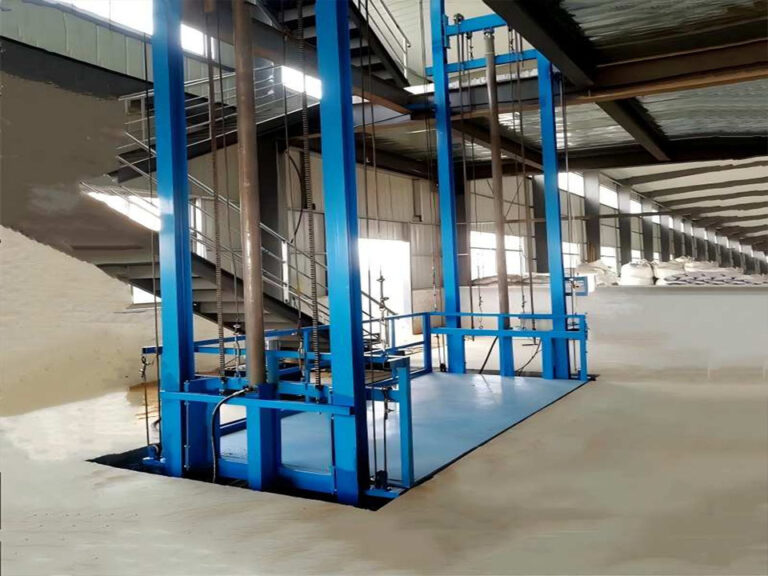
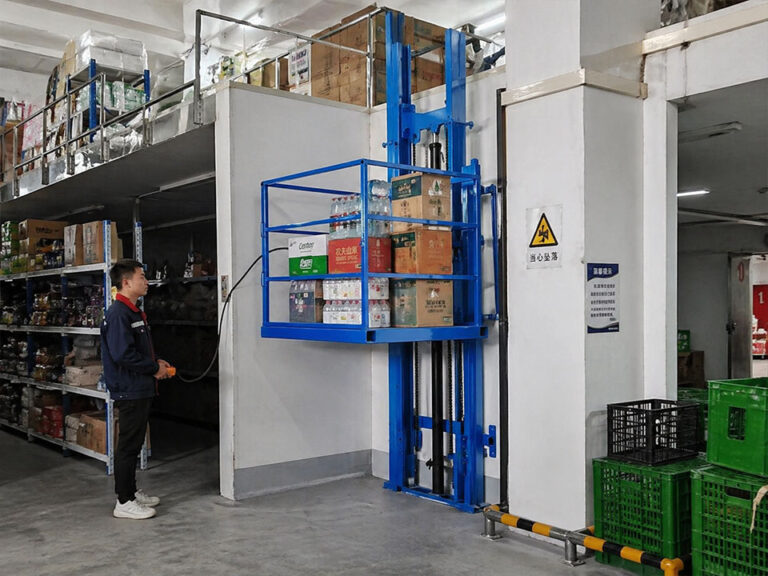
Small Hydraulic Lift
The Dirty Cause Nobody Wants to Discuss: Bad Loading Behavior
Most freight elevator problems do not start in the control cabinet.
They start with people.
A pallet is pushed in off-center. A cart hits the door sill. A forklift driver nudges the threshold because he is “saving time.” Someone loads 1,200 kg onto a platform rated for 1,000 kg because the load “looks fine.” Another person blocks the landing door with a steel bin. Nobody writes it down.
Then, six months later, the facility manager asks why the door lock keeps failing.
Really?
Freight Elevator Maintenance has to include behavior control. Not just grease, oil, and inspection boxes. The plan must control how people load, unload, report noise, report vibration, and react when the elevator starts moving slower than usual.
A good downtime reduction plan has three layers:
Mechanical prevention
Electrical and control reliability
Human-use discipline
Miss the third one and the first two become expensive theater.
Build a Downtime Reduction Plan Around Failure Modes, Not Calendar Dates
Most facilities still use calendar maintenance because it feels simple. Monthly inspection. Quarterly service. Annual review. Fine. But if the plan only follows dates, it misses actual wear.
A better system ranks failure modes by downtime risk.
Look at these high-risk areas first:
Failure Area
Common Early Warning
Downtime Risk
Facility Manager Action
Landing doors and locks
Door needs repeated closing, uneven gap, clicking sound
High
Inspect weekly, train users not to strike doors
Hydraulic system
Slow lifting, oil smell, platform drift, seal sweating
High
Check oil level, cylinder seals, hose condition
Control cabinet
Intermittent buttons, relay chatter, fault reset frequency
Medium-High
Log fault codes and call service before failure
Guide rails and rollers
Scraping noise, side vibration, rough travel
Medium
Check alignment and lubrication
Limit switches
Overtravel fault, inconsistent stopping height
High
Test during planned service window
Platform floor and threshold
Bent edge, loose plate, forklift impact marks
Medium
Repair before door system damage spreads
Overload protection
Alarm ignored or bypassed
Severe
Lock policy: no override without manager approval
Notice something? The door system is often the villain.
Not glamorous. Not expensive-looking. But doors and landing locks take abuse every day. In my opinion, any Freight Elevator Maintenance plan that treats doors as a minor checklist item is already weak.
Facility Managers Need a 30-60-90 Rule
I like simple rules because complex maintenance programs often die in busy facilities.
Use this:
Every 30 days: inspect the elevator from the user side. Doors, platform floor, buttons, warning labels, oil marks, strange sounds, stopping accuracy.
Every 60 days: review service records and downtime notes. Look for repeat faults, slow travel, reset events, operator complaints, and parts replaced more than once.
Every 90 days: hold a short review with the service provider, warehouse supervisor, safety officer, and facility manager. Ask one brutal question: “What small fault could shut us down next month?”
That question saves money.
A facility manager does not need to become an elevator engineer. But the manager does need pattern recognition. If the same landing door adjustment appears three times in six months, that is not maintenance. That is a warning flare.
The same idea applies to other heavy-duty site machines. A company using a remote control track mulching mower for tough terrain would never ignore recurring track tension problems. Freight elevators deserve the same respect.
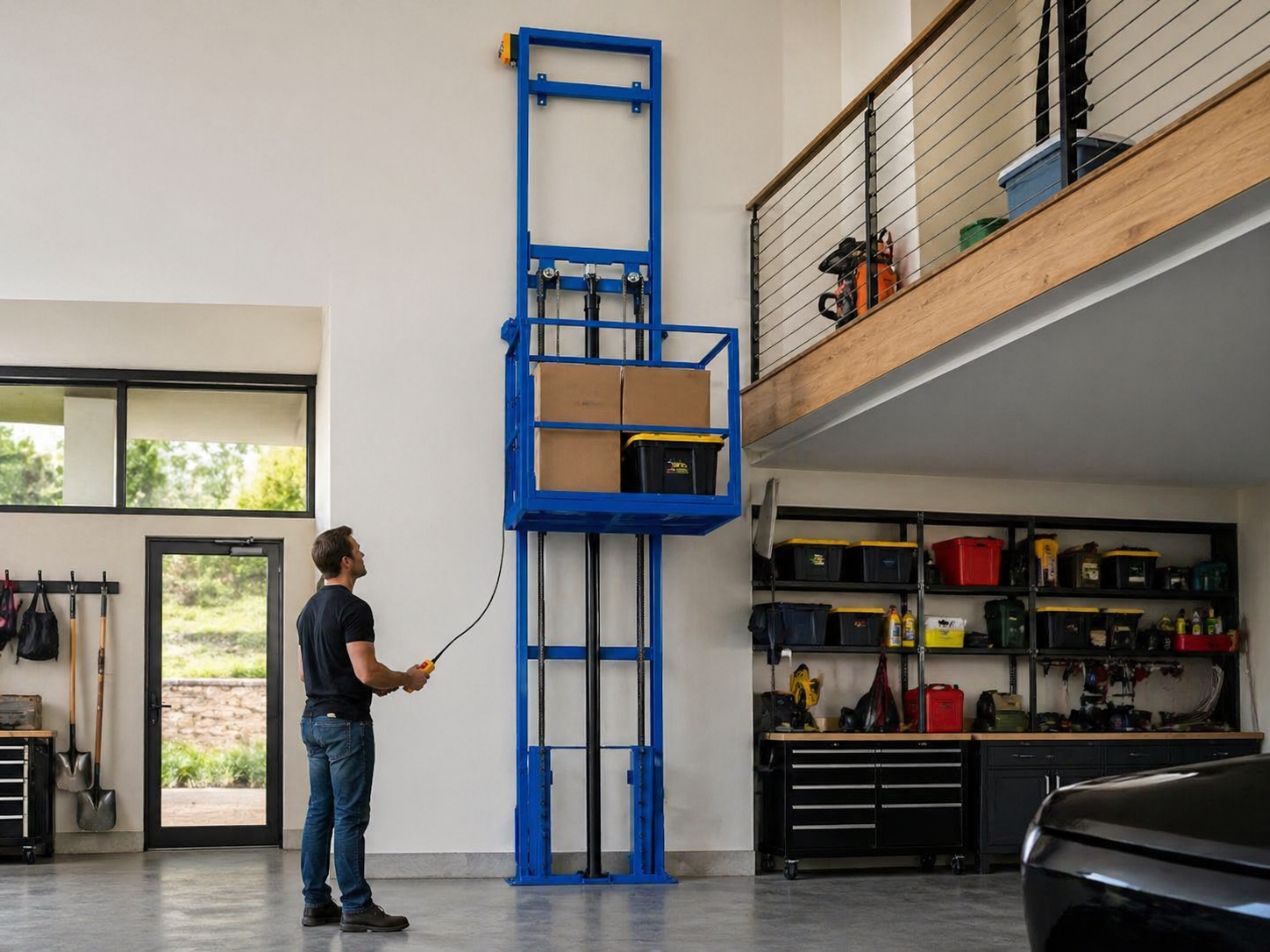
Small Hydraulic Lift
Create a Service Window Before the Elevator Creates One for You
Emergency service is expensive because it is chaotic.
Planned service is cheaper because you control the timing, labor, access, and production impact. That is the entire point of a freight elevator downtime reduction plan.
A real service window should include:
Service Window Item
Who Owns It
Minimum Standard
Shutdown time
Facility manager
Confirm at least 72 hours ahead
Load movement backup
Warehouse/operations
Move priority goods before shutdown
Access clearance
Site supervisor
Clear landing areas and machine access
Safety control
Safety officer
Lockout/tagout plan and signage
Service tasks
Elevator contractor
Written scope before arrival
Test load
Maintenance team
Confirm rated load test method when required
Restart approval
Facility manager
Sign off only after function test
And please, do not schedule maintenance during peak inbound or outbound windows. I know that sounds obvious. It still happens.
Bad planning turns a 3-hour service into a 9-hour argument.
The Maintenance Log Must Be Useful, Not Pretty
I frankly believe most maintenance logs are written to satisfy audits, not to prevent downtime.
Too neat. Too vague. Too useless.
“Checked elevator, normal operation” tells me almost nothing. What was checked? Door lock? Oil level? Landing accuracy? Control fault history? Hydraulic hose condition? Emergency stop? Overload alarm? Guide rail lubrication?
A better entry looks like this:
“2026-04-30, 09:20. Platform stopped 18 mm below second-floor landing with 850 kg test load. Door lock at L2 required second close attempt twice in 10 cycles. Oil level normal. No visible hose leak. Recommend landing door adjustment within 14 days.”
That is a record a manager can use.
For B2B facilities, I recommend recording at least these fields:
Record Field
Why It Matters
Date and exact time
Helps connect faults with shift, load type, or weather
Floor/landing affected
Door faults are often location-specific
Load weight estimate
Separates machine fault from overload abuse
Symptom description
Prevents vague “not working” reports
Fault code or service note
Helps contractor diagnose faster
Photos or short video
Captures intermittent issues
Action taken
Shows whether the issue was fixed or only reset
Next review date
Prevents “forgotten” defects
This is also where facility manager elevator maintenance becomes a leadership issue. If operators are afraid to report minor faults because they think they will be blamed, your log will be clean right up until the machine fails.
Clean logs can lie.
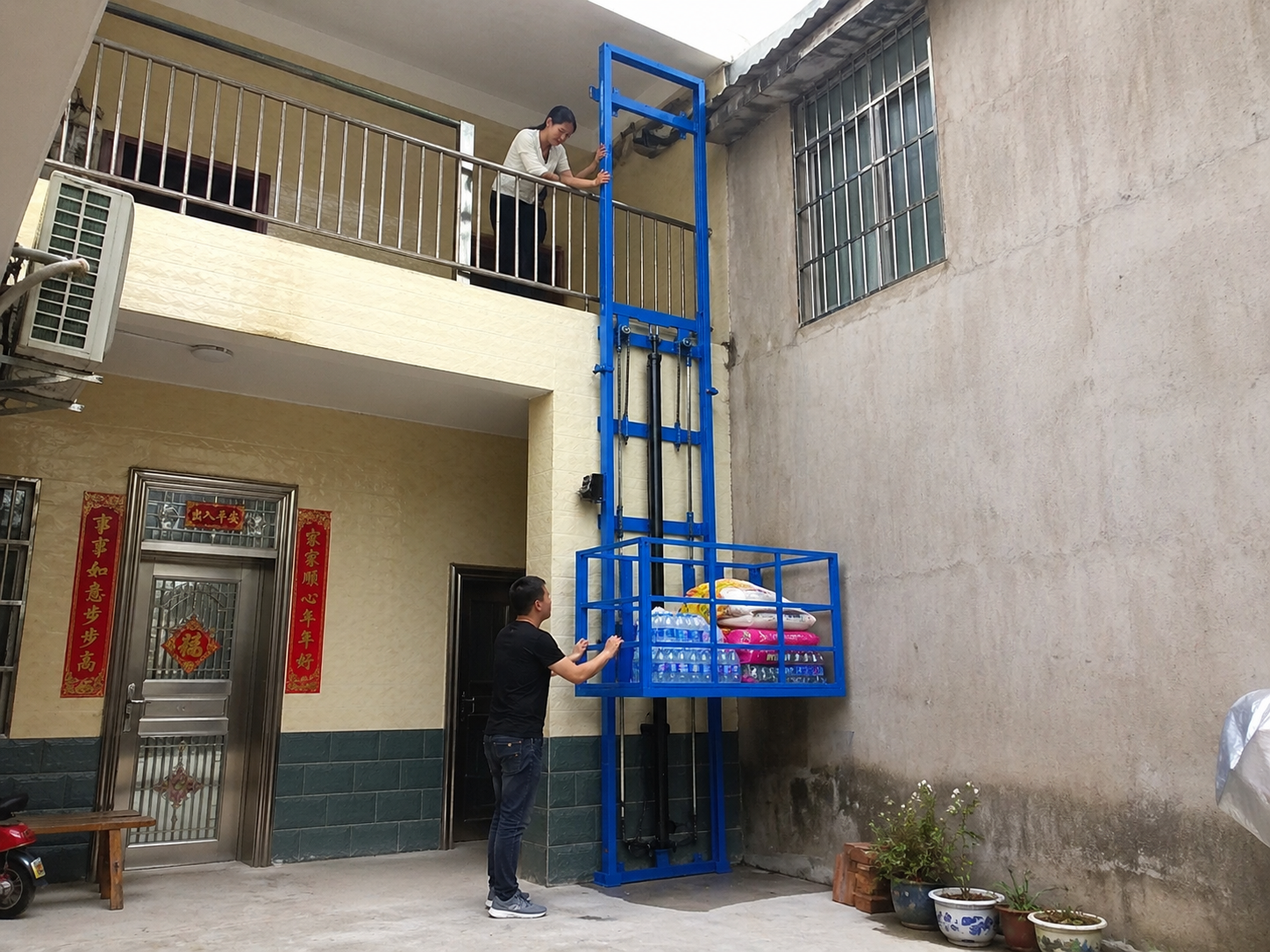
Small Hydraulic Lift
Don’t Ignore Environment: Freight Elevators Age Differently by Site
A freight elevator inside a dry, clean, light-duty parts room does not age like one beside a wet loading dock.
Environment changes maintenance frequency.
A port facility has salt air, wind-driven dust, forklifts, vibration, and irregular cargo. A food warehouse may have washdown humidity, cold-room temperature shifts, and strict hygiene movement. A metalworking plant may have abrasive dust and heavy point loads. A rural warehouse may deal with insects, mud, voltage fluctuation, and uneven operator training.
That is why “standard maintenance interval” is only a starting point.
If your site is dirty, wet, high-cycle, or high-impact, shorten the inspection interval. If your freight elevator carries concentrated loads, check platform deformation and guide wear more often. If users strike doors with pallet jacks, inspect landing hardware weekly.
I would rather see a boring weekly inspection than a heroic midnight repair.
Here is another ugly truth: buying the cheapest replacement part often creates the next emergency call.
For freight elevator preventive maintenance, facility managers should classify spare parts into three groups:
Part Category
Examples
Stocking Advice
Fast-wear items
Buttons, rollers, seals, indicator lamps
Keep basic stock if elevator is production-critical
Risk-control items
Door locks, limit switches, overload sensors
Confirm supplier lead time and approved models
Major components
Hydraulic pump, cylinder, controller, motor
Do not overstock blindly; create emergency sourcing plan
The goal is not to turn your maintenance room into a warehouse. The goal is to prevent a $30 sensor from stopping a $300,000 production day.
And yes, I have seen sites wait days because a basic landing-door component was not available locally. Nobody remembered it during budget season. Everybody remembered it during failure.
Use Simple Downtime Metrics, Not Corporate Fog
Managers love dashboards. Sometimes dashboards hide the problem.
For Freight Elevator Maintenance, track five numbers:
Metric
Target Use
Downtime hours per month
Shows business impact
Emergency calls per quarter
Measures planning failure
Repeat fault rate
Exposes poor repair quality
Mean time to repair
Shows contractor response and parts readiness
Preventive completion rate
Shows whether planned work is actually done
Keep it visible.
If emergency calls are rising while preventive completion looks perfect, your checklist is probably too shallow. If repeat faults are high, your contractor may be resetting instead of fixing. If downtime hours spike after new operators start, training is the issue.
Data is not magic. It is a flashlight.
Facility Manager Elevator Maintenance Checklist
Use this as a practical weekly field check. It is not a replacement for certified elevator service, but it catches early signs before they become shutdowns.
Weekly Check
Pass/Fail
Notes
Landing doors open and close smoothly
Door locks engage without repeated attempts
Platform stops level at each floor
Buttons respond on first press
Emergency stop works during test procedure
Warning labels are visible and readable
No oil leakage near cylinder or power unit
No abnormal vibration or scraping sound
Platform floor has no bent edges or loose plates
Overload warning is functional and not bypassed
Landing areas are clear of stored goods
Operators are following load-centering rules
For mixed equipment sites, I also recommend applying one shared maintenance culture across machines. A team that checks a compact tracked remote control loader for rough terrain before use should understand why a freight elevator deserves the same pre-use discipline.
Different machine. Same management failure if ignored.
How to Reduce Freight Elevator Downtime Without Overcomplicating It
Start with the machine. Then follow the money.
Which elevator stoppage costs the most? Which landing fails most often? Which department abuses the equipment? Which shift reports the fewest faults? Which spare part has the longest lead time? Which service task keeps getting postponed?
This is where many facility managers get uncomfortable because the answers are not always mechanical. Sometimes the worst downtime source is a department head who refuses to release the elevator for planned service. Sometimes it is an operator who overloads the platform because the company rewards speed and ignores damage. Sometimes it is a procurement team buying parts from whoever is cheapest this month.
Maintenance is political. There, I said it.
A strong B2B downtime reduction plan gives the facility manager authority to stop unsafe use, schedule planned shutdowns, demand useful service reports, and reject vague repair notes.
Without authority, the plan is just paperwork.
Recommended 12-Month Freight Elevator Maintenance Rhythm
Month
Main Focus
Manager Question
January
Baseline inspection and service record review
What failed last year?
February
Door lock and landing accuracy check
Which landing gets abused most?
March
Hydraulic oil, seals, hoses, and drift review
Is lifting speed changing?
April
Operator retraining and load-centering audit
Are users causing damage?
May
Control cabinet and button station review
Any intermittent faults?
June
Mid-year downtime report
Are emergency calls dropping?
July
Platform structure and threshold inspection
Any forklift impact damage?
August
Spare parts lead-time review
What part could delay repair?
September
Service provider performance review
Are repairs permanent?
October
Safety device function checks
Are alarms respected?
November
Budget planning for next year
What should be replaced before failure?
December
Annual summary and 90-day action plan
What is the first risk next year?
This rhythm works because it keeps freight elevator downtime reduction alive all year. Not just after a breakdown.
FAQs
What is Freight Elevator Maintenance?
Freight Elevator Maintenance is the planned inspection, servicing, repair tracking, and user-control process used to keep cargo elevators operating safely, reliably, and with minimal unplanned downtime in warehouses, factories, ports, workshops, and other B2B facilities that move goods between floors. It includes mechanical, hydraulic, electrical, door, platform, and operator-use checks.
In practical terms, it means the facility manager should not wait for failure. The plan should include weekly visual checks, scheduled contractor service, load discipline, spare parts planning, and written downtime review.
How can facility managers reduce freight elevator downtime?
Facility managers can reduce freight elevator downtime by tracking failure patterns, scheduling planned service windows, enforcing load limits, inspecting doors and locks frequently, keeping useful maintenance records, and correcting operator behavior before small issues become shutdowns. The best plans combine technical service with daily site discipline.
The fastest wins usually come from door systems, load-centering rules, and better fault reporting. If people stop hiding minor faults, repairs happen earlier and emergency calls drop.
How often should a freight elevator be inspected?
A freight elevator should receive basic user-side checks weekly, formal internal review monthly, service record analysis every 60 days, and contractor-level preventive maintenance according to site duty cycle, equipment design, local rules, and operating environment. Heavy-use or dirty sites should use shorter inspection intervals.
Do not copy another facility’s schedule blindly. A clean indoor storage lift and a high-cycle warehouse freight elevator do not carry the same risk.
What causes most freight elevator emergency calls?
Most freight elevator emergency calls come from door lock faults, poor loading behavior, hydraulic leaks, control signal issues, worn switches, ignored warning signs, and repeated small defects that were reset instead of properly repaired. In many facilities, the root cause is not one part but weak maintenance discipline.
If the same fault returns, do not celebrate every reset. Ask why the failure keeps coming back.
What should be included in a freight elevator maintenance plan?
A freight elevator maintenance plan should include inspection frequency, responsible personnel, load rules, door and lock checks, hydraulic system review, electrical control checks, spare parts planning, service-window scheduling, emergency response steps, downtime metrics, and written repair records that describe symptoms clearly. It should be simple enough for busy teams to follow.
The best plan is not the thickest plan. It is the one people actually use on a noisy Tuesday morning.
Why is planned maintenance better than emergency repair?
Planned maintenance is better than emergency repair because it lets facility managers control shutdown timing, prepare backup material movement, arrange safe access, confirm parts availability, and fix early defects before they interrupt production or warehouse flow. Emergency repair usually costs more because it starts after operations are already disrupted.
A facility manager who owns the service window owns the risk. A facility manager who waits for breakdowns lets the elevator choose the schedule.
CTA
If your freight elevator has already had repeat faults, slow lifting, door issues, oil leakage, or unexplained shutdowns, do not wait for the next emergency call. Build a simple Freight Elevator Maintenance plan now: inspect weekly, review records monthly, schedule service windows early, and train operators to report small problems before they become expensive downtime.
Contact our equipment manufacturer to discuss mini loaders, freight elevators, lift platforms, and lawn mowers for construction, logistics, agriculture, landscaping, mining, and municipal projects. Founded in 2019, we support global B2B buyers with RFQ review, WhatsApp or email communication, sales team guidance, customization, and export-ready machinery solutions.
Company
About
Solutions
Applications
Electric Freight Elevator
Contact
Products
Mini Loader
Freight Elevator
Lift Platform
Lawn Mower
Electric Mini Loader
Contact
+86 151 0096 5355
North of Xiaozhuangdong Village, Weijiazhuang Town, Longyao County, Xingtai City, Hebei Province, China