Reliable Mini Loader Manufacturer for OEM & Wholesale Equipment Buyers
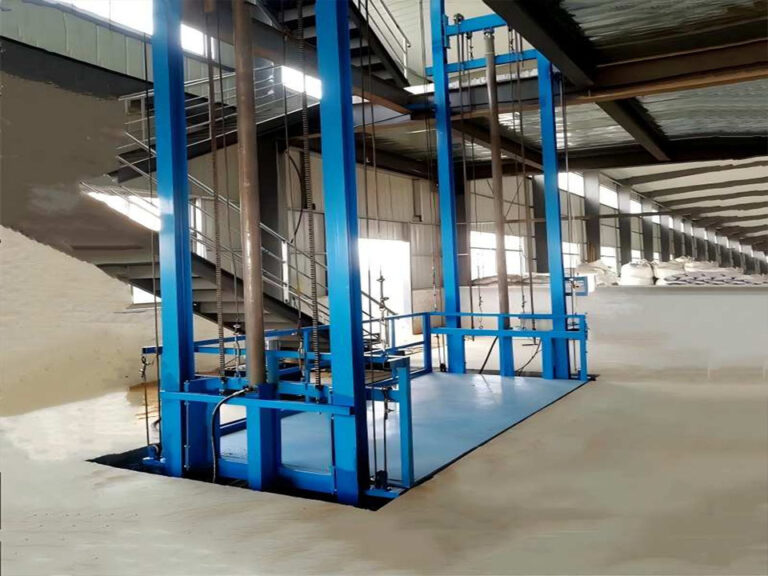
A trusted industrial equipment manufacturer helps B2B buyers source reliable machinery for construction, material handling, agriculture, landscaping, mining, and environmental applications. Since 2019, we have manufactured mini loaders, freight elevators, lift platforms, and lawn mowers for customers across Western countries, Japan, South Korea, Central Asia, Russia, and other markets.
Longyao County Yuhong Machinery Manufacturing Co., Ltd.
Since 2019
North of Xiaozhuangdong Village, Weijiazhuang Town, Longyao County, Xingtai City, Hebei Province, China
udit delays rarely come from one bad form; they come from scattered proof, vague ownership, and CAPA records that cannot survive questioning. This guide shows B2B teams how to document corrective actions with enough discipline to move faster when auditors arrive.
I’ve watched otherwise competent B2B teams lose three weeks over one missing screenshot, one unsigned corrective action report, one supplier email buried in a sales inbox, and one “we already fixed it” claim that nobody could prove under pressure. Sound familiar?
Here’s the ugly truth: most audit delays are not caused by the original defect. They are caused by weak evidence after the defect.
A cracked weld, a wrong hydraulic hose, a missed torque value, an overdue safety inspection, a supplier batch mismatch—these are painful, yes—but auditors can usually understand real production problems if the company shows disciplined containment, root cause logic, action ownership, verification, and closure records. What they do not forgive is a Corrective Action Plan that reads like office theater.
And I mean theater: “Staff retrained.” “Supplier notified.” “Inspection improved.” “Issue closed.”
Closed how?
Table of Contents
Why Corrective Action Recordkeeping Breaks During B2B Audits
Most companies do corrective actions backward. They fix the visible mess first, then try to reconstruct the record later when the auditor asks for proof. That is how delays begin.
In B2B equipment, construction machinery, lifting platforms, industrial components, agricultural machines, and outsourced fabrication, the record often moves through five places: production chat, supplier email, QC spreadsheet, ERP note, and somebody’s phone gallery. By the time an audit finding corrective action needs to be shown, the story is scattered.
I frankly believe this is why many “good” factories look sloppy during audits. Not because they do not fix problems. They do. But they cannot prove the fix in a clean sequence.
A proper Corrective Action Plan should connect the event, the risk, the root cause, the correction, the preventive action, the verification method, the responsible person, the due date, the closure approval, and the retained evidence. Miss two of those, and the auditor starts pulling the thread.
Then the meeting stretches.
The Difference Between Fixing a Problem and Documenting a Corrective Action
A correction fixes the immediate issue. A corrective action removes the cause so the issue does not repeat.
That sounds simple, but in real B2B operations the two get mixed constantly, especially when the customer is angry, the shipment date is close, and the sales team keeps asking whether the goods can still leave before Friday.
Replacing one damaged part is a correction. Updating the incoming inspection rule because a supplier’s packaging allows repeated impact damage is a corrective action. Reworking one mower frame is a correction. Changing the welding fixture, inspection frequency, and sign-off process is a corrective action.
This matters for companies selling rugged machinery such as a remote control tracked lawn mower for slopes and rough terrain because field failures are rarely polite. Mud, vibration, slope work, operator habits, transport damage, and inconsistent maintenance all expose weak quality records fast.
But the same logic applies to industrial buyers auditing factories, distributors, OEM suppliers, and private-label manufacturers.
The Recordkeeping Chain Auditors Actually Want to See
Auditors are not looking for poetry. They want a chain.
Event. Risk. Action. Proof.
When I review a corrective action report, I want to see the original nonconformance record first. Then I want batch numbers, serial numbers, customer complaint details, photos, dates, temporary containment, affected inventory checks, supplier communication, root cause analysis, corrective action owner, target completion date, verification evidence, and final approval.
The sequence matters because audit delays often happen when teams have the evidence but not the trail. A photo without a date is weak. A supplier promise without confirmation is weaker. A completed action without effectiveness verification is almost useless.
For B2B buyers sourcing high-wear outdoor machines like an all-terrain 4WD remote control lawn mower robot, recordkeeping should also include operating condition assumptions: slope angle, vegetation density, working hours, battery/fuel cycle, blade impact conditions, transport route, and maintenance interval. Otherwise, every failure becomes a shouting match about “misuse.”
And yes, suppliers love that word.
Build the Corrective Action Plan Around Evidence, Not Promises
A Corrective Action Plan should not be a motivational document. It is a legal-quality, audit-ready evidence map.
I would structure it around seven fields:
Nonconformance ID Root cause statement Immediate containment Permanent corrective action Preventive control Verification method Closure evidence
The trap is the root cause statement. Most are too lazy.
“Operator error” is not a root cause unless the record also explains why the operator made the error, why the system allowed it, and what control now prevents repeat failure. “Supplier defect” is also not enough. Which supplier? Which batch? Which inspection gate failed? Which acceptance criteria were missing? Which drawing revision was used?
For equipment categories such as a remote control track mulching mower for tough terrain, a weak CAPA may say, “Blade assembly loosened due to poor installation.” A stronger record says, “Blade assembly loosening occurred on serial numbers YH-RCM-240701 to YH-RCM-240718 after 6–9 operating hours; torque verification showed 18–22 N·m against a 35 N·m requirement; work instruction WI-BLD-04 did not require second-person torque witness; corrective action added calibrated torque wrench ID TW-07, 100% torque log, and supervisor sign-off for 30 days.”
That record can survive questions.
The CAPA Folder Structure I Would Use
Do not build recordkeeping around department comfort. Build it around audit retrieval.
A clean CAPA folder should allow a stranger to understand the case in ten minutes. Harsh? Good. Audits are harsh.
CAPA Record Section
What It Must Contain
Bad Version
Audit-Ready Version
Nonconformance summary
Date, product, batch, defect, source
“Customer complaint about machine”
“Complaint on YH-RCM-24-0612, left track derailment after 14 hours, reported 2026-04-18”
“30-unit follow-up inspection, zero misalignment; 60-day field complaint review”
Closure
Approval, evidence list, final date
“Closed”
“Closed by Quality Director, evidence files CAPA-026-A to CAPA-026-H”
This table looks basic. It is not.
The discipline behind it is what saves days during audits.
The “Evidence Pack” Rule: Every CAPA Needs Attachments
I like a simple rule: if a corrective action record has no attachments, it is probably under-documented.
Not always. Usually.
A complete CAPA recordkeeping pack should include photos, inspection sheets, supplier replies, revised SOPs, training attendance records, calibration logs, test reports, engineering change notices, production batch data, and final verification. For a corrective action tied to machinery performance, add field condition records and service feedback.
For example, when selling or sourcing a remote control tracked lawn mower with all-terrain design, a CAPA about track wear should not only include a factory inspection photo. It should include terrain conditions, working slope, belt tension values, idler condition, rubber compound batch, operator notes, and post-fix endurance results.
Why so much detail?
Because audit delays happen when the buyer, supplier, and auditor disagree about whether the action was actually effective.
Do Not Close CAPA Until Effectiveness Is Proven
This is where many teams cheat.
They close the corrective action when the task is done, not when the fix is proven. Big difference.
Changing a supplier is not proof. Updating a checklist is not proof. Training workers is not proof. Installing a new fixture is not proof. These are actions. Proof comes from follow-up inspection, trend data, customer complaint reduction, sampling results, process capability, repeat audit findings, or controlled field feedback.
A good audit corrective action plan should define effectiveness before implementation. That means the record should say what success looks like: zero repeat defects in 30 days, less than 1% rejection over 500 units, no recurrence across three production batches, torque compliance above 98%, or supplier delivery defect rate below 0.5% for two consecutive months.
For heavy-duty machines such as a compact tracked remote control loader for rough terrain, I would not accept “tested OK” as verification. Tested how? Under what load? On what terrain? For how many cycles? Against what acceptance limit?
Vague closure is where audit delays breed.
Assign One Owner, Not a Committee
Committees create delay. Owners close records.
Every Corrective Action Plan needs one accountable owner, even if five departments contribute. The owner should not be “Quality Department.” That is too broad. Put a name or role: Quality Manager, Supplier Quality Engineer, Production Supervisor, Maintenance Lead, Warehouse Manager, Service Engineer.
Then assign dates.
I prefer four dates in the record: issue date, containment deadline, corrective action deadline, effectiveness review date. Without the fourth date, CAPA recordkeeping becomes a graveyard of “closed” actions nobody ever checked again.
And no, a monthly meeting note does not replace ownership.
Digital Recordkeeping Is Useful, But Only If the Logic Is Clean
Some companies buy software and think they bought discipline. They did not.
A messy CAPA process inside expensive software is still messy. Worse, it becomes harder to challenge because everyone assumes the system knows what it is doing.
The real test is retrieval. During an audit, can your team pull the corrective action report, supporting evidence, revision history, approval log, and verification result in under five minutes? Can they show which records were changed after the finding? Can they prove who approved closure? Can they separate correction from corrective action?
If not, the digital system is just a prettier filing cabinet.
How to Document Corrective Actions for Audits Without Creating Paper Junk
The goal is not more records. The goal is better records.
I would rather see a three-page corrective action report with strong evidence than a 19-page file stuffed with screenshots, vague meeting notes, and duplicated supplier emails. Auditors can smell padding. So can buyers.
Use controlled templates. Use fixed field names. Use short root cause statements. Use dated evidence. Use file naming rules like CAPA-2026-014_RootCausePhoto_2026-04-22.jpg or CAPA-2026-014_VerificationBatchData_2026-05-08.xlsx.
Small habits. Big payoff.
The 5-File Minimum for Audit-Ready CAPA Recordkeeping
If your team wants a practical starting point, use this minimum package:
CAPA form Nonconformance evidence Root cause evidence Implementation evidence Effectiveness evidence
That is the skeleton. Add more when risk requires it.
For high-risk B2B products, I would also include customer communication, supplier corrective action request, engineering change notice, revised inspection standard, training record, and management approval. This is especially useful when products operate in high-vibration, outdoor, slope, lifting, hauling, or rough-terrain environments.
The harder the product works, the better the records must be.
Common CAPA Recordkeeping Mistakes That Delay Audits
But the worst mistake is confidence.
Teams say, “We know what happened.” Maybe they do. The auditor does not. Your buyer does not. Your future quality manager six months from now does not. Records must explain the case without relying on memory.
Common mistakes include:
Mistake
Why It Delays Audits
Better Practice
Closing CAPA without verification
Auditor cannot confirm recurrence control
Add effectiveness review date and measurable pass/fail criteria
Using “human error” as root cause
Looks shallow and defensive
Identify process, training, tool, fixture, supplier, or inspection gap
Missing supplier evidence
Buyer cannot see upstream control
Attach supplier corrective action report and approval record
No version control
Auditor cannot tell which procedure applied
Record SOP revision number and approval date
Evidence stored in chat apps
Retrieval is slow and incomplete
Move evidence into controlled CAPA folder
No retrospective review
Past affected products remain unclear
Define serial range, batch range, shipment impact, and customer exposure
No owner
Tasks drift
Assign one accountable owner with due date
I have seen audits slow down for every one of these. More than once.
A Practical Corrective Action Report Template
Use this structure if your team wants something fast and workable:
CAPA ID: Date opened: Source: customer complaint / internal audit / supplier issue / production defect / field service / regulatory finding Product or process affected: Batch, serial number, PO, or project reference: Problem statement: Immediate containment: Affected quantity: Risk level: low / medium / high Root cause method: 5 Why / fishbone / fault tree / process audit / supplier investigation Verified root cause: Corrective action: Preventive action: Owner: Due date: Required evidence: Effectiveness criteria: Effectiveness review date: Closure approval: Final status: open / pending verification / closed / reopened
Do not overdesign it. Overdesigned forms create fake compliance.
What Buyers Should Ask Suppliers Before the Audit
A good B2B buyer should ask for CAPA samples before placing large orders. Not after a problem.
Ask for one closed corrective action report from the past 12 months. Remove confidential customer names if needed. Fine. But look at the bones of the record.
Does the supplier show root cause? Do they show containment? Do they show evidence? Do they show effectiveness? Do they show approval? Do they show recurrence tracking?
If not, expect delays when a real issue happens.
And when the product category involves outdoor machinery, powered movement, hydraulic systems, slope operation, cutting systems, lifting frames, loading arms, or tracked mobility, weak CAPA recordkeeping is not a clerical flaw. It is a business risk.
FAQ
What is a Corrective Action Plan in B2B recordkeeping?
A Corrective Action Plan is a documented process that identifies the root cause of a nonconformity, assigns corrective and preventive actions, defines responsible owners, sets deadlines, and records evidence proving the issue was fixed and will not reasonably recur. In B2B audits, it connects the problem, the action, and the proof.
A strong plan should include containment records, batch or serial references, root cause analysis, implementation evidence, verification results, and closure approval. Without those elements, the plan may look complete on paper but fail during audit review.
How does corrective action recordkeeping reduce audit delays?
Corrective action recordkeeping reduces audit delays by giving auditors a clear, traceable evidence chain from the original finding to final verified closure. When records are complete, dated, owned, and easy to retrieve, auditors spend less time chasing missing proof or asking repeated follow-up questions.
The fastest audit files usually have standardized CAPA IDs, consistent file names, owner assignments, due dates, and verification evidence. The slowest ones depend on memory, email searches, chat screenshots, or verbal explanations from staff.
What should be included in a corrective action report?
A corrective action report should include the nonconformance description, affected product or process, risk assessment, containment action, verified root cause, corrective action, preventive action, owner, deadline, evidence attachments, effectiveness criteria, verification result, and closure approval. These fields make the report audit-ready.
For B2B suppliers, the report should also connect to purchase orders, production batches, serial numbers, inspection records, customer complaints, supplier replies, and revised work instructions when relevant.
What is the difference between correction and corrective action?
A correction removes the immediate nonconformity, while a corrective action removes the cause of that nonconformity to prevent recurrence. Replacing a defective part is a correction; changing the inspection method, fixture, supplier control, or training process that allowed the defect is corrective action.
Auditors care about this distinction because companies often close CAPA records after quick fixes. That creates weak audit evidence. The record must prove not only that the visible defect was handled, but that recurrence risk was controlled.
How long should CAPA records be kept?
CAPA records should be kept according to the company’s quality system, customer contract, product risk, regulatory exposure, and applicable industry requirements, with retention periods clearly defined in the document control procedure. For many B2B manufacturers, keeping CAPA records for several years is a practical baseline.
The more safety-related, high-value, customized, or regulated the product is, the stronger the case for longer retention. Buyers should also check whether customer contracts require specific retention periods for inspection, service, or traceability records.
How do you verify corrective action effectiveness?
Corrective action effectiveness is verified by checking measurable evidence after implementation, such as defect reduction, repeat inspection results, complaint trends, supplier performance data, audit results, field service feedback, or process control records. Verification must prove the action worked, not merely that the action was completed.
Good effectiveness criteria are specific: zero repeat failures across three batches, 98% torque compliance for 30 days, no recurrence within 60 days, or rejection rate below an agreed threshold. Vague statements like “staff trained” or “process improved” are not enough.
CTA
If your B2B operation wants fewer audit delays, stop treating corrective action recordkeeping as back-office cleanup. Build the Corrective Action Plan around proof, ownership, deadlines, and verification from day one. For industrial buyers comparing rugged machinery, tracked systems, and rough-terrain equipment, strong CAPA records are not just paperwork—they are supplier credibility in writing.
Contact our equipment manufacturer to discuss mini loaders, freight elevators, lift platforms, and lawn mowers for construction, logistics, agriculture, landscaping, mining, and municipal projects. Founded in 2019, we support global B2B buyers with RFQ review, WhatsApp or email communication, sales team guidance, customization, and export-ready machinery solutions.
Company
About
Solutions
Applications
Electric Freight Elevator
Contact
Products
Mini Loader
Freight Elevator
Lift Platform
Lawn Mower
Electric Mini Loader
Contact
+86 151 0096 5355
North of Xiaozhuangdong Village, Weijiazhuang Town, Longyao County, Xingtai City, Hebei Province, China