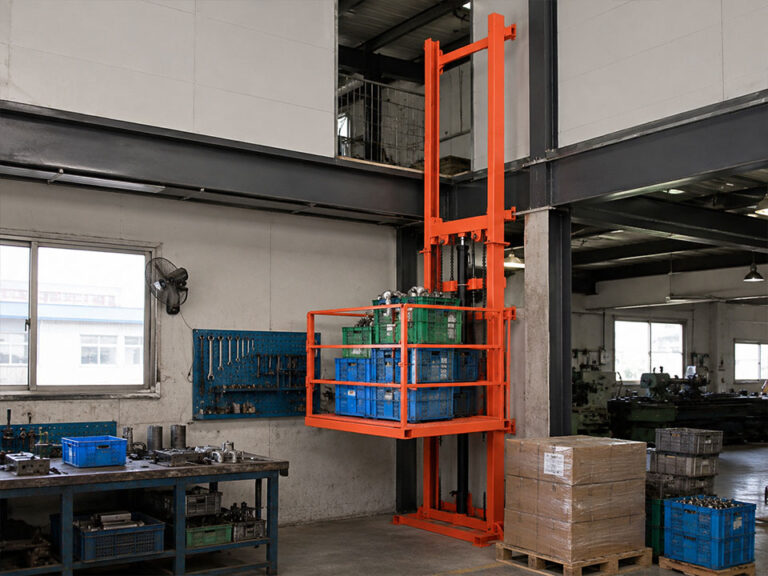
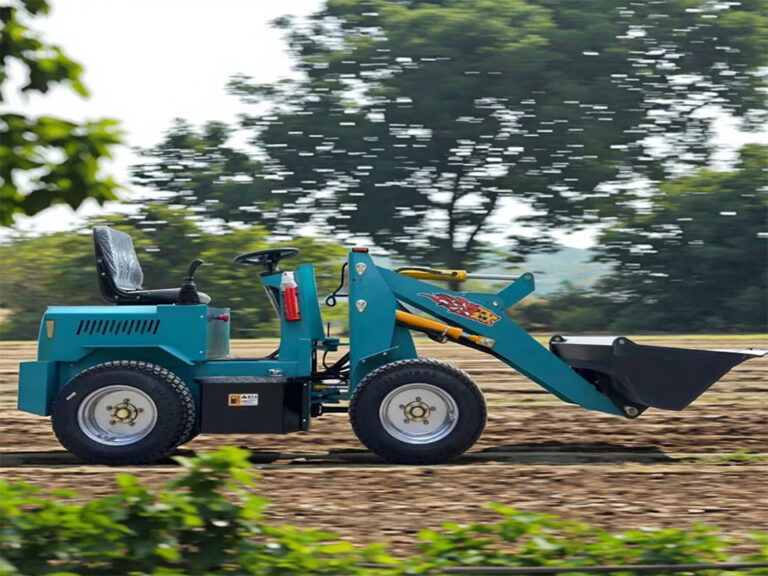
Reliable Mini Loader Manufacturer for OEM & Wholesale Equipment Buyers
A trusted industrial equipment manufacturer helps B2B buyers source reliable machinery for construction, material handling, agriculture, landscaping, mining, and environmental applications. Since 2019, we have manufactured mini loaders, freight elevators, lift platforms, and lawn mowers for customers across Western countries, Japan, South Korea, Central Asia, Russia, and other markets.
Longyao County Yuhong Machinery Manufacturing Co., Ltd.
Since 2019
North of Xiaozhuangdong Village, Weijiazhuang Town, Longyao County, Xingtai City, Hebei Province, China
OSHA Scissor Lift Safety Requirements: B2B Guide for Dealer Networks
Dealer networks cannot treat scissor lift safety as a loose after-sales note. This guide explains OSHA scissor lift safety requirements in plain B2B language, with inspection logic, training duties, and liability pressure points.
And that is the ugly truth most machinery exporters, distributors, rental partners, and regional dealer networks learn too late: the scissor lift may leave the warehouse with paint intact, manuals packed, and hydraulic oil at the right level, but if the buyer’s operator stands on a guardrail, drives on a sloped loading yard, ignores wind limits, or skips a pre-use check, the seller’s phone still rings first. Why pretend safety ends at delivery?
OSHA Scissor Lift Safety Requirements are not just “operator training content.” They are a commercial risk filter. They affect dealer onboarding, rental handover paperwork, maintenance schedules, spare parts claims, demo-day procedures, warranty disputes, and the one messy question nobody wants to answer after an incident: who failed to warn whom?
The U.S. Bureau of Labor Statistics reported 5,283 fatal work injuries in 2023, with a fatal injury rate of 3.5 deaths per 100,000 full-time equivalent workers; it also noted that a worker died every 99 minutes from a work-related injury that year. That number is not scissor-lift-only, but it explains why fall-related compliance language carries weight in B2B equipment procurement.
Table of Contents
The Dealer Network Problem: OSHA Compliance Gets Lost Between Sales and Site Reality
A dealer sells equipment. A contractor uses it. A subcontractor borrows it. A night-shift worker moves it. Then somebody asks whether the scissor lift inspection checklist was completed.
That chain is where safety breaks.
I have seen B2B machinery discussions become almost absurdly focused on platform height, battery capacity, hydraulic cylinder size, and payment terms while the safety file is treated like a PDF nobody opens. But OSHA’s own scissor lift guidance keeps coming back to three plain hazards: fall protection, stabilization, and positioning. OSHA also states that only trained workers should use scissor lifts and that employers should ensure those workers can operate the lift properly.
For dealer networks, that means the selling process should not stop at “machine delivered.” It should include:
Training proof.
A signed pre-use checklist.
A clean maintenance record.
Manufacturer instructions in the buyer’s working language.
A documented handover process for every unit, whether the buyer is a warehouse, contractor, plant maintenance team, supermarket chain, or rental fleet.
And yes, that also applies to mixed equipment dealers who sell compact outdoor machines, remote-control mowing equipment, and construction platforms under one catalog. If your network already distributes 4WD remote control lawn mower equipment for rough terrain, the same dealer discipline—handover notes, operating boundaries, terrain warnings, and service logs—should carry into scissor lift sales.
OSHA Does Not Treat Scissor Lifts Like Toys With Wheels
A scissor lift is a mobile elevated work platform, but OSHA often discusses the hazard profile in relation to scaffold-style risks when the platform is extended and stationary. That matters because the danger is not only “falling off.” It is also tip-over, collapse, electrocution, crushing, overload, and bad positioning near moving equipment.
Here is the hard part: OSHA scissor lift safety requirements are not one single neat rule sitting in a sales brochure. They are pulled from multiple obligations around guardrails, training, maintenance, worksite hazard assessment, manufacturer instructions, and safe work practices. OSHA’s scissor lift guidance specifically says safe use includes maintaining equipment, following manufacturer instructions, training workers, providing needed PPE, and applying safe work practices.
So when a dealer says, “The buyer is responsible,” I partly agree.
Partly.
Because if the dealer network gives vague safety instructions, leaves inspection procedures unclear, or never trains its local resellers on what OSHA-oriented buyers ask for, the commercial damage still comes back through refunds, bad reviews, blocked repeat orders, and distributor distrust.
Guardrails Are Not Decoration
Scissor lifts must have guardrails installed to help prevent workers from falling. OSHA’s scissor lift material references guardrail rules under 29 CFR 1926.451(g) and 29 CFR 1910.29; it also tells employers to train workers to check the guardrail system, stand only on the platform, never stand on guardrails, and keep work within easy reach.
That sounds basic.
But basic is where many incidents start.
A worker cannot reach a pipe bracket, so he climbs the mid rail. Another leans out with both hands on a tool. Somebody puts a box on the platform to gain 12 more inches. The lift was not “defective” in the classic mechanical sense; the use pattern was defective.
Dealer networks should say this bluntly in training material: guardrails are a boundary, not a ladder. If the job cannot be reached from the platform floor, the customer chose the wrong working height, wrong machine position, or wrong access method.
For B2B buyers comparing machinery categories, the same thinking applies across product lines. A customer using a remote control tracked lawn mower for slopes and rough terrain needs slope warnings; a scissor lift buyer needs platform-position warnings. Different machines. Same dealer responsibility: make misuse harder to excuse.
Stabilization: The Rule Buyers Ignore Until the Lift Moves Wrong
OSHA tells employers to select firm, level surfaces away from drop-offs, holes, slopes, bumps, ground obstructions, and debris. It also says outdoor scissor lifts are generally limited to wind speeds below 28 mph, and the lift should not be moved in an elevated position unless the manufacturer’s instructions allow it.
Here is where I get opinionated: many dealer brochures over-sell “mobility” and under-explain “stability.”
That is dangerous.
A scissor lift is not a mini truck with a balcony on top. Once the platform is raised, the machine becomes a vertical risk structure. Wind, potholes, forklift traffic, overloaded materials, and uneven concrete all start to matter more than the buyer expected.
OSHA’s own case example is still brutally useful: during the 2010 Notre Dame football season, a worker raised a scissor lift over 39 feet while filming practice; wind gusts exceeded 50 mph, and the lift tipped over, killing him.
Dealer networks should convert that lesson into simple sales-floor language:
Do not operate outdoors beyond rated wind conditions.
Do not raise on slopes, soft ground, debris, or damaged concrete.
Do not move elevated unless the manual allows it.
Do not exceed rated platform load.
Do not let forklifts, loaders, or trucks enter the lift’s operating zone.
Positioning: The Hidden Killer in Warehouses and Job Sites
Positioning is boring until it kills someone.
OSHA warns that scissor lifts create crushing hazards around fixed objects, moving vehicles, door frames, support beams, and nearby workers. It also highlights electrocution, arc flash, and thermal burn risks near energized power lines; OSHA’s guidance says work locations should not approach electrical sources by at least 10 feet unless required qualified-worker controls are in place.
For dealer networks, this should shape the handover checklist.
Not just “Does the machine go up and down?”
Ask sharper questions:
Will the buyer use it near loading docks?
Will forklift traffic cross the lift zone?
Will the platform pass under beams, mezzanine edges, signage, or lighting?
Will operators work near power lines, busbars, transformers, or temporary site electricity?
Will night-shift staff move the lift without a supervisor?
A dealer selling a remote-control 4WD lawn mower with gas engine power would not ignore slope, debris, and bystander distance. So why should scissor lift dealers ignore overhead steel, dock traffic, and electrical clearance?
Training Requirements: A Certificate Is Not a Magic Shield
OSHA says employers must provide workers training on hazards, including safe work with or near scissor lifts, and the training must include manufacturer instructions, operation while vertical and in transit, material handling, weight limits, worksite hazards such as electrical wires, and reporting defects or maintenance needs.
That is not a one-slide toolbox talk.
For dealer networks, scissor lift training requirements should be packaged into three layers:
First, dealer staff must understand the machine. Salespeople who cannot explain guardrails, wind limits, load ratings, emergency descent, brakes, pothole protection, and charging rules should not run demonstrations.
Second, the buyer’s supervisor must receive handover training. Not only the operator. The supervisor controls shift pressure, schedule shortcuts, and inspection discipline.
Third, local resellers should keep records. Date, machine model, serial number, trainer name, trainee name, language used, checklist version, and signatures.
I know some distributors hate this because paperwork slows deals.
Good.
Unsafe speed is expensive speed.
Scissor Lift Inspection Checklist: What Dealers Should Standardize
A scissor lift inspection checklist should be short enough to use daily, but serious enough to catch defects before the platform rises. OSHA’s scissor lift guidance says manufacturer maintenance and inspection instructions generally include testing controls and components before each use, checking guardrails, and verifying brakes hold the lift in position.
For B2B dealer networks, I would standardize the inspection into four zones:
And when a dealer also sells outdoor equipment such as a heavy-duty remote control tracked flail mower for slopes, this checklist habit becomes a brand advantage: customers begin to see the dealer as a risk-control partner, not a box mover.
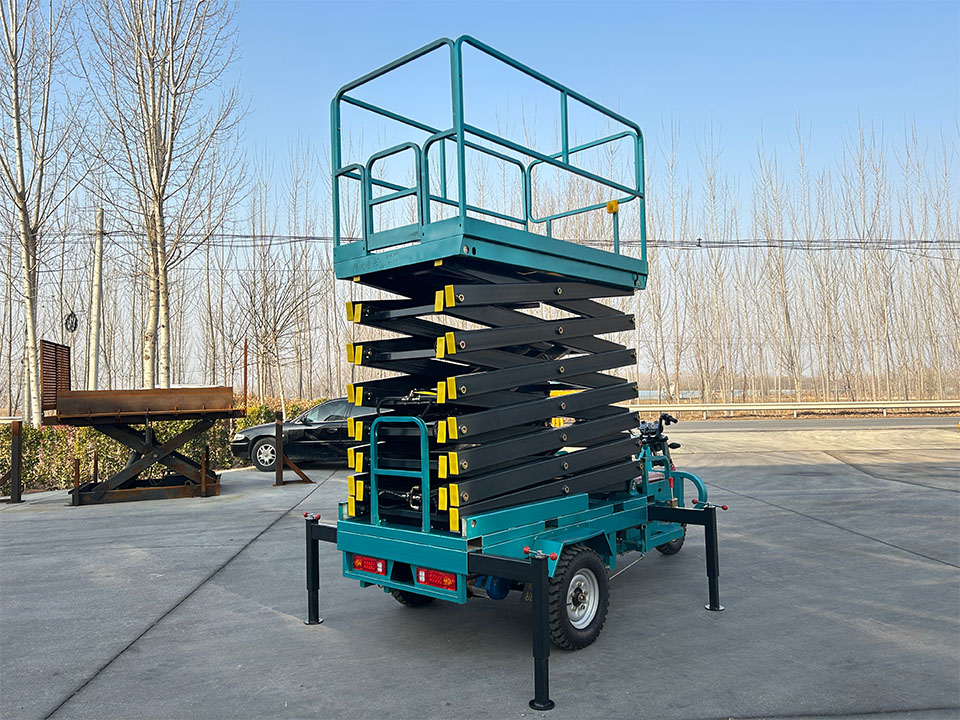
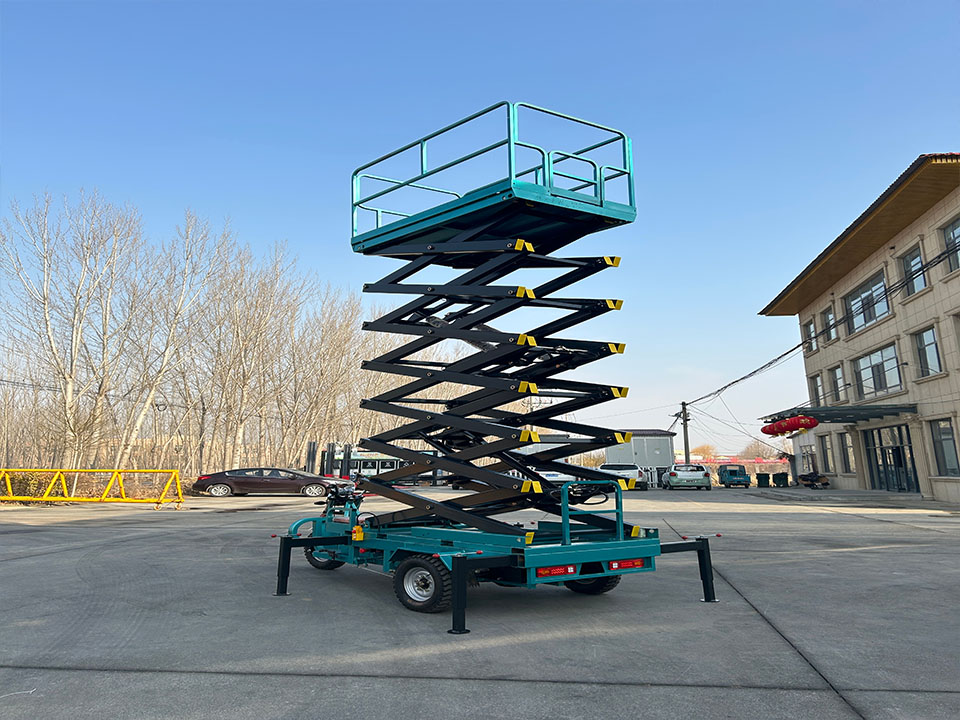
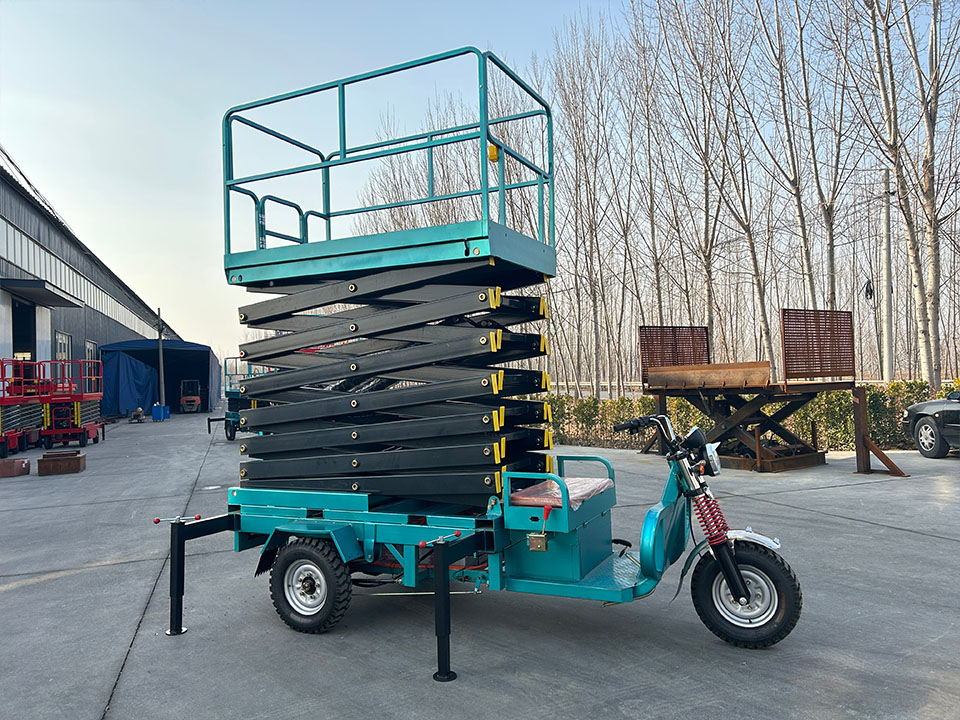
Electric ThreeWheeled Hydraulic Lifting Vehicle
Compliance Table for Dealer Networks
Safety Area
OSHA-Oriented Requirement
Dealer Network Action
Buyer-Side Proof to Keep
Guardrails
Scissor lifts need guardrails; operators should stand only on the platform and avoid leaning beyond reach
Add guardrail inspection to demo, delivery, and rental handover
Signed pre-use checklist, photo record, defect report
Stabilization
Use firm, level surfaces; avoid holes, slopes, debris, and unsafe wind conditions
Train dealers to explain ground limits and rated outdoor wind restrictions
Site risk assessment, operator briefing sheet
Positioning
Avoid crushing hazards, traffic contact, and unsafe electrical proximity
Provide traffic-control and overhead-hazard checklist
Work-zone inspection log, supervisor approval
Training
Workers must be trained on hazards, manufacturer instructions, weight limits, and defect reporting
Create dealer training pack with model-specific procedures
Training roster, date, trainer name, machine serial number
Maintenance
Controls, components, guardrails, and brakes should be inspected according to manufacturer instructions
Supply maintenance schedule and spare parts list
Service log, repair ticket, lockout/tagout note
Load Control
Do not exceed manufacturer platform load rating
Put load-rating warning in quotation, manual, and platform sticker
Load calculation, job-task approval
Why OSHA Aerial Lift Requirements Still Influence Scissor Lift Sales
Some buyers search “OSHA aerial lift requirements” even when they mean scissor lifts. That confusion matters for SEO and sales conversations.
Aerial lifts and scissor lifts are not always regulated in identical ways, and equipment definitions can shift depending on design and use. But from a buyer’s view, the worry is simple: elevated workers, falling risk, tip-over risk, training documents, inspection records, and liability.
That is why dealer content should use both terms naturally: OSHA Scissor Lift Safety Requirements, scissor lift OSHA requirements, scissor lift safety regulations, and OSHA aerial lift requirements. Not keyword stuffing. Buyer-language matching.
OSHA’s FY 2025 top-cited standards list still places fall protection general requirements, scaffolding, and fall protection training among the most cited standards, which reinforces the commercial reality: fall-related controls remain a persistent enforcement concern.
The Dealer’s Liability Gap: Manuals Alone Are Weak Protection
A manual in the crate is not a training system.
A warning sticker is not a safety culture.
A WhatsApp message is not a documented handover.
Dealer networks need a compliance package that travels with the machine. I would include:
A model-specific scissor lift inspection checklist.
A dealer demo checklist.
A delivery acceptance form.
A daily pre-use inspection sheet.
A maintenance interval sheet.
A defect reporting form.
A short “do not do this” operator card.
A QR code linking to training material.
This is not legal advice. It is commercial survival.
The same discipline can support a wider machinery catalog, including compact outdoor units like the XT-800CB remote control track lawn mower for rough terrain, because serious B2B customers increasingly expect documentation before they trust unfamiliar equipment suppliers.
What Buyers Should Ask Before Accepting a Scissor Lift
B2B buyers should ask dealers blunt questions before delivery:
Is the model rated for indoor use, outdoor use, or both?
What is the platform capacity in pounds or kilograms?
What is the maximum working height?
What wind speed limit applies?
Does the manual prohibit elevated travel?
What daily inspection items must be checked?
What defects require removing the lift from service?
Who provides operator training?
Are replacement decals, guardrail parts, control switches, brakes, batteries, hydraulic hoses, and emergency lowering components available?
If the dealer cannot answer, the dealer is not ready.
FAQ
What are OSHA scissor lift safety requirements for dealer networks?
OSHA scissor lift safety requirements for dealer networks are the practical safety controls dealers should help customers document, including trained operators, working guardrails, stable ground conditions, safe positioning, manufacturer-based inspection, regular maintenance, load-limit control, and clear defect reporting before the machine is used on a job site. Dealers should not present these as optional extras. They belong in quotations, delivery documents, demo procedures, and after-sales support.
Do scissor lift operators need OSHA training?
Scissor lift operators need employer-provided training covering hazards, manufacturer instructions, vertical and travel operation, material handling, platform weight limits, electrical or site hazards, and how to report defects or maintenance needs before using the equipment. The dealer’s role is usually not to replace the employer, but to support the employer with model-specific documents and handover training that make compliance easier.
What should be included in a scissor lift inspection checklist?
A scissor lift inspection checklist should cover the platform, guardrails, gate latch, controls, emergency stop, brakes, tires, steering, hydraulic leaks, lift mechanism, warning labels, battery or fuel condition, load plate, worksite surface, wind conditions, traffic, overhead obstructions, and nearby electrical sources. The checklist should be short enough for daily use, but strict enough to trigger removal from service when a defect appears.
Are guardrails enough for OSHA scissor lift fall protection?
Guardrails are the primary fall-protection feature OSHA emphasizes for scissor lifts, but they are only effective when installed, undamaged, checked before use, and respected by operators who stand on the platform floor instead of climbing, sitting, leaning, or using boxes and ladders for extra reach. If the job cannot be reached safely, the solution is repositioning or selecting different equipment.
Can a scissor lift be moved while elevated?
A scissor lift should not be moved while elevated unless the manufacturer’s instructions and site conditions allow that specific operation, because elevated travel increases tip-over, collision, pothole, slope, and crushing hazards. Dealer networks should avoid casual language like “driveable at height” unless the model manual, ground condition, load, and work-zone controls all support it.
Why should B2B dealers care about scissor lift safety regulations?
B2B dealers should care about scissor lift safety regulations because compliance failures can damage repeat orders, rental contracts, distributor trust, warranty discussions, and brand reputation even when the end user controls the job site. A dealer that provides training records, inspection templates, maintenance guidance, and clear operating limits looks more professional than a dealer selling only price and platform height.
CTA
If you are building a dealer network for lifting platforms, warehouse access equipment, or mixed industrial machinery, do not sell scissor lifts as “just another product.” Package them with inspection sheets, training support, maintenance schedules, and clear safety limits. Buyers remember the supplier who helps them reduce risk. They also remember the one who disappeared after delivery.
Contact our equipment manufacturer to discuss mini loaders, freight elevators, lift platforms, and lawn mowers for construction, logistics, agriculture, landscaping, mining, and municipal projects. Founded in 2019, we support global B2B buyers with RFQ review, WhatsApp or email communication, sales team guidance, customization, and export-ready machinery solutions.
Company
About
Solutions
Applications
Electric Freight Elevator
Contact
Products
Mini Loader
Freight Elevator
Lift Platform
Lawn Mower
Electric Mini Loader
Contact
+86 151 0096 5355
North of Xiaozhuangdong Village, Weijiazhuang Town, Longyao County, Xingtai City, Hebei Province, China