Reliable Mini Loader Manufacturer for OEM & Wholesale Equipment Buyers
A trusted industrial equipment manufacturer helps B2B buyers source reliable machinery for construction, material handling, agriculture, landscaping, mining, and environmental applications. Since 2019, we have manufactured mini loaders, freight elevators, lift platforms, and lawn mowers for customers across Western countries, Japan, South Korea, Central Asia, Russia, and other markets.
Longyao County Yuhong Machinery Manufacturing Co., Ltd.
Since 2019
North of Xiaozhuangdong Village, Weijiazhuang Town, Longyao County, Xingtai City, Hebei Province, China
Inspector files are not paperwork decoration; they are the proof trail that shows a company found a problem, fixed it, verified it, and learned from it. This guide explains how to build corrective action documentation that survives audits, safety inspections, supplier reviews, and buyer due diligence.
When an inspector asks for corrective action documentation, the company with a clean chain of evidence—finding, containment, root cause, owner, due date, verification, closure proof, and recurrence check—looks controlled before anyone even walks to the machine line.
So why do so many factories still treat records like a storage problem?
I’ll say the quiet part: most corrective action files fail because they were written for internal comfort, not external attack. A supervisor writes, “Issue fixed.” A quality manager signs it. Someone drops three photos into a folder. Everyone feels safe. Then an inspector asks for the original nonconformance report, the root-cause method, the maintenance record, the operator retraining proof, the effectiveness check after 30 days, and the version history. Silence.
That silence is expensive.
In 2024, OSHA raised maximum penalties for serious and other-than-serious violations to $16,131 per violation, while willful or repeated violations rose to $161,323 per violation; that number matters because weak records often make a correctable issue look like an unmanaged pattern.OSHA also requires certain injury and illness records—OSHA 300 Log, annual summary, privacy case list if used, and OSHA 301 Incident Report forms—to be saved for five years after the calendar year they cover.
But this guide is not only about OSHA. It is about inspector psychology.
A clean corrective action recordkeeping system tells a simple story: we saw it, we contained it, we understood it, we fixed it, we proved it, and we made sure it did not come back.
Table of Contents
Why Corrective Action Recordkeeping Fails Before the Inspector Arrives
Bad files usually look busy. That is the trap.
They have PDFs, photos, Excel sheets, maintenance tickets, supplier emails, signatures, and maybe one scanned training sheet with coffee stains on the corner. But they do not have sequence. They do not have ownership. They do not have evidence tied to dates.
Here’s the ugly truth from my experience: an inspector does not need to prove your whole operation is broken. They only need to find one gap that suggests your control system is cosmetic.
A corrective action report should not read like a diary. It should read like a case file.
The file must answer five questions fast:
Inspector Question
Weak File Answer
Strong File Answer
What happened?
“Machine issue found.”
“Hydraulic hose abrasion found during daily inspection on Unit M-04, April 12, 2026.”
“30-day follow-up inspection showed no abrasion on 6 similar units; photos and checklist attached.”
That last row is where most companies lose credibility. Closure is not a signature. Closure is verified control.
The Inspector File Should Be Built Like Evidence, Not Office Admin
A proper inspection file checklist should include four layers: the event record, the decision trail, the correction proof, and the recurrence-control proof.
Sounds basic. It isn’t.
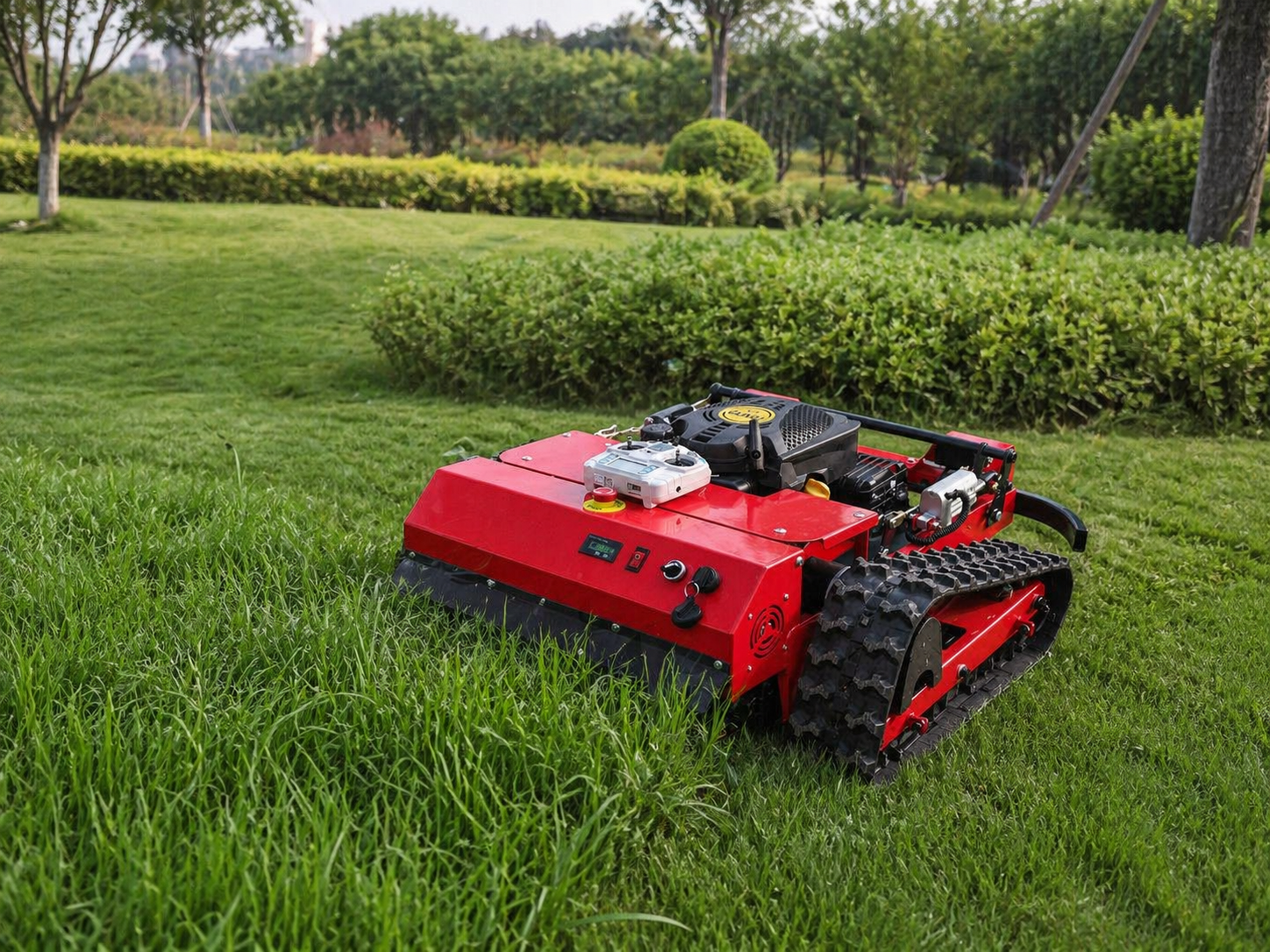
For equipment manufacturers, rental fleets, farms, construction contractors, and warehouse buyers, the file needs to connect the corrective action to the exact asset. If the issue involved a slope unit, the file should name the asset type, duty cycle, inspection trigger, and operating environment. For example, a fleet using a remote control tracked lawn mower brush cutter robot should not file “track issue” as the problem. That phrase is lazy. The record should say whether the issue involved track tension, sprocket wear, hydraulic drive lag, remote signal interruption, blade spindle vibration, or slope-control instability.
Specific records beat polished records.
If a rough-terrain buyer is reviewing a remote control 4WD brush cutter mower for rough terrain, they do not want poetic safety language. They want proof that inspection points exist before delivery, during operation, after abnormal noise, after impact, and after any field repair.
And yes, that is B2B sales content too. Buyers trust documented control.
What Regulators Are Really Signaling in 2024
Regulators are asking for more structured data, not less.
OSHA’s electronic submission rules require certain establishments with 100 or more employees in designated higher-hazard industries to submit OSHA Forms 300 and 301, along with Form 300A data, once per year. That changes the recordkeeping mood. A messy notebook in a supervisor’s drawer is no longer just messy; it is disconnected from a data environment where names, dates, case types, and incident outcomes can be compared.
The FDA’s 2024 warning-letter language tells the same story from another angle. In one medical-device warning letter, FDA criticized a CAPA procedure because it did not define or document requirements to verify or validate corrective actions before implementation, and the agency pointed to recurring complaints after the supposed corrective action date. Different industry, same lesson: a corrective action without effectiveness evidence is not a closed action. It is a hope with a signature.
EPA enforcement numbers also show why file discipline matters outside safety departments. In FY 2024, EPA performed over 8,500 inspections, a more than 9% increase compared with FY 2023. More inspections mean more file requests. More file requests mean more chances for weak documentation to turn a small defect into a bigger credibility problem.
Build the Corrective Action Report Around a Single Evidence Chain
I prefer a seven-part corrective action report. Not because it is fancy. Because inspectors can follow it.
The report should contain:
File Section
What It Must Prove
Best Evidence to Attach
Finding
The issue was identified clearly
Inspection sheet, photo, complaint, audit note
Risk classification
The company understood severity
Risk matrix, stop-use decision, affected asset list
Work order, part replacement, engineering change, SOP update
Verification
The fix worked
Follow-up inspection, test result, repeat photo, performance log
Prevention
Similar issues were controlled
Training record, PM checklist revision, supplier notice
Here is my bias: I do not trust corrective action files that skip containment. If the file jumps from “problem found” to “root cause review,” I assume the company left risk sitting in the field while people discussed it.
The Difference Between Correction and Corrective Action
A correction fixes the immediate defect. A corrective action removes the cause that allowed the defect to happen.
This distinction sounds academic until a buyer, insurer, auditor, or inspector asks whether the same defect could happen again tomorrow.
Replacing a damaged blade belt is a correction. Updating the inspection checklist to include belt alignment after the first 10 operating hours is corrective action. Tightening a loose bolt is a correction. Adding torque-mark inspection to the pre-delivery file is corrective action. Replacing a broken guard is a correction. Changing the guard bracket design, retraining assembly staff, and checking the next 50 units is corrective action.
Small words. Big difference.
If your corrective action documentation does not separate those two ideas, the file looks immature. Worse, it looks defensive.
The Inspector File Checklist I Would Use Before Any Audit
Before a planned inspection, I would build one folder per issue and one master register.
The master register should show ID number, asset, issue category, date opened, risk level, owner, due date, closure date, verification date, and status. Do not hide overdue items. Inspectors dislike surprises less than they dislike concealment.
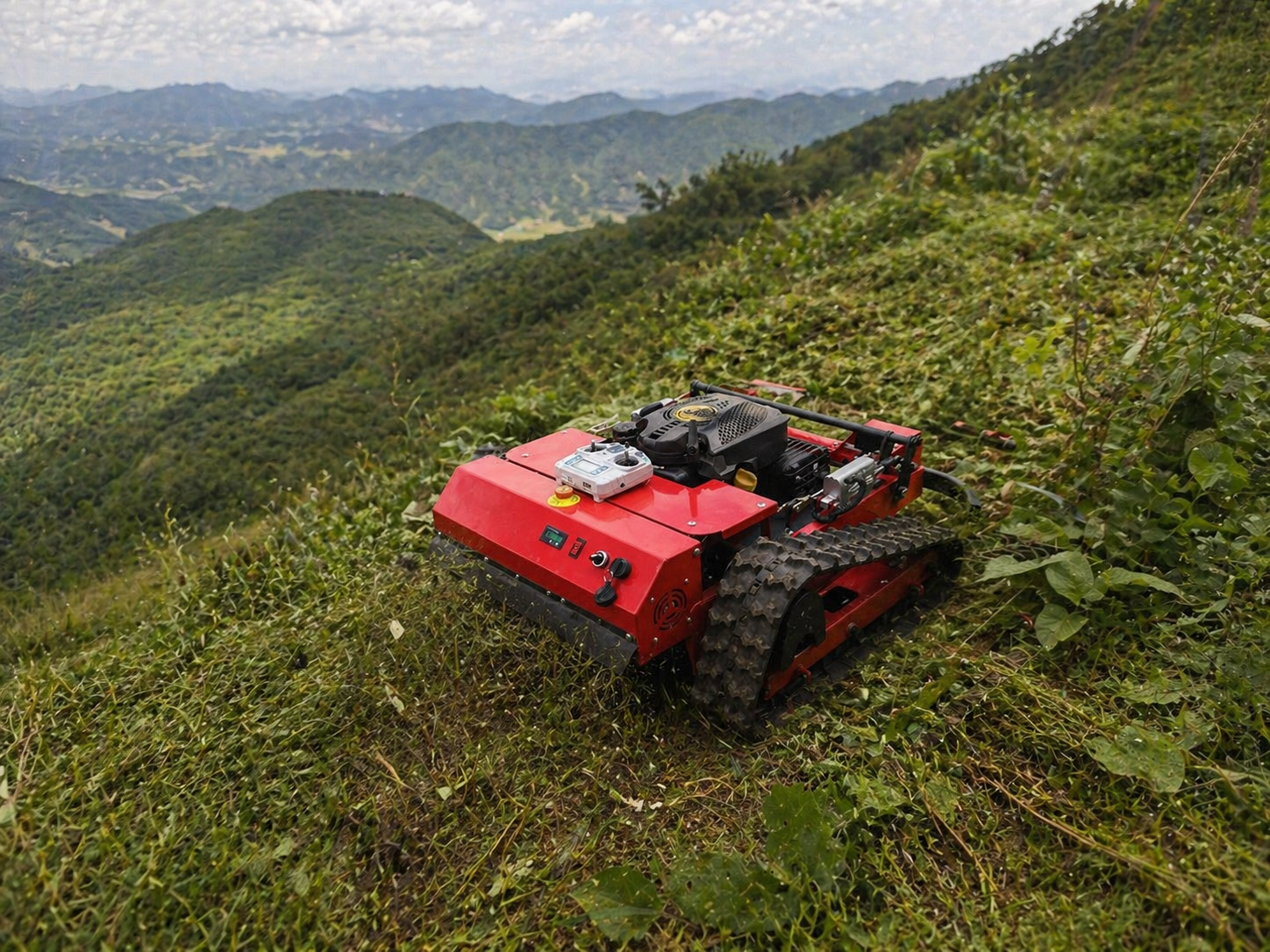
For equipment used on steep, wet, muddy, or vegetation-heavy sites—say a remote control tracked slope mower with dozer blade—the file should also identify operating conditions. Slope angle, soil type, vegetation density, blade load, remote-control distance, and track wear are not decoration. They explain why a corrective action was selected.
Use this checklist:
Inspector File Item
Required?
Why It Matters
Original finding or complaint
Yes
Shows the trigger source
Date and asset ID
Yes
Prevents vague “fleet issue” language
Photos before correction
Strongly recommended
Gives visual proof
Immediate containment action
Yes
Shows risk was controlled
Root-cause worksheet
Yes
Shows investigation discipline
Corrective action owner
Yes
Creates accountability
Completion deadline
Yes
Shows time control
Training or communication record
If people/process changed
Proves operators were informed
Updated checklist/SOP
If process changed
Proves the system changed
Effectiveness verification
Yes
Proves the fix worked
Closure approval
Yes
Confirms final review
Similar-asset review
Recommended
Proves recurrence control
The similar-asset review is the underrated one. If one machine had a hydraulic hose abrasion point, did anyone inspect the other five units? If one operator skipped a pre-start check, did anyone review the training record for the whole shift? If one product batch had weak packaging, did anyone inspect the next shipment?
Inspectors ask this because patterns matter.
How to Prepare Inspector Files Without Creating Fake Perfection
Do not clean the file until it looks fake.
I know that sounds odd. But a record with one minor delay and a documented explanation often feels more believable than a file where every action somehow closed on the exact due date with the exact same manager signature.
Real operations have friction: parts arrive late, weather delays testing, operators change shifts, suppliers answer slowly. The file can show that. The point is not perfect behavior. The point is controlled behavior.
A strong compliance recordkeeping checklist should show:
Control Point
Good Practice
Bad Practice
Naming
CA-2026-004-HYD-HOSE-M04
“hose problem”
Version control
Rev. 02 with change note
Multiple unlabeled PDFs
Photo proof
Before/after with date and asset ID
Random photos in phone gallery
Owner
One named person
“Maintenance team”
Root cause
Physical cause plus management/system cause
“Operator error” only
Closure
Verification after use period
Same-day signoff only
Retention
Stored under defined retention rule
Personal desktop folder
And please stop blaming operators as the final root cause. Operator error is usually the start of the investigation, not the end. Why was the wrong behavior possible? Missing label? Poor access? Bad checklist? Weak training? Time pressure? Wrong tool? Bad design?
That is where corrective action recordkeeping becomes useful instead of ceremonial.
Use File Names That an Inspector Can Read in Ten Seconds
Every file should be readable without opening ten folders. If your team needs tribal knowledge to find proof, the system is already weak. A substitute safety manager should be able to find the original finding, containment photo, corrective action report, verification evidence, and closure approval in under five minutes.
If not, the folder is not inspector-ready.
The 30-60-90 Day Verification Rule
Same-day closure is seductive. It also scares me.
A repair made at 9:00 a.m. and closed at 2:00 p.m. may be legitimate for a simple defect. But for repeat failures, high-risk equipment, supplier defects, electrical issues, hydraulic leaks, brake issues, guarding issues, or training gaps, a same-day closure often proves only that the repair happened—not that the corrective action worked.
But the file should justify the verification window. “Checked after 30 days because the unit completed 42 operating hours on wet orchard terrain with no repeat abrasion” is much stronger than “closed after repair.”
Corrective Action Documentation for B2B Buyers
B2B buyers are not only buying machinery. They are buying risk reduction.
A procurement manager comparing suppliers may ask for inspection records, pre-shipment checks, maintenance guidance, field issue history, corrective action documentation, and spare parts support. If you can show clean audit corrective action records, you look different from a factory that only sends glossy product photos.
This matters in product categories with remote operation, slope work, moving blades, hydraulic loads, and outdoor contamination. The buyer knows the machine will not live in a brochure. It will hit mud, wet grass, stones, uneven ground, fuel variation, dust, vibration, and operators who are in a hurry.
So the record must speak like a shop floor, not a marketing department.
A proper file tells the buyer: we know where failures can happen, we inspect those points, we document deviations, and we close them with proof.
FAQ
What is corrective action recordkeeping?
Corrective action recordkeeping is the structured documentation system used to record a problem, contain the immediate risk, investigate the root cause, assign and complete corrective actions, verify effectiveness, and preserve evidence for inspectors, auditors, buyers, insurers, and internal managers reviewing whether the issue was truly controlled.
In plain language, it is the proof trail. A strong file includes the original finding, asset ID, date, photos, root-cause analysis, work orders, training records, revised checklists, verification evidence, and closure approval. A weak file says “fixed” and hopes nobody asks follow-up questions.
What should be included in corrective action documentation?
Corrective action documentation should include the original finding, risk classification, containment action, root-cause analysis, assigned corrective action, completion deadline, responsible owner, supporting evidence, verification result, closure approval, and any similar-asset review needed to prove the same issue will not repeat elsewhere.
For equipment companies, I would also include machine model, serial number, operating environment, inspection trigger, parts replaced, photos before and after, and PM checklist updates. That extra detail helps inspectors understand not only what happened, but why the chosen action was reasonable.
How do you prepare corrective action files for inspectors?
To prepare corrective action files for inspectors, organize every issue into a clear evidence chain: finding, containment, root cause, corrective action, verification, prevention, and closure, then store each document with readable names, dates, responsible owners, and links to the exact asset or process affected.
Do not wait until the inspection notice arrives. Run a pre-inspection file review, check for missing photos, confirm overdue actions, verify signatures, and make sure closure evidence is stronger than a manager’s opinion. The file should answer the inspector’s next question before they ask it.
What is the difference between a corrective action report and an inspection file?
A corrective action report is the main document that explains the issue, root cause, assigned fix, deadline, owner, and verification result, while an inspection file is the larger evidence package containing that report plus photos, checklists, work orders, training proof, emails, test results, and closure records.
Think of the report as the narrative and the inspection file as the case folder. If the report claims a hydraulic hose routing issue was fixed, the inspection file should contain the revised routing photo, work order, updated checklist, and follow-up inspection proof.
How long should corrective action records be kept?
Corrective action records should be kept according to the applicable regulation, contract, internal quality system, and risk category, but many safety-related files should be retained for multiple years because inspectors, insurers, and buyers may request historical proof after the original issue appears closed.
For OSHA injury and illness records, certain forms must be retained for five years after the calendar year they cover. For non-OSHA equipment quality files, I prefer matching retention to product life, warranty period, buyer contract requirements, and any known regulatory exposure.
What makes a corrective action file inspector-ready?
An inspector-ready corrective action file is complete, dated, traceable, evidence-based, easy to navigate, and strong enough to show that the company corrected the immediate issue, identified the real cause, verified the fix, updated the system, and checked whether similar assets or processes were affected.
The best test is simple: give the file to someone outside the department and ask them to explain what happened in five minutes. If they cannot trace the problem from finding to verified closure, the file is not ready.
CTA
If your buyers ask tough questions about inspection files, maintenance control, and corrective action documentation, do not answer with vague promises. Build the evidence before they ask. For equipment used in rough terrain, orchards, farms, and slope maintenance, recordkeeping is not back-office paperwork—it is part of the product’s credibility.
Contact our equipment manufacturer to discuss mini loaders, freight elevators, lift platforms, and lawn mowers for construction, logistics, agriculture, landscaping, mining, and municipal projects. Founded in 2019, we support global B2B buyers with RFQ review, WhatsApp or email communication, sales team guidance, customization, and export-ready machinery solutions.
Company
About
Solutions
Applications
Electric Freight Elevator
Contact
Products
Mini Loader
Freight Elevator
Lift Platform
Lawn Mower
Electric Mini Loader
Contact
+86 151 0096 5355
North of Xiaozhuangdong Village, Weijiazhuang Town, Longyao County, Xingtai City, Hebei Province, China