Reliable Mini Loader Manufacturer for OEM & Wholesale Equipment Buyers
A trusted industrial equipment manufacturer helps B2B buyers source reliable machinery for construction, material handling, agriculture, landscaping, mining, and environmental applications. Since 2019, we have manufactured mini loaders, freight elevators, lift platforms, and lawn mowers for customers across Western countries, Japan, South Korea, Central Asia, Russia, and other markets.
Longyao County Yuhong Machinery Manufacturing Co., Ltd.
Since 2019
North of Xiaozhuangdong Village, Weijiazhuang Town, Longyao County, Xingtai City, Hebei Province, China
Cargo Elevator Reliability Program: Reduce Downtime for Port Operators
Port downtime rarely starts with one dramatic failure; it usually starts with ignored noise, weak checklists, and lazy spare-parts planning. This guide shows how port operators can build a practical cargo elevator reliability program around inspections, parts, service windows, and accountability.
And yet, I’ve watched maintenance teams treat a cargo elevator like a steel box that “just goes up and down,” right until one blown seal, one worn guide rail, one tired contactor, or one sloppy overload event turns a clean loading schedule into a queue of angry truckers, delayed pallets, and supervisors pretending the problem came from nowhere. Why gamble with that?
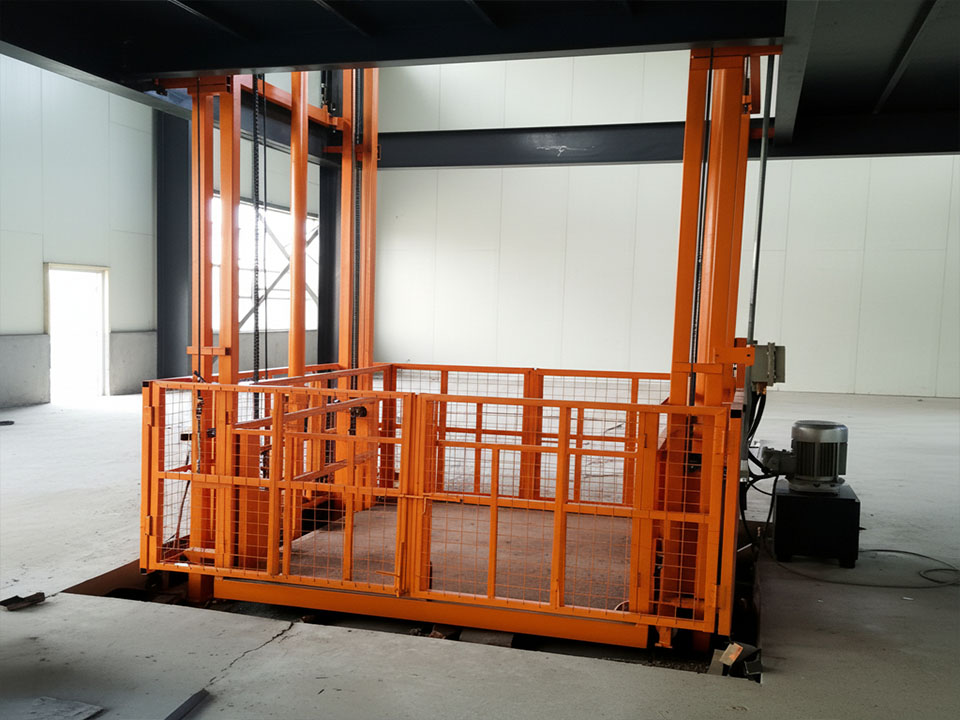
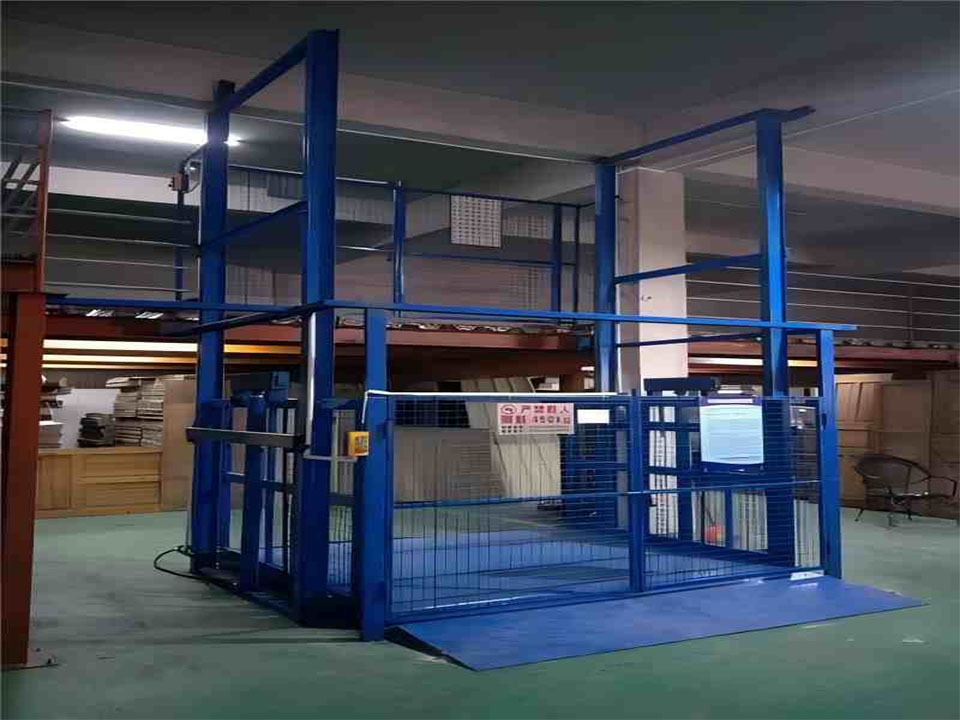
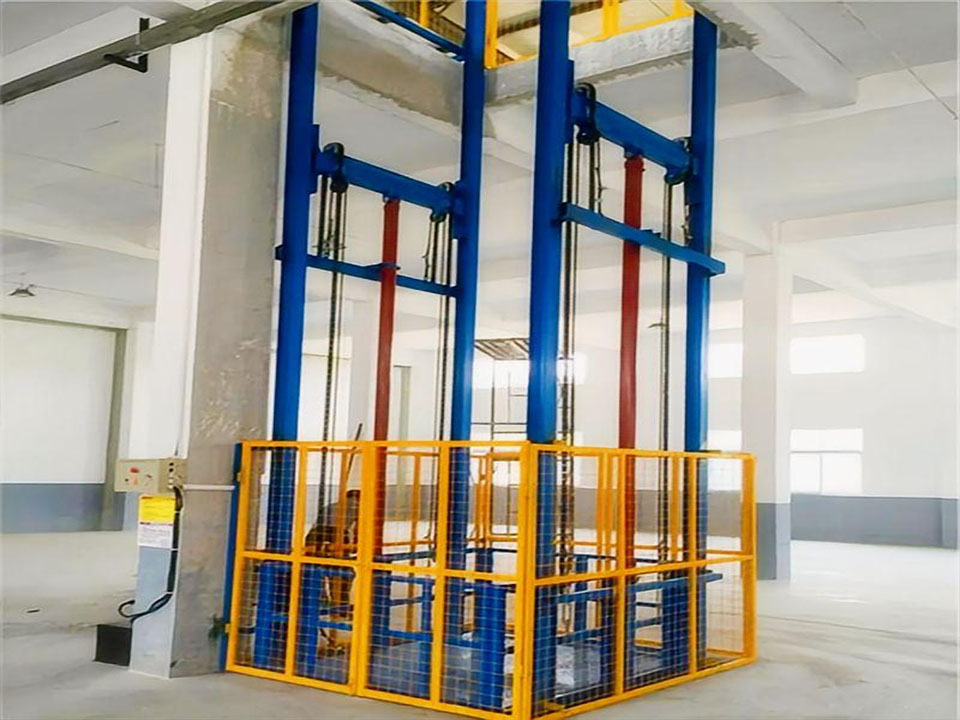
Here’s the hard truth: Cargo Elevator Maintenance is not a repair job. It’s a production-control system. In a port, the cargo elevator is part of the berth rhythm, the warehouse handoff, the customs buffer, the truck gate flow, and sometimes the cold-chain clock. When it stops, it doesn’t stop alone.
Reuters reported in June 2024 that Singapore container berthing waits had stretched to two or three days, compared with a normal target of less than one day, while some tracking firms saw delays up to a week during the Red Sea-driven congestion wave. That kind of pressure makes weak equipment maintenance look expensive very quickly.
But port operators still underfund the small stuff.
A cargo elevator reliability program should be brutally simple: inspect the right parts, at the right frequency, with the right spare stock, before the loading plan gets punched in the mouth.
Table of Contents
Why Port Cargo Elevators Fail at the Worst Possible Time
A cargo elevator in a port does not live an easy life. Salt air. Dust. Forklift vibration. Peak-hour abuse. Oversized cargo. Operators rushing because the vessel schedule already slipped. Add humid air into an electrical cabinet and suddenly the “minor fault” becomes a shutdown nobody budgeted for.
The U.S. Bureau of Transportation Statistics describes port performance tracking around capacity and throughput because ports are not judged by equipment beauty; they are judged by movement, volume, and flow. When an elevator sits dead, capacity on paper becomes fiction.
I frankly believe many downtime reports lie by omission. They record “hydraulic failure” or “door interlock fault.” Fine. But the real failure happened three months earlier when nobody measured oil contamination, checked rail alignment, reviewed overload events, or stocked the correct cylinder seal kit.
Tiny misses compound.
For port operators, the cargo elevator reliability program should track five failure families:
Hydraulic pressure loss
Electrical control faults
Door, gate, and interlock failure
Structural wear from impact or overloading
Operator misuse during rushed cargo movement
A freight elevator preventive maintenance plan that ignores any one of those is not a plan. It’s theater.
The Downtime Math Nobody Wants to Put on the Wall
Downtime is not only the technician’s invoice. It includes waiting labor, cargo re-routing, forklift double-handling, missed truck slots, demurrage pressure, warehouse overflow, supervisor overtime, and customer trust quietly leaking away.
If a port warehouse moves mixed cargo at 20–40 pallet movements per hour through one vertical route, a 6-hour cargo elevator shutdown can wipe out 120–240 planned movements. That number gets uglier when the elevator serves a mezzanine, bonded warehouse, cold-storage transfer point, or heavy-parts staging area.
UN Trade and Development said its 2024 maritime review covered rising port calls, cargo-handling activity, waiting time, and the operational strain created by chokepoints and rerouting. It also noted that ports using digital tools such as AI, automation, and better tracking report reduced waiting times and more efficient transshipment.
So the question is blunt: if global shipping disruption is already adding uncertainty outside your gate, why tolerate preventable elevator downtime inside your own building?
Build the Reliability Program Around Failure Modes, Not Calendar Rituals
Many maintenance teams still worship the calendar. Monday: check oil. Friday: clean pit. Monthly: inspect cables. Quarterly: call technician. Looks organized. Often isn’t.
A real cargo elevator reliability program starts with failure modes. Ask what actually stops the lift. Then build inspection points around those risks.
For a hydraulic cargo elevator, I would put these at the top:
And yes, the checklist should be ugly enough for real work: oil stain box, photo upload field, “who signed it,” “who ignored it,” and “who closed the repair.” A clean checklist with no accountability is just office decoration.
Port Cargo Elevator Maintenance Needs a Different Service Rhythm
A factory cargo elevator and a port cargo elevator may look similar, but the working rhythm is not the same. Port equipment gets hit by peaks. Vessel arrival windows compress work into brutal bursts. Operators rush. Cargo dimensions vary. Weather changes fast.
That is why port cargo elevator maintenance should use three layers:
Daily checks: operator-level checks before the shift starts. Door operation, platform level, abnormal sound, warning signs, obvious leaks, pit obstruction, emergency stop.
Planned service windows: technician-level work during low-volume periods. Oil testing, pressure testing, electrical cabinet review, interlock adjustment, structural inspection, spare-part replacement.
Port operators should treat service windows like vessel planning. You don’t “find time.” You reserve it.
If rough-yard support equipment is used around warehouse ramps or outer storage areas, the same logic applies to auxiliary machines such as a 4WD remote control lawn mower for rough terrain use: the machine survives only when the service rhythm matches the environment, not some generic brochure schedule.
The Spare Parts List Should Be Built From Downtime Probability
Here’s another uncomfortable point: many teams stock cheap parts, not important parts.
They keep random buttons, lamps, and bolts. Useful? Sometimes. But when the hydraulic hose fails, the door interlock burns, or the pump contactor dies, everyone starts calling suppliers like it’s a religious ceremony.
For cargo elevator downtime reduction, the spare-parts shelf should include:
Hydraulic seal kits
High-pressure hoses
Door interlock switches
Limit switches
Contactors and relays
Emergency stop buttons
Control fuses
Guide shoe sets
Roller assemblies
Warning labels and rated-load plates
Common fasteners
Hydraulic oil filters
The list should be ranked by three numbers: failure probability, delivery lead time, and downtime impact.
A $40 switch that takes four days to source can be more dangerous than a $400 component sitting in stock. I’ve seen this happen. It’s embarrassing. It’s also common.
For yards dealing with slope, vegetation, embankments, or perimeter maintenance, equipment such as a heavy-duty gas powered orchard mower robot needs the same spare-parts thinking: belts, blades, filters, and remote-control parts are not “extras” when the work area has no patience for delay.
Safety Is Part of Reliability, Not a Separate Department
Some managers talk about safety as if it slows production. I disagree. Bad safety slows production because accidents freeze the site, trigger investigations, and destroy trust.
OSHA’s longshoring and marine terminal fatal facts group case summaries into vehicular accidents, falls or drowning, and material-handling accidents, with struck-by or run-over events involving trucks, front-end loaders, or forklifts listed as frequent causes in longshoring fatalities.
Cargo elevator safety belongs inside the reliability program because many elevator faults are really control failures: overloaded platform, blocked gate, rushed loading, missing signage, bent guardrail, bypassed interlock, poor floor marking.
So, build rules that operators can actually follow:
Cargo must be centered on the platform.
No standing under raised freight.
No riding with goods unless the elevator is rated and designed for personnel.
Rated load must be visible at every loading point.
Forklift impact must be reported immediately.
Gate faults must stop use, not trigger “try again” behavior.
Emergency lowering must be tested, not assumed.
Simple? Yes. Ignored? Also yes.
That’s why signage matters. “严禁站人 / No standing.” “禁止超载 / No overloading.” “货物居中 / Keep cargo centered.” These are not decorative stickers; they are production controls written in short words.
Use Condition Data Before Buying Fancy Software
I like sensors. I don’t like pretending sensors fix bad discipline.
A basic industrial cargo lift service plan can start with manual logs: lift cycle count, overload events, oil temperature, pressure readings, fault codes, repair time, spare-part usage, and inspection photos. Once that habit exists, then add better tools.
Good monitoring points include:
Hydraulic pressure drift
Motor current spikes
Door-close failure frequency
Platform leveling error
Emergency stop events
Cycle count by shift
Oil temperature range
Fault reset count
If the reset count rises, something is wrong. If the same door fault appears twice in a week, something is wrong. If the lift runs slower under a normal load, something is wrong.
Don’t wait for smoke.
For remote or rough-access port support zones, the same maintenance discipline applies to machines like a remote control tracked flail mower 4WD slope cutter. Harsh ground exposes weak maintenance faster than clean concrete ever will.
The 30-60-90 Day Cargo Elevator Reliability Program
I would not start with a giant maintenance manual. Nobody reads it. Start with a 90-day reset.
First 30 Days: Baseline the Elevator
Record the current condition. Photograph the platform, pit, gate, rails, hydraulic unit, control cabinet, signage, and loading zones. List every known fault. Then stop pretending “minor” means harmless.
Actions:
Confirm rated load and platform size.
Check hydraulic leaks and pressure.
Inspect door interlocks.
Review electrical cabinet moisture and terminal tightness.
Mark forklift loading zones.
Create fault-code log.
Build spare-parts priority list.
Days 31-60: Control the Repeat Failures
Now attack patterns. If the same fault repeats, it is not random. It is a message.
Actions:
Replace weak switches before failure.
Adjust door and gate alignment.
Test emergency lowering.
Train operators on centered loading.
Add inspection signatures.
Add photo proof for defects.
Schedule one low-volume service window.
Days 61-90: Lock the Program Into Operations
This is where most teams fail. They improve for two months, then drift back.
Actions:
Assign one owner for elevator reliability.
Review downtime minutes weekly.
Track mean time between failures.
Compare spare-parts use against fault history.
Add service-window planning to port operations meetings.
Review vendor response time.
Set maximum unresolved defect age.
This is not complicated. It is uncomfortable. There’s a difference.
How to Reduce Cargo Elevator Downtime for Port Operators
The fastest way to reduce cargo elevator downtime for port operators is to remove the delay between warning sign and action. Not every fault becomes a shutdown if somebody owns it early.
Use this operating rule:
Downtime Trigger
Bad Response
Better Response
Target Time
Small hydraulic leak
“Watch it”
Tag, photograph, inspect hose and seal
Same shift
Door closes unevenly
Force close
Stop, clean track, adjust latch
24 hours
Random electrical reset
Keep using
Log fault, inspect cabinet, test relay
24–48 hours
Slow lifting under load
Blame operator
Check pressure, oil, pump, load balance
Same week
Bent platform edge
Ignore cosmetic damage
Inspect structure and guide path
Same day
Missing load label
Reprint later
Replace before next shift
Same day
A cargo elevator reliability program should not ask, “Did we inspect it?” It should ask, “What changed since the last inspection?”
That one question catches more trouble than most expensive dashboards.
Vendor Selection: Stop Buying Only on Lift Capacity
Port operators often ask for the tonnage first. 1 ton. 3 tons. 5 tons. 10 tons. Fine. But rated load is only the beginning.
When choosing or upgrading cargo elevators for port warehouses, ask harder questions:
What is the expected cycle count per day?
What is the real cargo size, not just weight?
Will forklifts enter the platform?
Is the environment salty, wet, dusty, or hot?
Is the loading point exposed to rain?
What is the local spare-parts lead time?
Can the supplier provide drawings, wiring diagrams, and hydraulic schematics?
Are interlocks protected from impact?
Is emergency lowering easy to access?
Who services the unit after installation?
A cheap elevator with poor service access becomes expensive after the first shutdown. I don’t care how attractive the quote looked.
For port-area vegetation, yard edges, and non-paved service zones, machines such as a remote control 4WD brush cutter lawn mower robot show the same buying lesson: specifications matter, but serviceability decides long-term uptime.
The Maintenance KPI Set I Would Actually Use
Forget vanity metrics. Use numbers that expose pain.
KPI
Why It Matters
Good Target
Downtime minutes per month
Shows real operational loss
Downward trend for 3 months
Repeat fault rate
Reveals unresolved root causes
Below 10–15%
Emergency callouts
Measures poor planning
Reduce quarter by quarter
Spare-part stockout events
Exposes weak inventory
Zero for A-class parts
Inspection completion rate
Measures discipline
95%+
Defect closure time
Shows response speed
Same week for non-major defects
Overload events
Measures operator behavior
Falling trend
Service-window compliance
Shows planning maturity
90%+ completed as scheduled
The best KPI is not the prettiest chart. It is the one that makes excuses harder.
FAQ
What is Cargo Elevator Maintenance for port operators?
Cargo Elevator Maintenance for port operators is a structured inspection, repair, spare-parts, and service-window system designed to keep freight elevators available during cargo movement, warehouse loading, customs staging, and truck dispatch operations while reducing shutdowns caused by hydraulic, electrical, structural, door, and operator-related failures.
For a port site, it should include daily operator checks, weekly maintenance checks, scheduled service windows, emergency lowering tests, load-control rules, and spare-parts planning. The goal is not only safe lifting; the goal is predictable cargo flow.
How does a cargo elevator reliability program reduce downtime?
A cargo elevator reliability program reduces downtime by identifying failure signals early, assigning ownership, stocking high-risk parts, and scheduling repairs before the elevator fails during peak cargo movement, vessel discharge, warehouse transfer, or truck loading operations.
The real gain comes from speed. A small oil leak, repeated door fault, or slow lift cycle becomes expensive only when nobody reacts. Track faults, review them weekly, and close defects before they become emergency callouts.
What should be checked daily on a port cargo elevator?
Daily port cargo elevator checks should cover door and gate function, platform leveling, warning labels, abnormal sound, visible hydraulic leaks, emergency stop response, pit obstruction, lighting, load-position rules, and any obvious damage from forklift contact or cargo impact.
The operator should sign the checklist before use. If the gate sticks, the platform tilts, or the lift makes a new noise, the unit should be reported immediately. “Use it one more shift” is how small faults become ugly shutdowns.
How often should freight elevator preventive maintenance be scheduled?
Freight elevator preventive maintenance should be scheduled through daily user checks, weekly maintenance inspections, monthly functional testing, and deeper quarterly or semi-annual service windows depending on cycle count, load weight, environmental exposure, and local safety requirements.
A high-cycle port warehouse may need tighter intervals than a normal factory lift. Salt air, humidity, forklift impact, and rushed loading all shorten component life. The schedule should follow risk, not just the calendar.
What spare parts should port operators keep for cargo elevator downtime reduction?
Port operators should keep high-impact cargo elevator spare parts such as hydraulic hoses, seal kits, oil filters, limit switches, door interlocks, contactors, relays, emergency stop buttons, guide shoes, rollers, fuses, warning labels, and common fasteners.
The right shelf stock depends on lead time and failure history. A low-cost switch with a long delivery time can stop operations longer than a costly component that is easy to source. Rank parts by downtime risk, not purchase price.
How can port operators plan industrial cargo lift service windows?
Port operators can plan industrial cargo lift service windows by matching maintenance tasks to low-volume periods, vessel schedules, warehouse workload, spare-parts availability, technician access, and risk level of known defects before failures interrupt live cargo operations.
Service windows should be booked like operations slots, not squeezed in casually. Confirm parts first, assign staff, lock out the elevator, complete the work, test under load, and record the result before returning the lift to service.
CTA
If your port warehouse depends on vertical freight movement, don’t wait for the next emergency callout to prove the weak point. Build the checklist, stock the parts, train the operators, and schedule the service window before the elevator decides the schedule for you.
For related heavy-duty equipment planning, you can also review our remote control 4WD lawn mower for rough terrain use and compare how harsh-environment machines should be selected, serviced, and protected before downtime becomes normal.
Contact our equipment manufacturer to discuss mini loaders, freight elevators, lift platforms, and lawn mowers for construction, logistics, agriculture, landscaping, mining, and municipal projects. Founded in 2019, we support global B2B buyers with RFQ review, WhatsApp or email communication, sales team guidance, customization, and export-ready machinery solutions.
Company
About
Solutions
Applications
Electric Freight Elevator
Contact
Products
Mini Loader
Freight Elevator
Lift Platform
Lawn Mower
Electric Mini Loader
Contact
+86 151 0096 5355
North of Xiaozhuangdong Village, Weijiazhuang Town, Longyao County, Xingtai City, Hebei Province, China