Reliable Mini Loader Manufacturer for OEM & Wholesale Equipment Buyers
A trusted industrial equipment manufacturer helps B2B buyers source reliable machinery for construction, material handling, agriculture, landscaping, mining, and environmental applications. Since 2019, we have manufactured mini loaders, freight elevators, lift platforms, and lawn mowers for customers across Western countries, Japan, South Korea, Central Asia, Russia, and other markets.
Longyao County Yuhong Machinery Manufacturing Co., Ltd.
Since 2019
North of Xiaozhuangdong Village, Weijiazhuang Town, Longyao County, Xingtai City, Hebei Province, China
High-Load Equipment Integrity Plan for Safety Managers in 2026
High-load equipment does not fail politely; it fails through ignored defects, weak records, and rushed inspections. This guide gives safety managers a practical integrity plan for 2026, built around inspection discipline, maintenance proof, and load-risk controls.
It hides behind paint, dust, “we checked it last week,” and that lazy little nod operators give when everyone knows the machine feels wrong but production wants the load moved before lunch, before shift change, before the truck leaves, before somebody with authority finally says stop. Why do we still pretend heavy equipment inspection is just a form?
I’ve seen this pattern too many times. A freight lift starts drifting by a few millimeters. A loader brake pedal gets soft. A platform gate rattles. Someone writes “monitor” on the sheet, which is often industry code for “we’re gambling.”
Bad bet.
The U.S. Bureau of Labor Statistics reported 5,070 fatal work injuries in 2024, and its event data shows 213 deaths involving workers struck, caught, or compressed by running powered equipment. That’s not theory; that’s the cost of contact with moving steel, hydraulics, tires, chains, loads, and bad assumptions.
Table of Contents
Stop Calling It “Maintenance” When You Mean Integrity
Maintenance says, “We changed the oil.” Integrity asks, “Can this machine still safely carry, lift, stop, hold, and release its rated load under actual site conditions?”
Different question. Different discipline.
A high-load equipment integrity plan should cover every machine that carries stored energy: scissor lifts, freight elevators, loaders, material platforms, hoists, hydraulic lifts, and the odd modified unit in the corner that nobody wants to talk about. Especially that one.
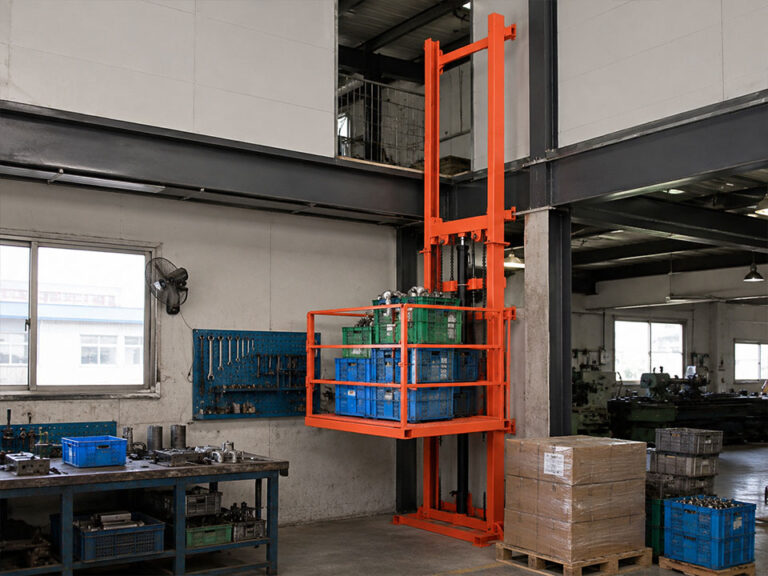
For example, a dual mast mobile construction platform material lift is not just “a lift.” It’s a vertical load path with mast alignment, platform stability, hydraulic behavior, guard condition, base support, and operator discipline all stacked into one risk package. Same with a hydraulic dual rail freight elevator for industrial loads. Rails, cylinders, platform drift, door discipline, overload habits—miss one, and the inspection is half-blind.
Here’s the hard truth: safety managers don’t get punished for not having beautiful paperwork. They get punished when paperwork can’t prove control.
The Real 2026 Risk: Familiar Machines Becoming Invisible
But the dangerous machine isn’t always the newest one.
Sometimes it’s the old loader everybody trusts because “it’s never failed,” or the warehouse freight elevator that moves pallets 80 times a day until nobody hears the pump tone change anymore. Familiarity is a sedative. It makes defects look normal.
Singapore’s 2024 Workplace Safety and Health Report recorded 43 workplace fatal injuries, up from 36 in 2023, and listed collapse or failure of structures and equipment among the top fatality causes; the report also recorded dangerous occurrences involving collapse or failure of structures and equipment.
That matters for safety managers in 2026 because buyers, insurers, contractors, and auditors are getting less patient with “we inspect it regularly” as a complete answer. Regularly means nothing unless you can show frequency, condition, defect status, repair proof, and release approval.
No proof? No control.
Build the Plan Around Load Paths, Not Clipboards
Start with the load path. Always.
Where does the force travel? Through bucket pins, mast rails, platform deck, cylinder mounts, cables, brakes, tires, floor slab, anchor points, guardrails, and sometimes through a tired operator trying to save 30 seconds. Your heavy equipment inspection system should follow that force.
Equipment Class
Failure Pattern I Watch First
Inspection Frequency
Safety Manager’s Real Question
Scissor lifts and mobile platforms
Hydraulic leak, control delay, guard damage, unstable setup
Pre-use plus scheduled service
Can it raise and hold safely without wobble, drift, or bad controls?
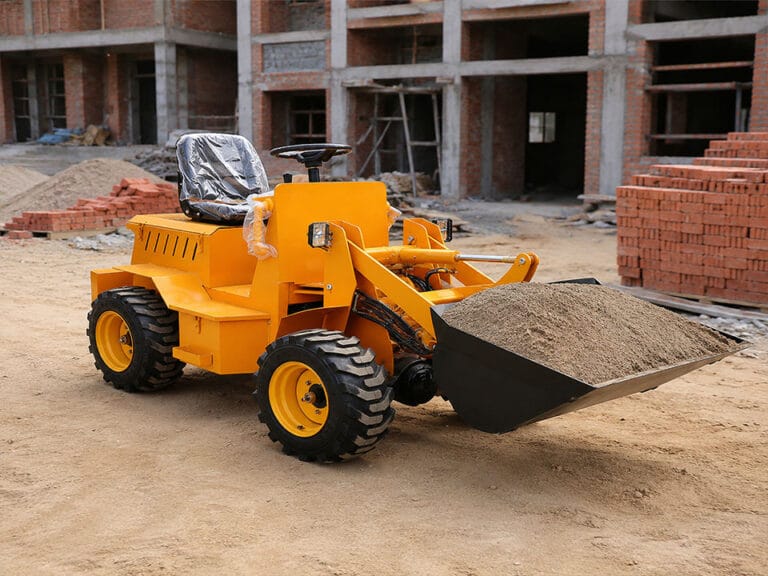
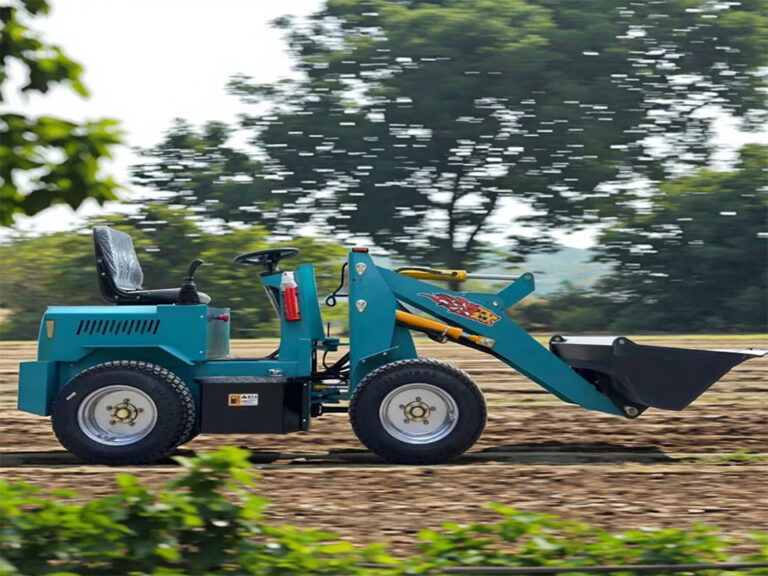
This is why I like pairing equipment choice with inspection access. A compact electric bucket loader for material handling jobs should be checked around brakes, steering, bucket linkage, battery cables, hydraulic fittings, tire sidewalls, and reverse alarm behavior. If your operator can’t easily see wear points, the checklist becomes a guessing game.
And guessing is not a system.
The Inspection Loop Nobody Wants to Own
OSHA’s powered industrial truck rule says industrial trucks must be examined before being placed in service and unsafe trucks must be removed until restored to safe condition.
Simple sentence. Hard execution.
Because the weak point usually isn’t the rule. It’s ownership. Operators spot the symptom. Supervisors want production. Maintenance wants a work order. Procurement wants the machine cheap. Safety wants nobody hurt. And somehow the defect sits in the middle like an unwanted invoice.
Use this loop:
Stage
Owner
Proof Required
Where It Usually Breaks
Pre-use check
Operator
Asset ID, time, name, defect status
Boxes ticked without looking
Work observation
Supervisor
Spot-check notes or photos
Unsafe shortcuts become “normal”
Defect escalation
Operator + safety manager
Severity code and lockout decision
“Monitor” replaces repair
Repair verification
Maintenance lead
Work order, part record, test result
Fixed but not retested under load
Trend review
Safety manager
Monthly defect summary
Repeat defects stay hidden
I’ll say it plainly: if a defect cannot stop the machine, your inspection program is decorative.
Make the Checklist Dirty, Specific, and Hard to Fake
A good high-load equipment safety checklist should feel like it was written by someone who has stood next to the machine, heard the pump groan, smelled hot hydraulic oil, and watched a loose platform shudder when a load shifted.
Not corporate poetry.
Inspection Zone
What to Check
Reject Condition
Evidence
Structure
Frame, mast, rails, welds, platform deck
Crack, bend, loose bolt, rust at load point
Photo plus asset ID
Hydraulics
Cylinders, hoses, fittings, pump sound, drift
Leak, jerky travel, overheating, platform drop
Leak tag and service order
Controls
Emergency stop, limit switch, remote, travel control
But ask yourself this: after an incident, would you rather explain why your checklist was “efficient” or why it actually caught failure modes?
Treat Defects Like Evidence, Not Annoyances
Small defects talk. Most managers just don’t listen.
One leaking hose is maintenance. Five leaking hoses across similar machines in 60 days? That’s a pattern. It might be heat, cheap hose quality, poor routing, wrong oil, operator abuse, bad fittings, or a supplier issue. The point is, it’s no longer “a hose problem.”
It’s an integrity signal.
Your 2026 equipment integrity management plan should classify defects like this:
Defect Level
Example
Action
Level 1: Monitor
Scratched paint, minor label wear, non-load cosmetic damage
Record and review
Level 2: Repair Soon
Slow seep, worn tire, loose guard hardware
Schedule repair and restrict use if needed
Level 3: Stop Use
Active hydraulic leak, failed emergency stop, brake fault, cracked weld
I don’t like “operator judgment only” systems. Too much pressure lands on the lowest-paid person near the machine. Give them a stop-use rule, a defect code, and management backing—or don’t pretend you care about integrity.
The Environment Is Part of the Machine
And here’s where many safety programs go soft: they inspect the equipment but ignore the site.
A freight lift on clean indoor concrete is one risk. A material lift on uneven construction ground is another. A loader moving wet pallets over broken yard concrete? Different again. The machine didn’t magically become unsafe by itself; the environment loaded the dice.
Ask these before you approve use:
Can the floor support the loaded machine?
Is the route free of potholes, ramps, blind corners, and pedestrian squeeze points?
Is the rated load label visible?
Is the load center understood?
Are operators trained on this exact machine, not just “similar equipment”?
Has the duty cycle changed since purchase?
Is anyone using the machine as a workaround for bad layout?
I’ve watched companies spend money on equipment, then starve the operating area—bad lighting, poor markings, missing exclusion zones, uneven floor plates. That’s not economy. That’s deferred risk.
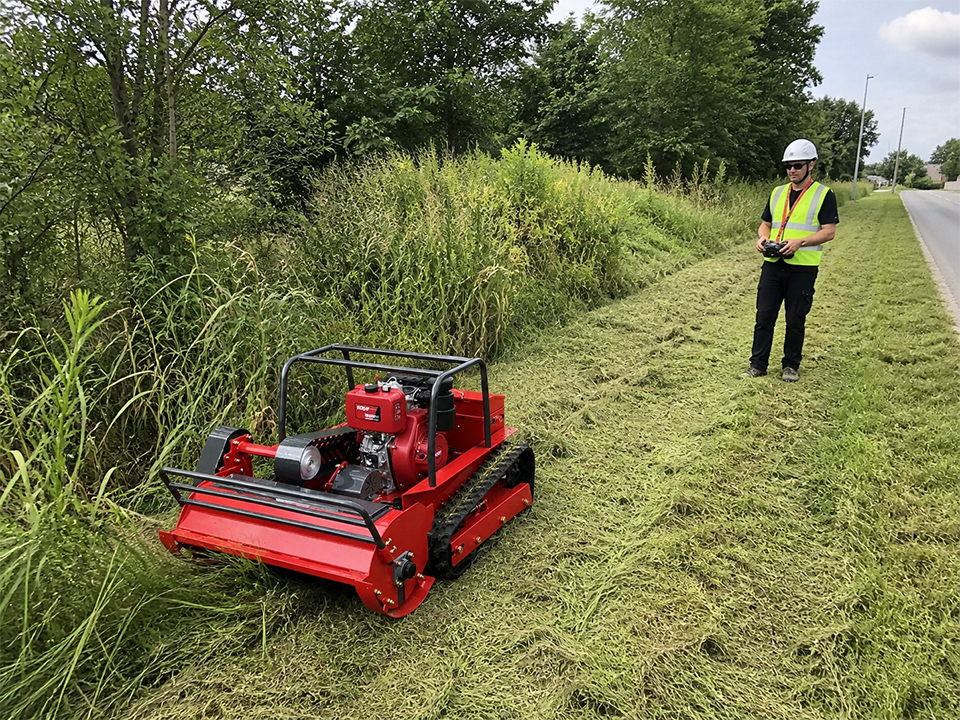
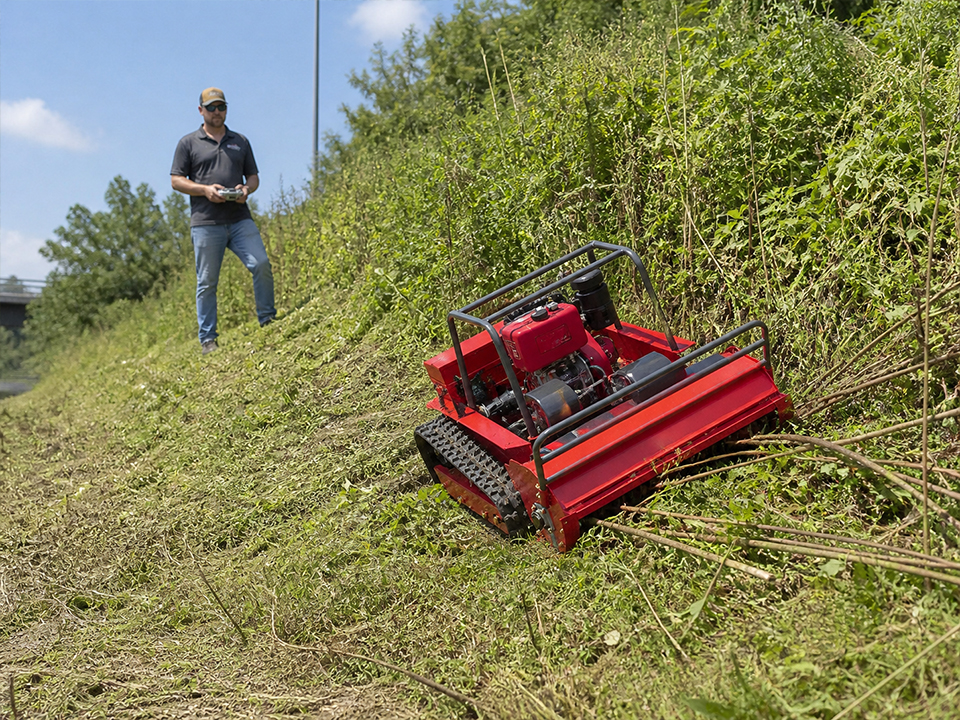
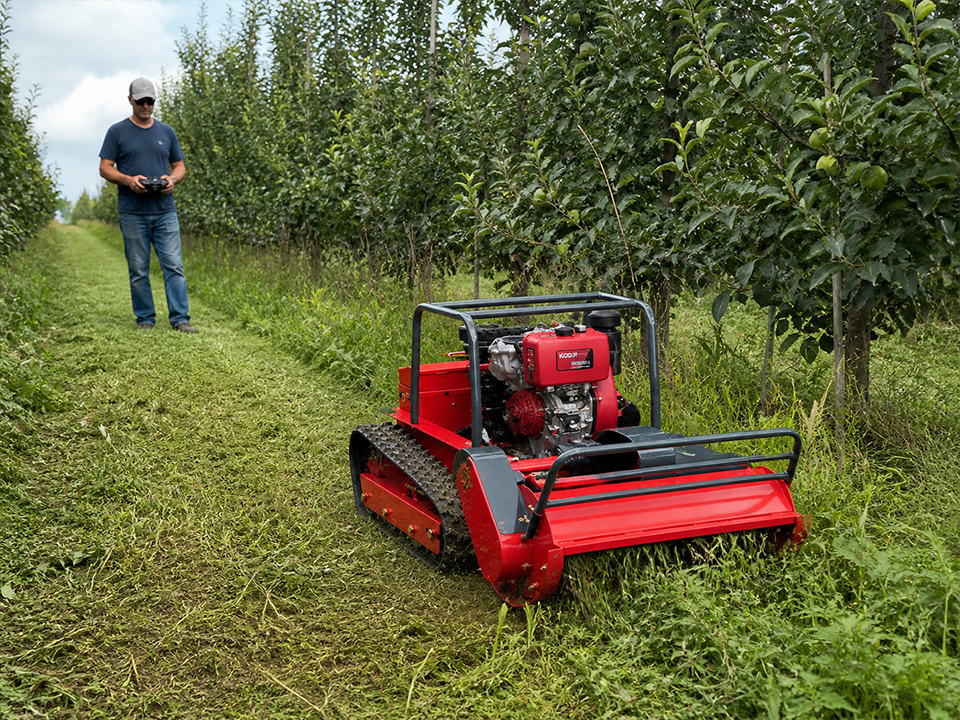
Remote Control Brush Cutter Manufacturer
Audit Files: Boring Until You Need Them
For cranes in construction, OSHA requires a competent person to begin a visual inspection before each shift, and apparent deficiencies must be evaluated for safety impact.
The lesson travels well beyond cranes.
If your high-load assets are audited in 2026, the question won’t be “Do you inspect?” It’ll be “Show me.” Show the asset register. Show the defect. Show the repair. Show the release. Show the training. Show the load record. Show the change approval.
Document
Minimum Standard
Better 2026 Practice
Asset register
Model, serial number, rated load
QR code tied to inspection file
Daily inspection
Operator, date, defect status
Photo-backed digital checklist
Maintenance log
Service date and repair note
Parts, technician, test result, downtime
Load test record
Rated load confirmation when required
Before/after repair comparison
Training file
Authorized operators only
Machine-specific sign-off
Near-miss log
Event description
Trend review and corrective action
Modification record
Supplier or engineer approval
Photos, drawings, approval date
Name the files properly. Don’t dump them into a folder called “Safety.” Use asset ID, date, and document type. Example: FE-03_2026-04-12_Platform-Drift-Repair_Load-Test.pdf.
Yes, it’s dull. That’s why it works.
FAQ
What is a high-load equipment integrity plan?
A high-load equipment integrity plan is a documented safety system used to confirm that lifting, loading, hauling, and elevated-work machinery remains structurally sound, mechanically reliable, properly inspected, correctly maintained, and safe to operate under rated working loads in real site conditions.
In plain workshop language, it connects the machine, the load, the operator, the work area, and the paperwork. If one part is missing, the plan has a hole.
How often should heavy equipment inspection be performed?
Heavy equipment inspection should be performed before use or before each shift, with deeper weekly, monthly, and annual checks based on equipment type, workload, operating environment, defect history, and legal requirements for that machine category.
But don’t worship the calendar. Inspect after overloads, strange noise, impact, hydraulic leaks, relocation, attachment changes, long idle periods, or operator complaints. Machines tell stories. Listen early.
What belongs in a high-load equipment safety checklist?
A high-load equipment safety checklist should include structure, hydraulics, controls, brakes, wheels or tires, load platform, guards, emergency stop, rated-capacity label, work-area condition, operator authorization, defect notes, photos, corrective action, and final release status.
The checklist should be machine-specific. A loader needs brake and bucket-pin checks. A freight elevator needs rail, interlock, and drift checks. A scissor lift needs platform, guardrail, control, battery, and ground-condition checks.
How do safety managers create an equipment integrity management plan for 2026?
Safety managers create an equipment integrity management plan by listing all high-load assets, ranking risk, setting inspection frequencies, assigning owners, defining stop-use defects, linking maintenance records to asset IDs, training operators, and reviewing repeat defect trends every month.
Don’t make it pretty first. Make it enforceable. Pretty comes later.
What is the difference between a heavy equipment maintenance plan and a mechanical integrity program?
A heavy equipment maintenance plan schedules service tasks, while a mechanical integrity program proves the equipment remains fit for its rated load, work environment, and safety function through inspections, defect control, repair verification, load checks, and traceable records.
That difference matters when a customer, auditor, insurer, or investigator asks what you knew before the failure. “We serviced it” is thin. “Here is the evidence chain” is stronger.
CTA
If your facility runs freight elevators, scissor lifts, construction platforms, material lifts, compact loaders, or mixed high-load equipment, stop letting inspection live as a clipboard habit. Build the register. Tighten the checklist. Lock out bad machines. Track defect patterns. And when a machine whispers that something is wrong, don’t wait for it to shout.
Contact our equipment manufacturer to discuss mini loaders, freight elevators, lift platforms, and lawn mowers for construction, logistics, agriculture, landscaping, mining, and municipal projects. Founded in 2019, we support global B2B buyers with RFQ review, WhatsApp or email communication, sales team guidance, customization, and export-ready machinery solutions.
Company
About
Solutions
Applications
Electric Freight Elevator
Contact
Products
Mini Loader
Freight Elevator
Lift Platform
Lawn Mower
Electric Mini Loader
Contact
+86 151 0096 5355
North of Xiaozhuangdong Village, Weijiazhuang Town, Longyao County, Xingtai City, Hebei Province, China