Reliable Mini Loader Manufacturer for OEM & Wholesale Equipment Buyers
A trusted industrial equipment manufacturer helps B2B buyers source reliable machinery for construction, material handling, agriculture, landscaping, mining, and environmental applications. Since 2019, we have manufactured mini loaders, freight elevators, lift platforms, and lawn mowers for customers across Western countries, Japan, South Korea, Central Asia, Russia, and other markets.
Longyao County Yuhong Machinery Manufacturing Co., Ltd.
Since 2019
North of Xiaozhuangdong Village, Weijiazhuang Town, Longyao County, Xingtai City, Hebei Province, China
Hydraulic leaks rarely start as disasters; they start as stains, heat, weak lift response, and lazy inspections. This guide shows how to catch wheel loader hydraulic problems earlier before they become downtime, injury risk, or expensive pump failure.
And, honestly, most jobsite crews ignore the story until the machine starts screaming through weak lift force, foamy hydraulic fluid, burnt-oil smell, slow bucket cycle times, or that embarrassing puddle under the belly pan that everyone pretends “just appeared this morning.” Why wait until the loader is dead in the yard?
Here’s the hard truth: Wheel Loader Hydraulic Maintenance is not mainly about changing oil on schedule. That’s the easy part. The real discipline is catching the leak before it becomes a pressure-loss problem, a hose-burst problem, a fire-risk problem, or a crushed-body problem. In March 2024, OSHA recorded a fatal case where a damaged hydraulic pump line caused a leak, the hoist fell, and an employee died from blunt trauma injuries. That is not “just a leak.” That is stored energy turning into violence.
The industry likes shiny brochures. I don’t. I prefer inspection marks, hose dates, oil analysis notes, and a mechanic who knows the difference between a sweating fitting and a line that is ready to fail.
Why Hydraulic Leaks Start Small But End Expensive
A hydraulic leak on a wheel loader usually begins in one of five places: hose cover abrasion, crimp fatigue, cylinder rod seal wear, loose JIC/ORFS fittings, or contamination chewing through valves and pump internals. The operator sees “a little oil.” The maintenance manager sees lost pressure, overheated oil, air intrusion, dirt entry, and a pump bill waiting in the corner.
Small leak. Big bill.
A modern wheel loader hydraulic system may run under thousands of PSI depending on model, attachment load, pump design, and relief-valve setting. That pressure is useful when the bucket is lifting wet aggregate. It is ugly when oil escapes through a pinhole in a hose. High-pressure injection injuries can look minor at first, but hydraulic fluid under pressure can penetrate skin and require urgent medical care; safety groups regularly warn that even small punctures should be treated seriously.
So when someone wipes a hose with a bare hand to “find the leak,” I frankly believe that person has not been trained. Use cardboard. Use paper. Use inspection dye when needed. Use your brain.
Table of Contents
The Early Leak Signals Most Crews Miss
The first sign is not always a puddle.
Sometimes it is dust sticking to an oily film around the lift cylinder gland. Sometimes it is a darker patch near the hose clamp behind the articulation joint. Sometimes it is hydraulic oil temperature climbing because the pump is working harder to maintain pressure through internal leakage. And sometimes the operator says, “Bucket feels slower today,” which is usually treated as complaining until the machine fails during loading.
For wheel loader hydraulic leak inspection, I use a simple rule: look for behavior before damage. A leak is not only liquid leaving the system. A leak is also pressure escaping inside a worn valve, air entering through a suction-side weakness, or oil bypassing a tired cylinder seal.
Watch these signals closely:
Leak Signal
What It Usually Means
Immediate Risk
What I Would Check First
Dust stuck around hose ends
Fitting seepage or early crimp failure
Dirt entry, pressure loss
Hose crimp, O-ring, fitting torque
Slow bucket lift
Internal bypass or low hydraulic oil level
Poor productivity, pump strain
Fluid level, cylinder seals, relief valve
Foamy oil
Air entering system or wrong fluid
Cavitation, pump wear
Suction line, reservoir level, fluid grade
Burnt oil smell
Overheating or oxidation
Seal hardening, valve damage
Cooler, filter, duty cycle, contamination
Fresh oil under articulation area
Hose abrasion or steering circuit leak
Sudden hose failure
Routing, clamps, steering lines
Jerky boom movement
Air, contamination, sticking spool
Unsafe load control
Filters, valve block, cylinder condition
That table is not theory. It is how machines actually die.
Daily Loader Hydraulic Fluid Check: The 7-Minute Habit
A good loader hydraulic fluid check should not be a lazy glance at the sight gauge while the operator is half inside the cab. I want the machine parked level, attachments lowered, pressure relieved, oil at the correct temperature range for the manufacturer’s check method, and the same person recording abnormal findings day after day.
Seven minutes. That’s enough.
Check the sight glass or dipstick. Look for milkiness, which may suggest water contamination. Smell the fluid. Burnt oil is not “normal because the machine works hard.” Inspect around the reservoir cap because dirty breathers invite contamination. Look under the pump area. Look at lift cylinders, tilt cylinders, steering cylinders, couplers, and any auxiliary lines. If the wheel loader uses quick couplers for attachments, inspect those couplers like they owe you money.
And please, stop topping off oil forever without finding the leak. Topping off is not maintenance. It is paid denial.
Outside damage is easier: abrasion, cracking, cuts, crushed sections, exposed reinforcement wire, heat damage near exhaust, and bad routing. Inside damage is sneakier. Old oil, wrong fluid, contamination particles, and pressure spikes can weaken the tube before the hose looks terrible.
For hydraulic hose leak detection, I inspect these areas first:
Bend points near lift arms
Hose clamps at articulation zones
Hose rub points near frame edges
Crimp sleeves with oil rings
Quick couplers and auxiliary ports
Cylinder hose connections
Pump outlet lines
Return lines near cooler and filter housing
But the bend radius is where many cheap maintenance programs get exposed. A hose forced into a tight bend will fail early. A hose rubbing against the frame will fail early. A replacement hose with the wrong pressure rating will fail early. Then everyone blames the machine.
No. Blame the shortcut.
The Ugly Truth About Wheel Loader Hydraulic System Maintenance
Most hydraulic failures are not surprises. They are ignored warnings with invoices attached.
A loader that works in quarry dust, wet soil, demolition debris, fertilizer, animal waste, snow-melt salt, or hot asphalt zones has a harder hydraulic life than a machine doing light yard loading. That means the service interval printed in a manual may be a baseline, not a promise. If the hydraulic filter is constantly loading early, if cylinder rods are scratched, if the cooler is packed with dust, or if operators run the machine with low oil, the schedule must become tighter.
This is where wheel loader hydraulic system maintenance turns from paperwork into judgment.
In 2024, OSHA also recorded a case where a mechanic was repairing a cab lift cylinder after a hydraulic leak was observed; during repair, the cab fell from blocks and struck the worker. The case is a brutal reminder that leak repair is not just “find oil, change part.” Stored energy, blocking, isolation, and support matter.
I don’t care how experienced the mechanic is. If the boom, cab, bucket, or attachment can move, it needs proper support before hands go near the danger zone.
What Good Wheel Loader Hydraulic Maintenance Looks Like
Good maintenance is boring in the best way.
It uses checklists. It tags defects. It records oil additions. It photographs leaks before cleaning. It marks replaced hoses with dates. It trains operators not to keep working a machine that is leaking near hot surfaces, steering circuits, brake-related hydraulic systems, or lift cylinders.
Here is a practical schedule I would use for a busy loader fleet:
The BLS reported 5,283 fatal work injuries in the United States in 2023, with a fatal work injury rate of 3.5 per 100,000 full-time workers; later BLS data showed 5,070 fatal work injuries in 2024, down 4.0% from 2023. Heavy equipment maintenance is only one slice of that number, but the trend does not make a leaking hydraulic system safe.
How To Spot Hydraulic Leaks On A Wheel Loader Before Shutdown
The best leak inspection happens after work, not only before work.
Why? Because warm oil flows better. A leak that hides during a cold morning inspection may show itself after the loader has pushed, lifted, curled, traveled, and steered under real pressure. So I like a two-stage check: pre-start inspection for obvious defects, then post-shift inspection for fresh seepage.
Here is the field method:
Park on clean ground or cardboard if possible. Lower the bucket. Shut down. Relieve hydraulic pressure. Wait, then inspect from top to bottom. Do not crawl under unsupported equipment. Use a flashlight. Look for fresh shine. Touch around suspect areas with a rag only after pressure is relieved. Never use fingers to chase pinhole spray.
Then clean the area and recheck. A dirty machine lies. A cleaned machine tells you where the leak starts.
A weak lift does not automatically mean the pump is bad. A hot hydraulic system does not automatically mean the cooler is bad. A leaking cylinder does not automatically mean the cylinder is the only problem. Hydraulic systems are connected; one bad component can punish another.
For wheel loader hydraulic troubleshooting, I separate symptoms into three buckets:
Pressure symptoms: weak lift, poor breakout force, slow steering, attachment hesitation. Flow symptoms: slow cycle time, heat build-up, whining pump, sluggish travel functions on hydrostatic machines. Contamination symptoms: sticking valves, foamy oil, repeated seal failure, filter warning, dark oil.
That separation matters because it stops the mechanic from replacing a pump when the real problem is a suction restriction, air leak, clogged cooler, wrong viscosity oil, or internal cylinder bypass.
Hard opinion? Many “pump failures” are maintenance failures wearing a pump costume.
Common Mistakes That Create Hydraulic Leaks
The first mistake is mixing fluids without checking specification. Hydraulic oil is not soup. Viscosity, anti-wear additives, oxidation stability, seal compatibility, and temperature range matter. Put the wrong oil in a loader and you may not see failure today, but seals and pumps may start paying the price quietly.
The second mistake is over-tightening fittings. More force does not mean better sealing. It can crack fittings, crush O-rings, distort flare seats, and create repeat leaks.
The third mistake is ignoring hose routing after repair. I have seen replacement hoses installed like rope. Too tight, twisted, rubbing, unsupported. Then the operator wonders why the “new hose” failed.
The fourth mistake is cleaning only the outside. A shiny loader with contaminated oil is still sick.
The fifth mistake is skipping operator reports. Operators feel problems before managers see them. Slow curl. Jerky lift. Steering hesitation. A smell near the cooler. A new whine from the pump. Those comments are data.
When A Leak Means Stop The Loader Immediately
Not every seepage mark needs emergency shutdown, but some leaks are non-negotiable.
Stop the wheel loader if oil is spraying, dripping near hot exhaust, leaking from steering-related circuits, leaking from lift or tilt cylinder lines under load, causing visible pressure loss, creating slip hazards, or forcing repeated top-offs during a shift. Also stop if any hose reinforcement wire is exposed. That hose has already left the “monitor it” category.
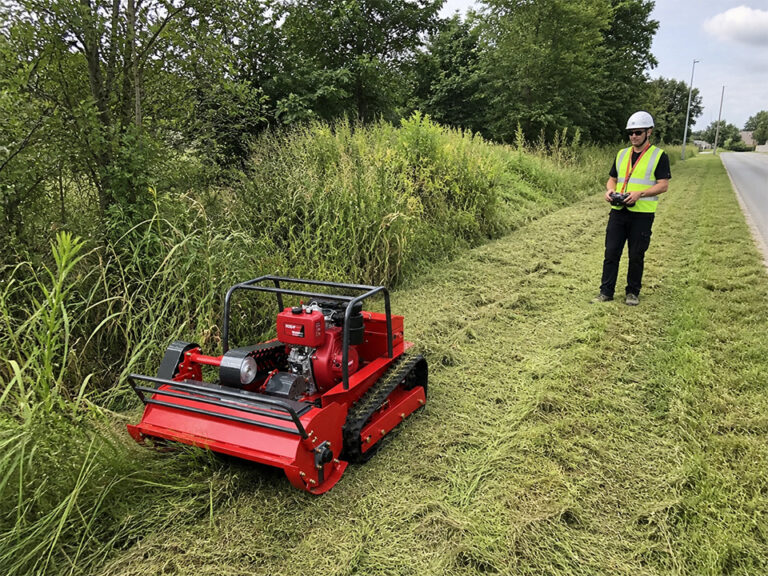
For remote or rough-terrain operations, machine recovery can be difficult. This is why inspection habits matter even on compact equipment such as the XT-800CB remote control track lawn mower for rough terrain. If a machine fails far from the workshop, the repair cost is only part of the problem. Recovery time, lost labor, transport, and customer delay stack up fast.
FAQ
What is Wheel Loader Hydraulic Maintenance?
Wheel Loader Hydraulic Maintenance is the routine inspection, cleaning, testing, fluid checking, filter control, hose monitoring, and leak repair process used to keep a wheel loader’s hydraulic system safe, efficient, and reliable under lifting, steering, loading, and attachment pressure. It prevents small leaks from becoming major failures.
In practical terms, it means checking hydraulic oil level, watching hose condition, inspecting cylinders, recording oil top-offs, replacing damaged seals, keeping breathers clean, and troubleshooting pressure or flow problems before the loader loses productivity.
How do you spot hydraulic leaks on a wheel loader?
You spot hydraulic leaks on a wheel loader by checking for fresh oil film, dust stuck to fittings, wet hose crimps, dripping under the frame, foamy hydraulic fluid, burnt oil smell, slow boom movement, weak bucket curl, and abnormal pump noise during pre-shift and post-shift inspections.
The best method is to clean suspect areas first, operate the machine safely, relieve pressure, then recheck with a flashlight and cardboard. Never use bare hands to search for pinhole leaks because high-pressure fluid can penetrate skin.
What causes hydraulic hose leaks on wheel loaders?
Hydraulic hose leaks on wheel loaders are usually caused by abrasion, tight bend radius, vibration, heat exposure, wrong hose rating, poor routing, damaged crimps, aged rubber, contamination, pressure spikes, or incorrect installation after repair. The leak often appears at the hose end before total failure.
A good maintenance team checks hose clamps, articulation points, lift-arm routing, auxiliary couplers, and pump outlet lines. If reinforcement wire is exposed, the hose should be replaced rather than watched.
How often should loader hydraulic fluid be checked?
Loader hydraulic fluid should be checked every shift, using the machine manufacturer’s correct level-check method, with the loader parked safely, attachments lowered, and pressure relieved where required. Daily checking catches low oil, foaming, contamination, overheating signs, and repeated top-off patterns before components are damaged.
For heavy-duty fleets, oil condition should also be reviewed through filter checks and, where justified, oil sampling. Dirty oil can damage pumps, valves, cylinders, seals, and hydraulic motors.
Is a small hydraulic leak dangerous?
A small hydraulic leak can be dangerous because it may indicate pressure loss, hose failure, seal damage, oil contamination, slip hazards, fire risk, or high-pressure injection danger. Even minor seepage can become a sudden burst when the loader lifts, curls, steers, or works under heavy load.
Small leaks should be cleaned, traced, documented, and repaired based on location and severity. Any spray, active dripping, steering-related leak, or exposed hose reinforcement should trigger immediate action.
What is the fastest way to troubleshoot wheel loader hydraulic problems?
The fastest way to troubleshoot wheel loader hydraulic problems is to separate symptoms into pressure, flow, contamination, and heat categories before replacing parts. This prevents wasted money on pumps, valves, cylinders, or hoses when the true cause is low oil, air entry, clogged filters, bad routing, or internal bypass.
Start with fluid level, leak points, filter condition, oil temperature, pump noise, cycle speed, and operator complaints. Then test pressure and flow according to the machine service data.
CTA
A wheel loader does not fail because one hose suddenly became evil. It fails because heat, pressure, vibration, dirt, weak inspection habits, and “run it one more day” thinking were allowed to pile up.
If you manage loaders, compact machines, or rough-terrain equipment, build the inspection habit before the repair bill arrives. Check the oil. Trace the stain. Replace the damaged hose. Record the defect. Train the operator. And when a hydraulic leak appears near a lift, steering, brake, or high-pressure circuit, stop pretending it is harmless.
That is real Wheel Loader Hydraulic Maintenance. Not paperwork. Protection.
Contact our equipment manufacturer to discuss mini loaders, freight elevators, lift platforms, and lawn mowers for construction, logistics, agriculture, landscaping, mining, and municipal projects. Founded in 2019, we support global B2B buyers with RFQ review, WhatsApp or email communication, sales team guidance, customization, and export-ready machinery solutions.
Company
About
Solutions
Applications
Electric Freight Elevator
Contact
Products
Mini Loader
Freight Elevator
Lift Platform
Lawn Mower
Electric Mini Loader
Contact
+86 151 0096 5355
North of Xiaozhuangdong Village, Weijiazhuang Town, Longyao County, Xingtai City, Hebei Province, China